

Air Conditioner Not Blowing Cold Air? Common Causes and How to Fix Them
Is your air conditioner not blowing cold air? Discover the most common causes — from dirty filters to refrigerant leaks — and how to fix them fast.


Is your air conditioner not blowing cold air? Discover the most common causes — from dirty filters to refrigerant leaks — and how to fix them fast.
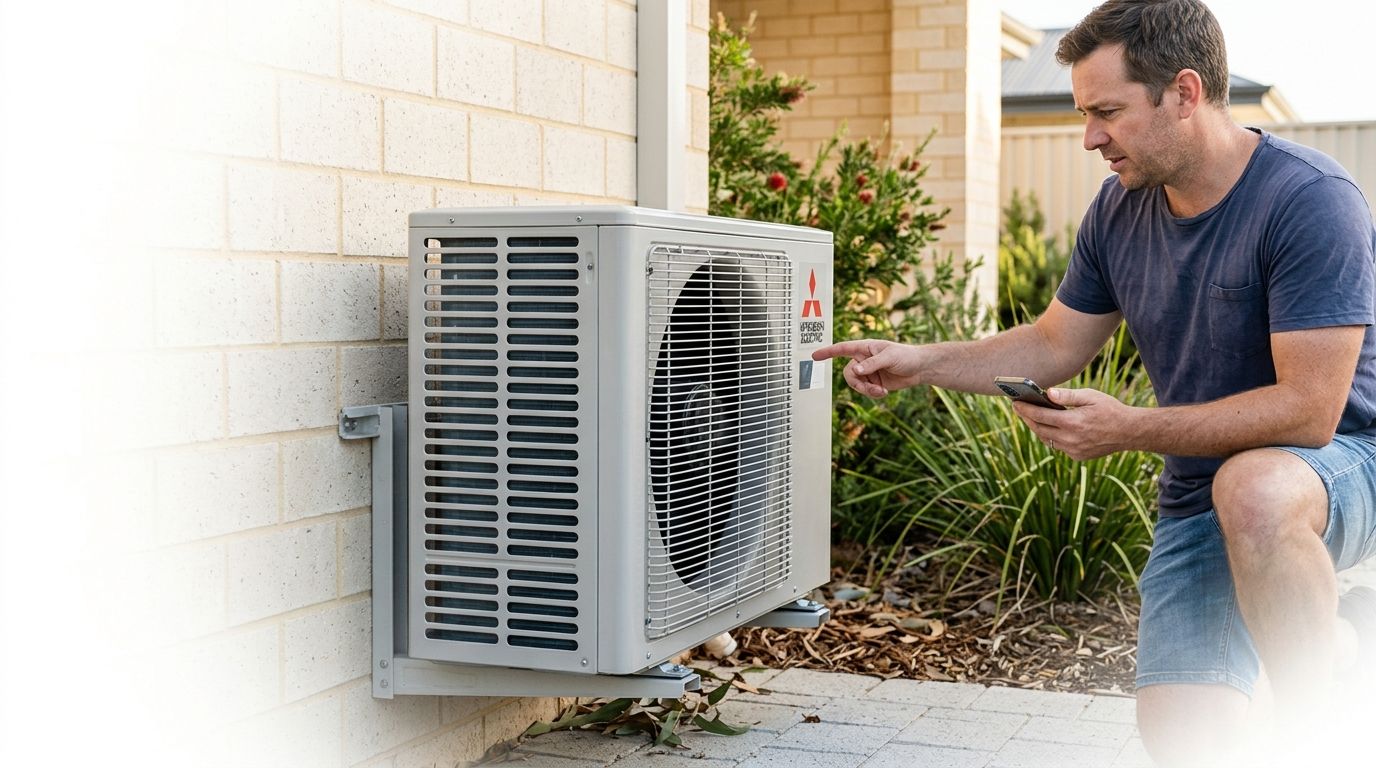
You've flicked the aircon on, it's humming away, but the room is still stuffy and 30-something degrees outside. If your air conditioner is not blowing cold air, you're not alone. It's one of the most common complaints we hear from homeowners across Sydney and Melbourne every summer. The good news is that the cause is often simpler than you'd expect.
There are six main reasons a split system stops cooling properly: a dirty air filter, an incorrect mode or thermostat setting, a frozen evaporator coil, a blocked or dirty condenser unit, low refrigerant, or a mechanical and electrical fault. Some of these you can check and fix yourself in under 10 minutes. Others will need a licensed technician, but even then, knowing the cause helps you explain the problem clearly and avoid unnecessary call-out fees.
Work through the checks in this article from simplest to most complex and you'll have a clear answer quickly.
Key takeaways
Before calling a technician, rule out the two most common and easily fixed causes: wrong settings on the remote and a clogged air filter. These two issues account for a surprisingly large number of service calls, and both can be resolved in minutes without any tools or technical knowledge.
A split system set to the wrong mode will run continuously without cooling the room at all. Check your remote and confirm the unit is set to 'Cool' mode, usually shown as a snowflake icon. Also check that the target temperature is set below the current room temperature. If the room is 28°C and the thermostat is set to 26°C, the unit should be actively cooling, but if it's set to 29°C or higher, it won't engage the compressor.
After a power outage, many remotes revert to a previous mode such as 'Fan Only' or 'Heat', which means the fan runs but no cooling happens. If you're unsure what the symbols on your remote mean, see our guide to Daikin remote symbols explained for a full breakdown of common icons.
A blocked air filter is one of the most frequent reasons a split system loses cooling performance. Dust and debris restrict airflow across the evaporator coil, forcing the unit to work harder for less output. In some cases the system will trigger a protective shutdown of the cooling function entirely to prevent the coil from freezing or the compressor from overheating.
Cleaning the filter is straightforward. Follow these steps:
If the filter is heavily soiled with mould, grease or pet hair that won't rinse out, or if the mesh is torn or warped, replace it rather than reinstalling it. Filters should be cleaned every four to six weeks during periods of heavy use. For a more thorough clean of the whole unit, including the coil and drain tray, see our full guide on how to clean your air conditioner.

If your air conditioner is not blowing cold air and the settings and filter check out fine, the problem is likely one of four causes: a frozen evaporator coil, a dirty outdoor condenser unit, low refrigerant from a leak, or an electrical or mechanical fault. Each has distinct signs that help you identify it before deciding whether to grab a garden hose or pick up the phone.
A frozen evaporator coil is more common than most people expect, and it's usually triggered by one of two things: restricted airflow or low refrigerant. When airflow across the coil drops too low, the coil temperature falls below freezing and ice builds up on the indoor unit. You might notice ice visible through the front panel, water dripping or pooling beneath the unit as it thaws, or airflow that feels weak and barely cool even when the fan is running.
If you spot these signs, turn the unit off at the wall immediately. Running a frozen system puts strain on the compressor. Switch to fan-only mode if your unit allows it, which helps the ice thaw faster, or simply leave the unit off for two to four hours. Once thawed, check and clean the filter before restarting.
If the coil freezes again within a day or two of restarting, a dirty filter is not the culprit. Recurring freezing almost always points to low refrigerant, which means a leak somewhere in the system. At that point, a technician needs to inspect the unit. For more background on how refrigerant works and why levels drop, see our article on air conditioner refrigerant explained.
The outdoor unit's job is to expel the heat extracted from inside your home. It does this by pushing air through the condenser coils, which is why the unit needs clear space around it to function properly. When dirt, leaves, grass clippings or other debris build up around or inside the condenser, the unit can't shed heat efficiently. The result is a system that runs constantly but struggles to cool the room, and in some cases triggers a high-pressure fault that shuts the compressor down entirely.
Start with a visual inspection. Walk around the outdoor unit and check for any debris packed against the fins or blocking the airflow path. Clear away any leaves, overgrown plants or objects sitting within 50cm of the unit on all sides. If the fins look heavily soiled with dirt or dust, a gentle rinse with a garden hose on a low-pressure setting can help. Spray from the inside out where possible to push debris away from the coil rather than deeper into it.
Avoid using a high-pressure washer, as this can bend the aluminium fins and reduce airflow further. Chemical coil cleaning is also best left to a professional, as the wrong product can corrode the fins or damage the refrigerant lines.
Refrigerant does not get 'used up' the way fuel does. Under normal operating conditions, the refrigerant level in a split system stays constant for the life of the unit. So if refrigerant is low, it almost always means there is a leak somewhere in the system, whether at a fitting, a valve or a hairline crack in the copper pipework.
The signs of low refrigerant are fairly consistent: the unit runs continuously but the room barely cools down, you may hear a faint hissing or bubbling sound near the indoor or outdoor unit, and ice can form on the indoor coil as described above. Energy bills often creep up at the same time because the system is working overtime to compensate.
Refrigerant handling is licensed work in Australia under the Australian Refrigeration Council (ARC) framework. It is illegal for an unlicensed person to purchase, handle or recharge refrigerant. More importantly, a regas alone will not fix the problem. If the leak is not found and repaired first, the new refrigerant will simply escape again, often within weeks. A qualified technician will pressure-test the system, locate the leak, repair it and then recharge to the correct level.
If none of the above causes match what you're seeing, the issue may be electrical or mechanical. Common culprits include a faulty run capacitor (which helps start the compressor and fan motors), a failing fan motor on either the indoor or outdoor unit, or a compressor that is struggling or has failed entirely. In some cases the fault is as simple as a tripped circuit breaker at the switchboard.
Check your switchboard first. If the breaker for the air conditioner has tripped, reset it once and test the unit. If it trips again immediately, do not keep resetting it. A repeatedly tripping breaker points to a wiring fault or a failing component drawing too much current, and that needs a licensed electrician or air conditioning technician to investigate safely.
Beyond the switchboard check, these faults are not DIY territory. Capacitors store a significant electrical charge even after the unit is switched off, and compressor diagnosis requires specialist tools. For units that are 10 or more years old and showing these symptoms, it is worth getting a technician's honest assessment of repair cost versus replacement value before committing to an expensive fix on ageing equipment.
Knowing where the DIY boundary sits saves you time, money and the risk of making a fault worse. Most homeowners can safely handle a handful of checks and basic maintenance tasks without any technical knowledge. Everything beyond that list requires a licensed technician.
Safe DIY actions include:
Call a technician if you are dealing with any of the following:
On the refrigerant point specifically: attempting to handle or recharge refrigerant without an ARC licence is illegal in Australia and carries significant fines. There is no workaround here. Book a qualified technician for air conditioning repairs in Sydney and let them handle it properly.
The most effective way to avoid reaching this point is a routine annual service. A technician will clean the coil, check refrigerant pressure, inspect electrical connections and test the system before summer hits, catching small issues before they become expensive faults. Booking a professional air conditioning service once a year is far cheaper than an emergency repair call in the middle of a heatwave, and it extends the working life of the unit considerably. Frozone Air installs and services units from Daikin, Mitsubishi Electric and Fujitsu across Sydney, so if your system is due for a check, we can help.
The most common reasons an air conditioner runs without cooling are a dirty filter restricting airflow, an incorrect mode or thermostat setting, a frozen evaporator coil, low refrigerant from a leak, or a dirty outdoor condenser unit. Work through each cause from simplest to most complex: check the remote settings first, then inspect the filter, then look at the outdoor unit before calling a technician.
To reset your air conditioner, turn the unit off at the remote or wall controller, then switch it off at the circuit breaker or isolator switch. Wait at least 30 seconds, then power it back on. A reset can clear minor electronic glitches that cause the unit to behave erratically, but it will not fix underlying mechanical faults, a frozen coil or a refrigerant issue. If the problem returns after a reset, a technician needs to investigate.
The main culprits are a wrong mode setting, a clogged filter, a frozen evaporator coil, a refrigerant leak, a dirty condenser unit or a faulty compressor. The cause determines whether it's a quick DIY fix or a job for a licensed technician. Settings and filter issues you can resolve yourself in minutes. Frozen coils, refrigerant leaks and compressor faults all require a professional.
Yes. If your unit is running but not producing cold air, continuing to run it can make the problem worse, particularly if there is a frozen coil or a refrigerant issue, as the compressor can sustain damage under those conditions. Turn the unit off and let it rest for at least 30 minutes, then check the filter and settings before restarting. If it still fails to cool after that, turn it off again and call a technician rather than leaving it running.
Most cooling problems come down to a handful of straightforward causes. A quick check of your remote settings and a clean of the air filter will resolve the issue more often than you'd expect. For anything beyond that, including frozen coils, refrigerant leaks and electrical faults, a licensed technician is the safest and most cost-effective path forward. Attempting to push through those problems without professional help usually turns a minor repair into a major one.
If your unit is ageing and faults are becoming a regular occurrence, it may be worth considering a replacement rather than another repair. Frozone Air installs and recommends reliable, energy-efficient options like the Daikin Cora 2.5kW Split System (FTXM25YVMA), the Mitsubishi Electric AP Series 2.5kW (MSZ-AP25VGD) and the Fujitsu Classic Plus 2.5kW (ASTG09KMCA), all of which offer strong performance for typical Australian bedrooms and living spaces.
If you're in Sydney or Melbourne and need a repair, service or new installation, book online or call Frozone Air on 1300 801 839. We'll get your system cooling again.