

What Is Ducted Air Conditioning? How It Works and Is It Right for Your Home?
What is ducted air conditioning and how does it work? Learn how ducted systems cool and heat your whole home, plus costs, pros, cons and top brands.


What is ducted air conditioning and how does it work? Learn how ducted systems cool and heat your whole home, plus costs, pros, cons and top brands.
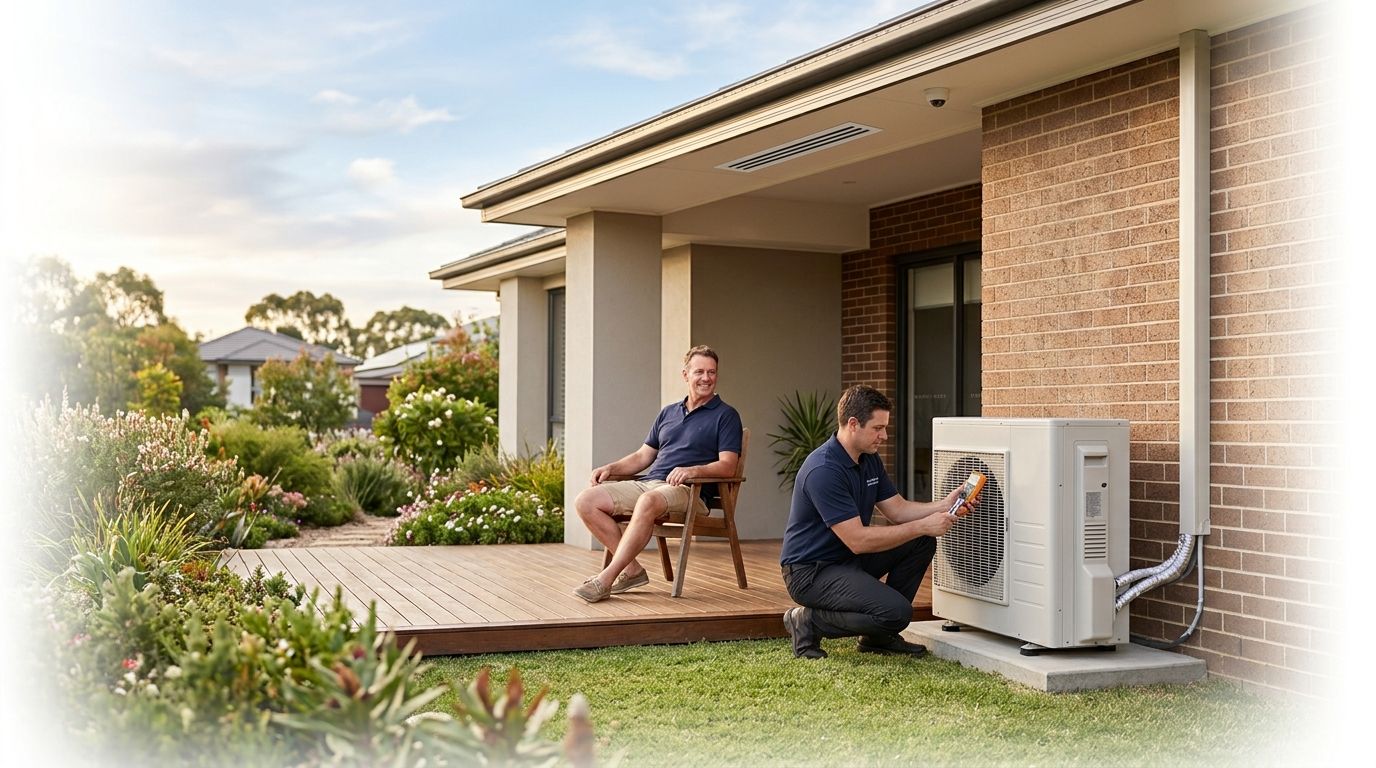
Ducted air conditioning is a whole-home climate control system that conditions the air in a central unit and distributes it through a concealed network of ducts and ceiling vents. Unlike a split system that serves a single room, a ducted system can cool and heat every room in your home from one installation. Most modern ducted systems are reverse cycle, meaning they handle both cooling in summer and heating in winter. To understand how that works, this article covers the three main components of a ducted system, how the refrigeration cycle operates, and how zoning lets you control which rooms get conditioned air.
Key takeaways
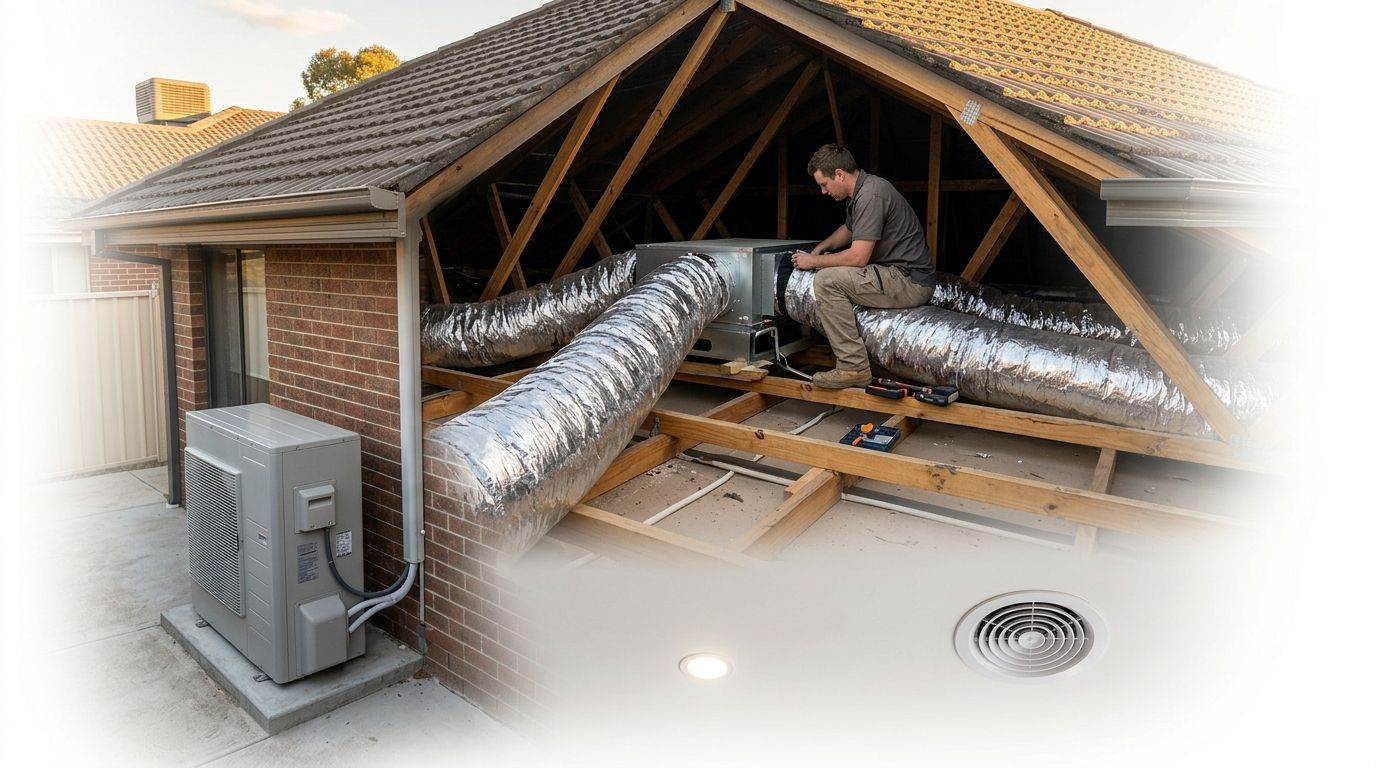
A ducted air conditioning system works by drawing warm indoor air into a central unit, conditioning it using a refrigeration cycle, and then pushing the treated air through a network of ducts to ceiling vents in each room. The system has three core components that work together: the outdoor unit, the indoor unit and the ductwork.
The outdoor unit houses the compressor and condenser coils. The compressor pressurises the refrigerant, and the condenser coils release heat from the refrigerant to the outside air. This is the part you see mounted on the ground or on a wall bracket outside your home.
The indoor unit sits in your roof cavity (or under the floor in some homes) and contains the evaporator coil and a blower fan. Warm air from inside your home is drawn across the cold evaporator coil, which absorbs the heat from the air. The now-cooled air is then pushed by the blower fan into the duct network.
The ductwork and ceiling vents are the delivery system. Insulated ducts run through your roof cavity and connect the indoor unit to individual vents in each room. The conditioned air flows out through these vents and the return air grille pulls stale room air back to the indoor unit to repeat the cycle.
In heating mode, the refrigeration cycle simply runs in reverse. Instead of extracting heat from indoor air and dumping it outside, the system extracts heat energy from the outside air and transfers it into your home. This works even on cold days, because there is still usable heat energy in outdoor air down to around minus 15 degrees Celsius. The result is efficient, even warmth distributed through the same ducts and vents used for cooling. For a deeper look at the refrigeration cycle, see our guide to how reverse cycle air conditioning works.
Zoning is one of the most practical advantages of a modern ducted system. Motorised dampers sit inside the ductwork at each branch and open or close on demand to direct airflow only to the rooms or zones you select. If the bedrooms are empty during the day, you close those zones and only condition the living areas, which reduces energy use significantly compared to older central AC systems that treated the whole home as one space.
Most current systems let you control zones through a wall-mounted controller or a smartphone app. Frozone Air installs iZone smart zoning controllers, which allow you to manage individual zones, set schedules and monitor energy use from your phone. iZone integrates with a wide range of ducted systems and is a popular upgrade for homeowners who want more precise control over their comfort and running costs.
The key efficiency advantage of zoning is straightforward: you only pay to condition the rooms you are actually using. In a four-bedroom home, that can make a meaningful difference to your quarterly electricity bill.
Ducted air conditioning offers whole-home comfort and a clean, discreet look that no other system can match, but it comes with a higher upfront cost and a more involved installation than a split system. The table below lays out the honest trade-offs so you can weigh them against your home and budget.
| Pros | Cons |
|---|---|
| Conditions every room in the home from a single system, delivering consistent comfort throughout. | High upfront cost, typically $5,000 to $15,000 or more depending on home size and system capacity. |
| Fully concealed installation with only slim ceiling grilles visible, preserving your interior design. | Installation requires access to the roof cavity, which is more invasive and time-consuming than a split system fit-out. |
| Quiet operation, as the main air-handling unit sits in the roof cavity away from living areas. | Running costs can be significant in larger homes if zoning is not used to limit conditioning to occupied rooms. |
| Zoning lets you direct conditioned air only to the rooms you are using, reducing unnecessary energy use. | Not cost-effective for small homes, apartments or renters who cannot recoup the installation investment. |
| One system to service and maintain rather than multiple individual units across the home. | Ductwork requires periodic professional cleaning to maintain air quality and system efficiency. |
Ducted air conditioning suits homeowners with three or more bedrooms who want a permanent, whole-home solution they will use for years to come. It is the right call if you are building, renovating or replacing an ageing system and want consistent comfort in every room without wall-mounted units cluttering your living spaces. For a full breakdown of what to budget, read our guide to ducted air conditioning cost in Australia. If your home is smaller or your situation is less permanent, the comparison below will help you decide whether a split system is the smarter fit.
Ducted and split system air conditioners are both excellent options, but they suit very different homes and budgets. The table below compares the two across five key factors so you can see at a glance which system aligns with your situation.
| Factor | Ducted | Split System |
|---|---|---|
| Upfront Cost | $5,000 to $15,000+, depending on home size and number of zones | $1,000 to $4,000 for supply and installation of a single unit |
| Best For | Whole-home comfort across multiple rooms and living areas | Single rooms, open-plan living areas or targeted cooling in one space |
| Installation Disruption | Significant, requiring roof cavity access and typically two or more days on site | Minimal, most single split system installations are completed in one day |
| Aesthetics | Fully concealed, with only slim ceiling grilles visible in each room | Wall-mounted indoor unit visible in the room, though modern units are compact and low-profile |
| Running Costs | Higher for whole-home conditioning, though zoning reduces unnecessary use | Lower for targeted cooling or heating of a single space |
For larger homes, ducted is the better long-term investment. The higher upfront cost is offset by the convenience of whole-home comfort, a cleaner aesthetic and a single system to maintain. For apartments, rentals or anyone who needs to add comfort to just one room, split system air conditioning is the smarter, more affordable choice. If you need multiple rooms covered but do not have the roof space or budget for full ductwork, a multi-split system is a practical middle ground, connecting several indoor units to one outdoor unit without any ducting required.
Frozone Air installs and recommends ducted systems from four leading brands: Daikin, Mitsubishi Electric, Fujitsu and ActronAir. Each brand has a distinct strength, and the right choice depends on your home size, roof cavity dimensions and budget. Here is a quick overview of what each brand brings to a ducted installation.
Daikin is one of the most trusted names in Australian air conditioning, and their ducted range reflects that reputation. The Daikin Ducted FDYQN series uses advanced inverter technology to modulate capacity in real time, which keeps running costs lower than fixed-speed systems. It also carries strong energy star ratings, making it a solid choice for medium to large homes where efficiency over the long term matters.
Mitsubishi Electric is the brand homeowners reach for when quiet operation is a priority. The Mitsubishi Electric PEAD series is a premium ducted option known for whisper-quiet performance and robust long-term reliability. If you have bedrooms close to the indoor unit or a roof cavity with limited acoustic insulation, the PEAD series is worth the investment.
Fujitsu's ducted range stands out for its compact indoor unit design, which makes it a practical option for homes with tighter or shallower roof cavities where a bulkier unit simply will not fit. The systems are well-regarded for consistent airflow and straightforward zoning integration. Fujitsu is a strong contender if your installer flags roof space as a constraint during the site assessment.
ActronAir is an Australian-designed and manufactured brand, and that local focus shows in how their systems perform across Australia's wide range of climate conditions. The ActronAir Classic Plus Ducted System is built specifically for local conditions, from humid coastal summers to cold inland winters, and the brand is backed by strong after-sales support through its Australian service network. For homeowners who want a system designed with the Australian climate in mind from the ground up, ActronAir is a compelling option.
Not sure which brand suits your home? Every home has different layout constraints, ceiling heights and usage patterns, so the best system for your neighbour may not be the best system for you. Get in touch with Frozone Air and we will assess your space and recommend the right fit. You can request a quote through our ducted air conditioning installation page and one of our technicians will be in touch to discuss your options.
A standard ducted air conditioning installation typically takes two to three days, depending on the size of the home and the complexity of the ductwork layout. Larger homes with multiple zones or difficult roof cavity access can take longer. Your installer will give you a more accurate timeframe after completing a site assessment.
Ducted air conditioning in Australia generally costs between $5,000 and $15,000 for supply and installation, with larger homes and premium brands sitting at the higher end of that range. The number of zones, the brand selected and the condition of your roof cavity all affect the final price. Getting two or three quotes from licensed installers is the best way to understand what your specific home will cost.
A ducted system is not inherently more efficient than a split system, but a well-zoned ducted system can be very efficient for whole-home conditioning because you only run the zones you are actively using. A single split system will always be more efficient for conditioning one room. The efficiency advantage of ducted comes from replacing multiple individual units with one central system that is properly sized and zoned for the home.
Ducted air conditioning systems should be professionally serviced once a year to keep them running efficiently and to maintain air quality. The service typically includes cleaning the filters, checking refrigerant levels, inspecting the ductwork for leaks and testing the zoning controls. Skipping annual servicing can reduce system efficiency and shorten the lifespan of the unit.
Ducted air conditioning is a powerful, discreet whole-home solution that delivers consistent comfort across every room from a single system. It suits larger homes and long-term owners best, but it does require professional installation and a higher upfront investment than a split system. The right choice comes down to your home size, budget and how long you plan to stay.
If you are ready to take the next step, the Frozone Air team services homes across Sydney and Melbourne and can assess your space, recommend the right system and provide a no-obligation quote. Call us on 1300 801 839 or book a ducted air conditioning installation quote online and one of our technicians will be in touch to walk you through your options.