

What Is a Reverse Cycle Air Conditioner and How Does Reverse Cycle Aircon Work?
Wondering how does reverse cycle aircon work? We explain the technology, benefits, system types and running costs in plain Australian English.


Wondering how does reverse cycle aircon work? We explain the technology, benefits, system types and running costs in plain Australian English.
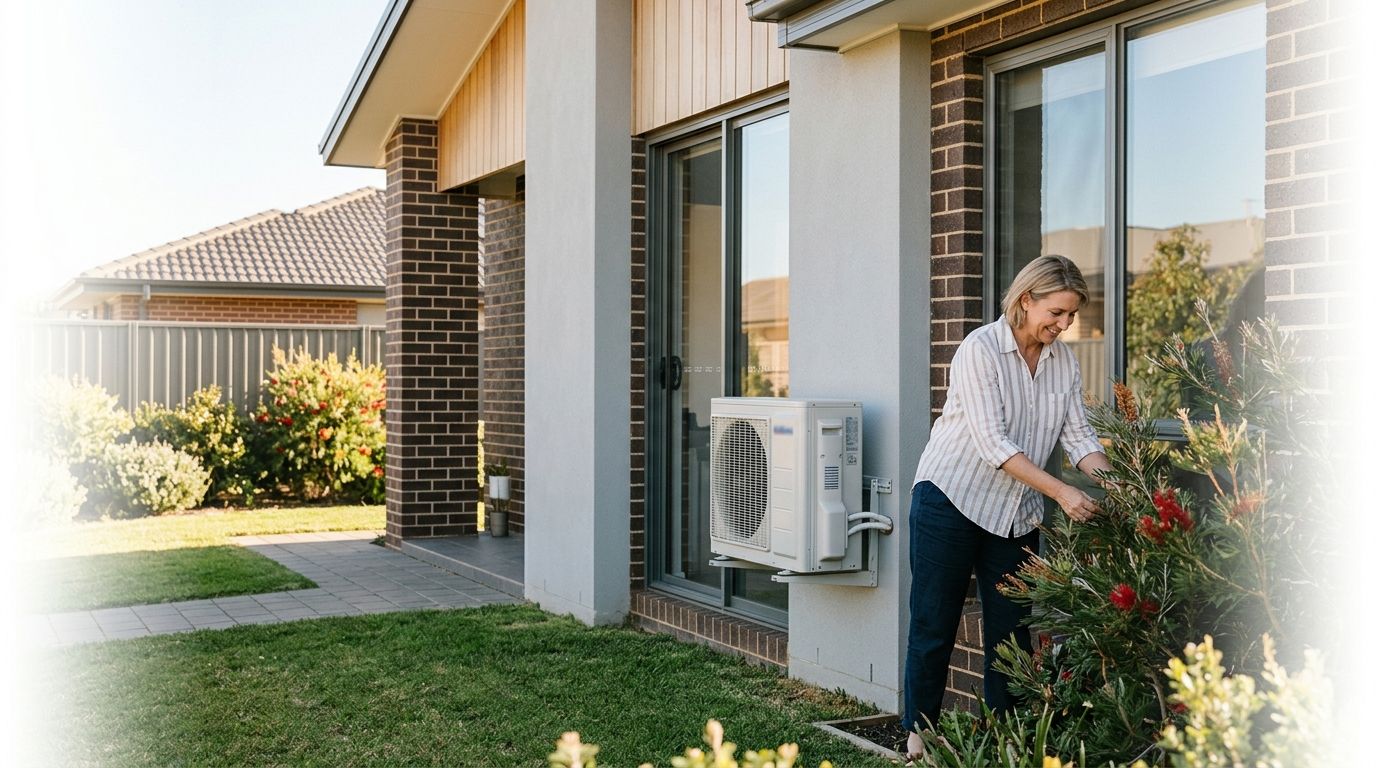
A reverse cycle air conditioner is a single unit that both heats and cools your home by moving heat energy rather than generating it. Understanding how does reverse cycle aircon work comes down to one core idea: the system uses a refrigerant loop to pull heat from one place and push it to another, reversing direction depending on whether you need warming or cooling. That makes it the most versatile climate control option available for Australian homes.
Unlike a cooling-only split system, a reverse cycle unit handles year-round comfort without any additional heating equipment. For most Australian households, that means one installation, one remote and one running cost to manage across every season.
The sections below cover the refrigeration cycle in plain language, the main system types available, how efficiency is measured and what you can expect to pay in running costs.
Key takeaways
A reverse cycle air conditioner moves heat between indoors and outdoors using a closed loop of refrigerant, a compressor, an indoor evaporator coil and an outdoor condenser coil. It does not generate heat or cold air from scratch. Instead, it transfers heat energy from wherever you do not want it to wherever you do, which is why these systems are also called heat pumps.
The key misconception to clear up here is that a reverse cycle system does not 'create' heat in heating mode. It extracts heat that already exists in the outdoor air and moves it inside. That distinction matters a great deal for efficiency.
A reverse cycle system delivers three to five units of heat energy for every one unit of electricity it consumes. This ratio is called the Coefficient of Performance, or COP. A COP of 3.5 means you are getting 3.5 kW of heating output for every 1 kW of electricity drawn from the grid, which is simply not possible with a resistive electric heater. A resistive heater converts electricity directly into heat at a 1:1 ratio, so a 2 kW bar heater produces exactly 2 kW of warmth and no more.
Gas ducted heating is often held up as the efficient alternative to electric heating, but a modern reverse cycle system typically outperforms it on a cost-per-kilowatt-of-heat basis, particularly as gas tariffs have risen sharply in recent years. Gas systems also require a separate installation and ongoing maintenance, whereas a reverse cycle unit handles both heating and cooling from a single piece of equipment.
The efficiency advantage of reverse cycle technology is also why running costs are lower than many homeowners expect. For a deeper look at the numbers behind electricity consumption and what your system is likely to cost per hour to run, see our guide on how much power an air conditioner uses.
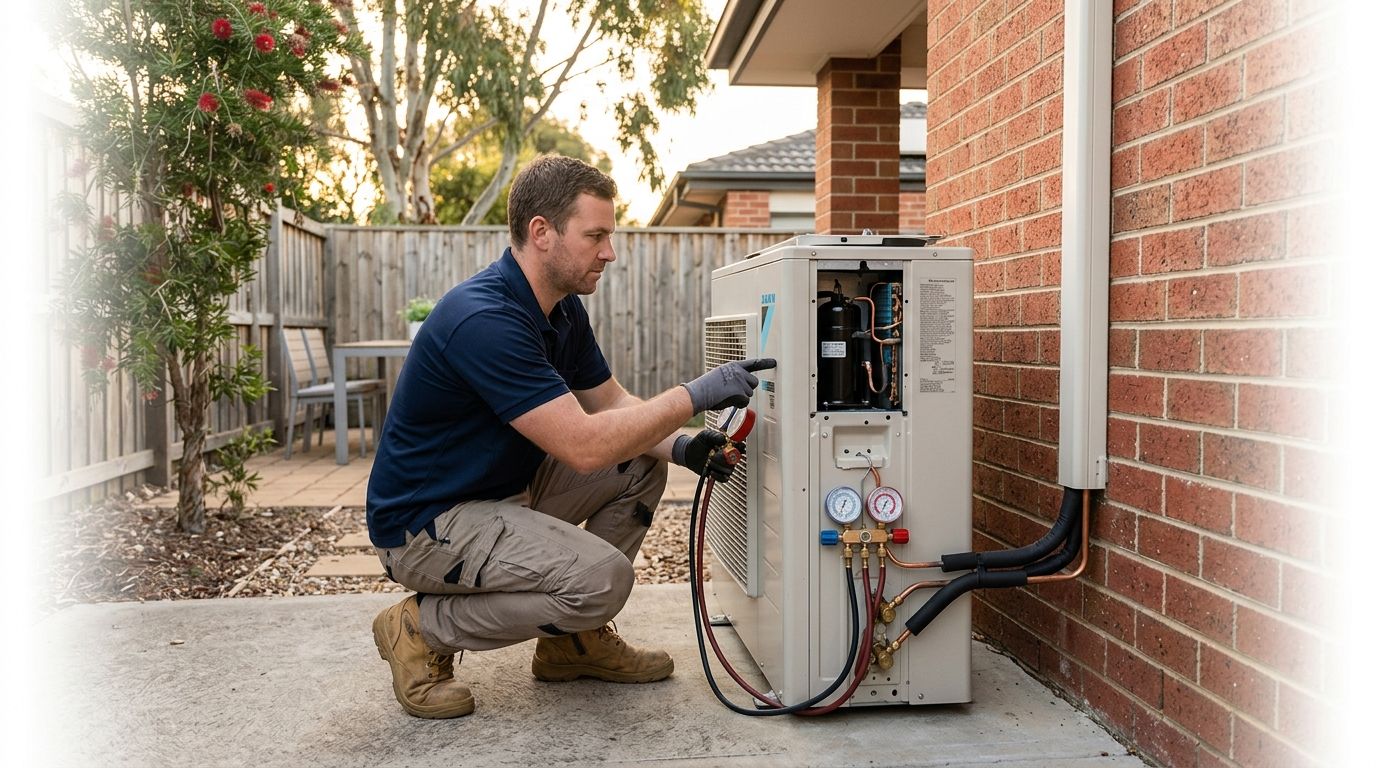
There are three main reverse cycle system types available in Australia, and the right choice depends on how many rooms you need to condition, your home's layout and your budget. Split system air conditioning covers the most common option, but multi-split and ducted systems each serve a distinct purpose. The comparison table below gives you a quick reference before the detail.
| System Type | Best For | Typical Capacity | Approx. Installed Cost Range | Pros |
|---|---|---|---|---|
| Wall-mounted split system | Single rooms, open-plan living areas | 2.5 kW to 9 kW | $1,400 to $3,500 | Affordable, straightforward installation, wide brand choice |
| Multi-split system | Homes needing 2 to 5 rooms conditioned without multiple outdoor units | 5 kW to 20 kW combined | $4,000 to $10,000+ | One outdoor unit, flexible indoor configurations |
| Ducted reverse cycle | Whole-home heating and cooling, larger homes | 8 kW to 20+ kW | $5,000 to $15,000+ | Whole-home coverage, discreet ceiling vents, zoning capability |
Wall-mounted split systems are the most common reverse cycle option in Australian homes, and for good reason. They handle capacities from 2.5 kW up to around 9 kW, making them well suited to bedrooms, living rooms and open-plan kitchen and dining areas. Installation is relatively straightforward: one indoor wall unit, one outdoor compressor and a refrigerant line connecting the two.
Two models Frozone Air installs and recommends regularly are the Daikin Cora FTXM25Y (2.5 kW) and the Mitsubishi Electric MSZ-AP25VGD (2.5 kW). The Daikin Cora is a strong entry-level to mid-range choice, with supply-and-install pricing typically sitting between $1,400 and $1,800 for a 2.5 kW unit. The Mitsubishi Electric MSZ-AP series is a reliable mid-range option with strong energy star ratings, and supply-and-install pricing for a 2.5 kW unit generally falls between $1,500 and $1,900. Both are inverter-driven, meaning they modulate output rather than cycling on and off, which keeps running costs lower over time.
A multi-split system connects two to five indoor heads to a single outdoor unit. This suits homes where you want independent climate control in several rooms but cannot accommodate multiple outdoor compressors due to space or strata restrictions. Each indoor unit can be set to a different temperature, and the single outdoor unit keeps the installation footprint compact.
Ducted air conditioning takes a different approach entirely. A central unit, typically installed in the roof cavity or under the floor, distributes conditioned air through a network of insulated ducts and ceiling vents across the whole home. Ducted systems suit larger homes where room-by-room split systems would become impractical or visually intrusive. The Fujitsu ARTG ducted reverse cycle range is one example Frozone Air installs, with ducted systems typically starting from around $5,000 to $7,000 installed for a smaller home, rising depending on the number of zones and ceiling access. Frozone Air installs all three system types across Sydney and Melbourne.
Reverse cycle air conditioning offers Australian households a single system that handles both heating and cooling year-round, runs more efficiently than gas or resistive electric heating, and includes built-in air filtration as standard. These practical advantages explain why reverse cycle has become the dominant choice for new installations across the country, from tropical Queensland to the colder southern states.
Year-round use from one system. A reverse cycle unit replaces both a cooling-only air conditioner and a separate heater. That means one installation, one set of filters to clean and one system to service. For households that previously ran a portable heater in winter and a window unit in summer, consolidating to a single reverse cycle split system is a straightforward upgrade.
Lower running costs than gas or resistive heating. As covered in the previous section, a reverse cycle system delivers three to five units of heat for every one unit of electricity consumed. A gas ducted heater or a bar heater simply cannot match that ratio. With gas tariffs rising sharply across Australia, the cost-per-kilowatt advantage of reverse cycle has widened considerably in recent years.
Built-in air filtration and dehumidification. Most reverse cycle units pass air through a filter on every cycle, capturing dust, pollen and airborne particles. In cooling mode, the system also removes humidity from the air as a byproduct of the refrigeration process, which makes a real difference in humid coastal climates.
No open flame or exposed heating element. Reverse cycle systems carry no combustion risk and no carbon monoxide hazard. There is no pilot light to fail and no flue to maintain, which simplifies both safety and ongoing servicing.
Quiet operation. Inverter-driven compressors ramp up and down gradually rather than switching on at full power. The result is noticeably quieter operation, particularly at night when the system is maintaining a set temperature rather than pulling a room down from a standing start.
The one honest trade-off is upfront cost. A reverse cycle split system costs more to purchase and install than a cooling-only unit of the same capacity, and a ducted reverse cycle system carries a significantly higher installation cost than a portable or window unit. For most households, the running cost savings and the elimination of a separate heater offset that gap over a few years of use. For a closer look at how specific models compare on efficiency ratings and annual running costs, see our guide to the most energy-efficient air conditioners in Australia.
A reverse cycle air conditioner suits the vast majority of Australian homes, but getting the right system depends on four practical factors: room size, climate zone, budget and your existing infrastructure. Working through these before you speak to an installer will save time and help you arrive at a recommendation that actually fits your home rather than just your price point.
Room size and kW capacity. Sizing is the single most common mistake in residential air conditioning. An undersized unit will run continuously trying to reach the set temperature, driving up your electricity bill and wearing out the compressor faster. An oversized unit will short-cycle, switching off before it has properly dehumidified the air and leaving the room feeling clammy. As a rough guide, a 2.5 kW unit suits a bedroom or small room up to around 20 square metres, while an open-plan living and dining area of 40 to 60 square metres typically needs a 5 to 7 kW unit. Ceiling height, insulation, window area and sun exposure all shift that figure, which is why a proper load calculation matters.
Climate zone. Reverse cycle technology works across all Australian climate zones. In most capital cities and coastal regions, a standard inverter split system handles both summer cooling and winter heating without issue. If you are in a high-altitude or alpine area where overnight temperatures regularly drop below minus 10 Celsius, look specifically for a cold-climate rated unit. These are designed to extract heat efficiently at lower outdoor temperatures and maintain rated heating output where a standard unit would struggle.
Budget. Entry-level reverse cycle split systems like the Daikin Cora FTXM25Y start from around $1,400 to $1,800 installed for a 2.5 kW unit. Premium inverter models with advanced filtration and Wi-Fi control sit higher. Ducted reverse cycle systems, such as the Fujitsu ARTG range, start from around $5,000 to $7,000 installed for a smaller home. The upfront cost is higher than a cooling-only unit, but the elimination of a separate heater and lower running costs typically close that gap within a few years.
Existing infrastructure. If your home already has gas ducted heating, replacing it with reverse cycle ducted is a larger project involving new ductwork, a new indoor unit and electrical upgrades. It is worth getting a proper assessment rather than assuming your existing ducts can be reused.
A licensed technician should assess your space before any unit is recommended or purchased. Room measurements alone are not enough. If you are ready to get a professional assessment and quote, our team handles air conditioning installation in Sydney and can advise on the right system for your home.
A standard air conditioner only cools. A reverse cycle air conditioner can both cool and heat by reversing the direction of its refrigerant cycle, using the outdoor air as a heat source in winter. This makes a reverse cycle unit a complete year-round climate control system, whereas a cooling-only unit requires a separate heater for winter use.
Reverse cycle air conditioning is one of the most cost-effective ways to heat and cool a home in Australia. Because the system moves heat rather than generating it, it delivers three to five units of thermal energy for every one unit of electricity consumed. Running costs vary by system size, usage hours and local electricity tariffs, but a correctly sized reverse cycle unit will typically cost less to run than gas ducted heating or resistive electric heaters.
Yes. A reverse cycle air conditioner heats by extracting heat energy from the outdoor air and transferring it inside, even on cold days. Most standard units operate effectively down to around minus 10 to minus 15 Celsius outdoors. In alpine areas with more extreme winters, a cold-climate rated model is recommended to maintain full heating output at lower temperatures.
A well-maintained reverse cycle split system typically lasts 10 to 15 years. Ducted systems can last a similar period, though ductwork may need attention sooner depending on installation quality and the environment. Regular filter cleaning every four to six weeks and an annual service by a licensed technician are the two most effective ways to extend the life of any reverse cycle system.
Reverse cycle air conditioning is the most versatile and energy-efficient way to heat and cool an Australian home. Getting the right outcome comes down to choosing the correct system type, sizing it properly for your space and having it installed by a licensed technician who knows what they are doing.
Frozone Air supplies and installs reverse cycle systems across Sydney and Melbourne, from entry-level split systems like the Daikin Cora through to fully zoned ducted setups. Whether you have a clear idea of what you need or you are starting from scratch, our team can walk you through the options and provide a free quote with no pressure attached.
Call us on 1300 801 839 or book a consultation online and we will get back to you promptly.