

What Is the Ideal Infant Room Temperature? (And How Your Air Conditioner Can Help)
What's the safest infant room temperature in Australia? Learn the expert-recommended range, SIDS risks, and how your air conditioner can help maintain it.


What's the safest infant room temperature in Australia? Learn the expert-recommended range, SIDS risks, and how your air conditioner can help maintain it.
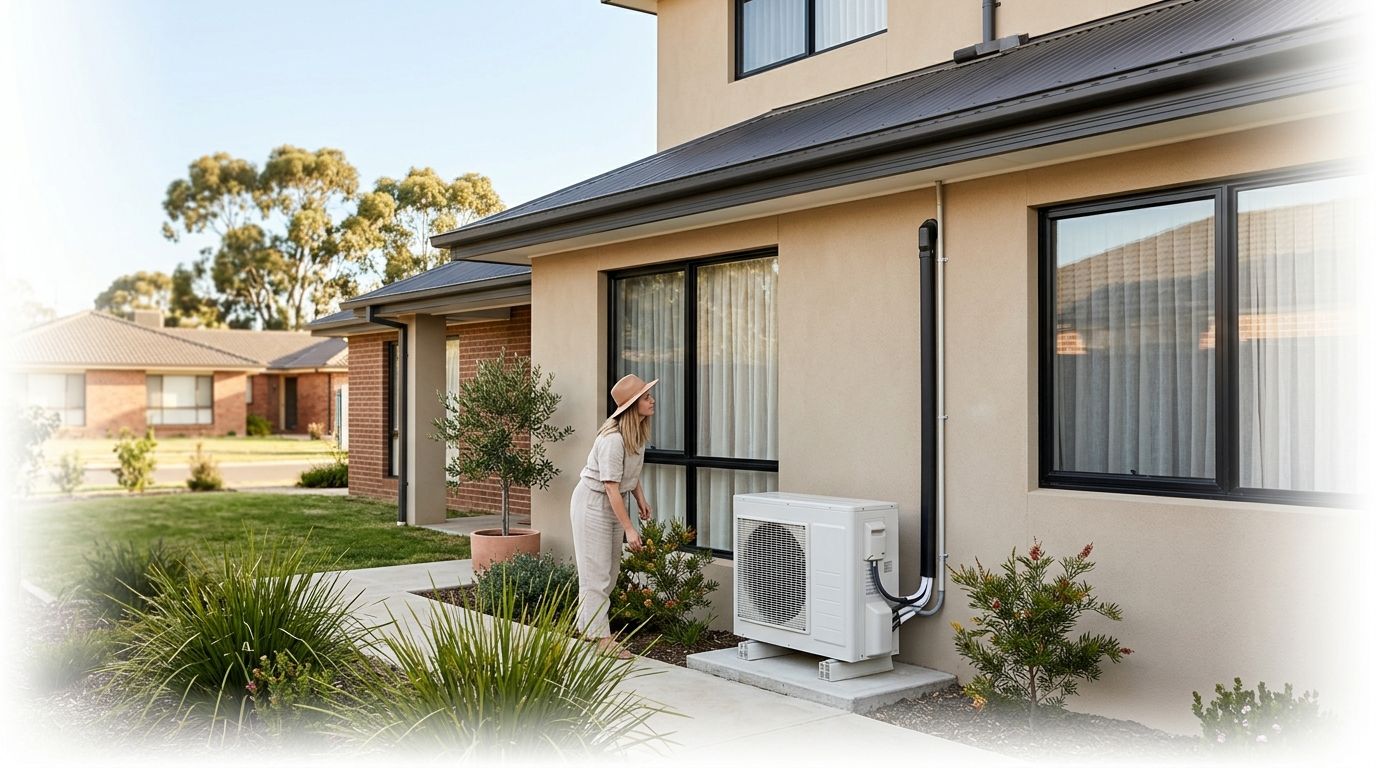
Every parent knows the 2am worry: is my baby too hot, too cold, or just right? Getting the infant room temperature right is one of the most practical things you can do for your baby's safety and sleep quality. Experts recommend keeping a nursery between 18°C and 22°C, but Australian summers can push indoor temperatures well above 30°C and winters can drop rooms below 15°C overnight. This article covers the safe temperature range, why overheating is a recognised SIDS risk factor, and how a reverse cycle air conditioner gives you reliable, year-round control without the guesswork.
Key takeaways
Babies are not small adults. A newborn's thermoregulatory system, the internal mechanism that regulates body temperature, is still immature and cannot respond to heat or cold the way an adult's can. That means your baby relies almost entirely on their environment and clothing to stay at a safe temperature. A room that feels perfectly comfortable to you can be dangerously warm for them.
There are two key risks on either end of the scale. Overheating is the more serious concern and is a recognised risk factor for Sudden Infant Death Syndrome (SIDS). On the other side, a room that is too cold disrupts sleep cycles, causes discomfort and can increase a baby's susceptibility to respiratory illness. Neither extreme is safe, and neither is easy to manage without some form of climate control.
In Australian cities like Sydney and Melbourne, summer nights regularly keep indoor temperatures above 26°C or 27°C, even with windows open. That is well outside the safe range for a sleeping infant. A reverse cycle split system gives parents the ability to hold the nursery at a steady temperature through the night, regardless of what the weather is doing outside.
SIDS (Sudden Infant Death Syndrome) is the sudden and unexplained death of an otherwise healthy baby, most commonly during sleep. While the exact cause remains unknown, overheating is a well-established risk factor. Red Nose Australia, the country's leading authority on safe infant sleep, recommends keeping a baby's room between 18°C and 20°C to reduce this risk.
One of the most common mistakes parents make is assuming that if they feel comfortable, the baby must be too. Babies generate more heat relative to their body size, lose it less efficiently and cannot kick off a blanket or tell you they are too warm. A room sitting at 24°C or 25°C may feel fine to an adult but can cause a baby to overheat, particularly if they are dressed in layers or wrapped in a heavy swaddle.
Signs that your baby may be overheating include a sweaty neck or damp hair, flushed or red skin, rapid or laboured breathing, and feeling hot to the touch on the chest or back. If you notice any of these, remove a layer of clothing and check the room temperature immediately. Keeping the nursery consistently within the 18°C to 20°C range is the most reliable way to avoid this situation altogether.
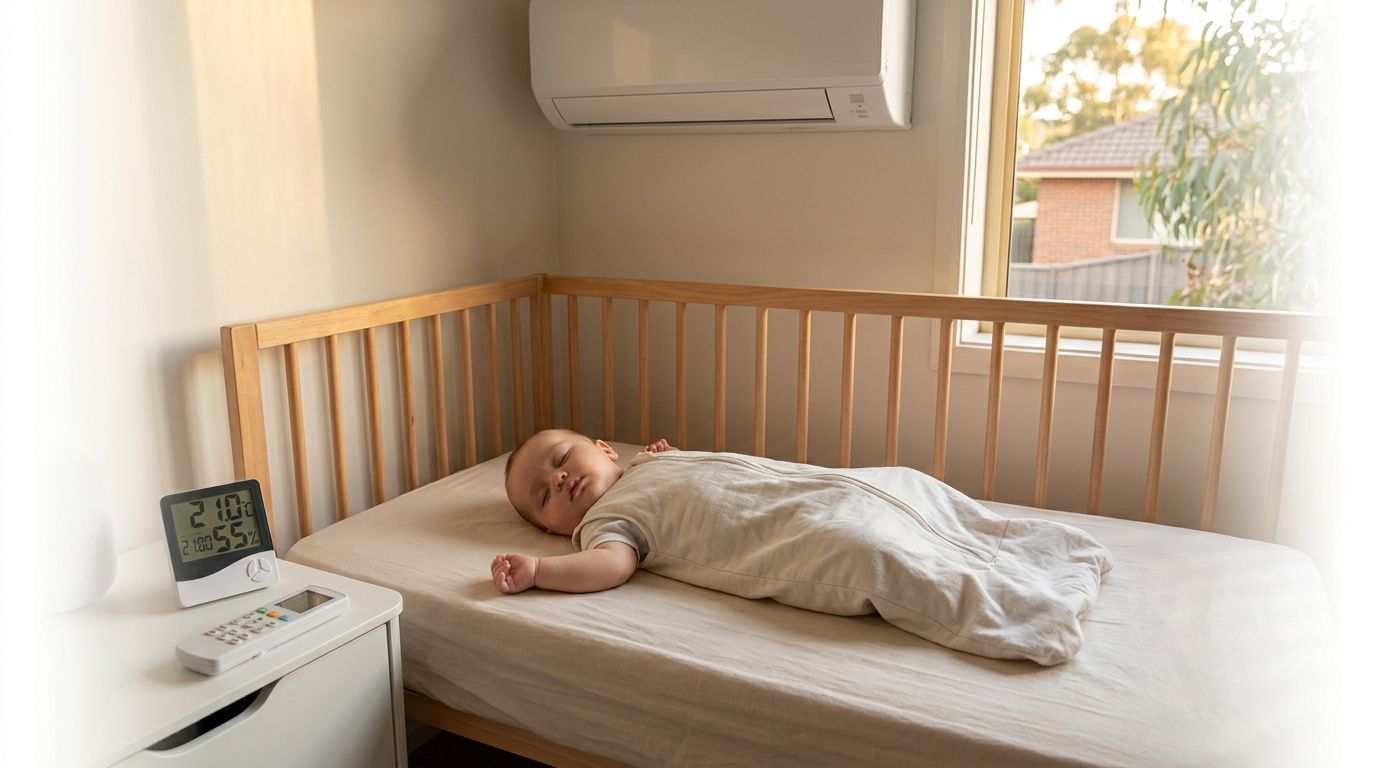
A reverse cycle air conditioner is the most practical tool for keeping a nursery within the 18°C to 22°C safe range across all four seasons, because a single unit handles both cooling in summer and heating in winter. Pair it with a basic room thermometer (available for under $20 at most hardware stores) and you have a reliable, low-effort system for monitoring and adjusting the nursery climate any time of day or night.
On hot Australian nights, the goal is not to make the nursery as cold as possible. Set your split system to 20°C to 22°C rather than blasting it down to 16°C or 18°C. Overcooling is a real risk, particularly for newborns, and a room that is too cold carries its own set of comfort and health concerns.
Airflow direction matters just as much as temperature. Angle the louvres so the air circulates around the room rather than blowing directly onto the cot. A steady stream of cold air hitting a sleeping baby can cause localised chilling even if the room thermometer reads a safe overall temperature.
Most modern split systems include a 'sleep mode' or 'quiet mode' that reduces fan speed, lowers noise output and gradually adjusts the set temperature over a few hours. This is ideal for overnight use in a nursery. Activate it before you put the baby down and the unit will do the rest without waking anyone up.
Reverse cycle air conditioning is the safest way to heat a nursery in winter. Unlike gas heaters or portable electric heaters, a split system has no combustion, no exposed heating elements and no risk of tipping over. Set the unit to 18°C to 20°C and let the inverter technology hold that temperature steadily through the night.
Portable electric heaters and gas heaters both carry risks that make them unsuitable near a cot. Exposed elements can cause burns if touched, portable units can be knocked over, and gas appliances produce combustion byproducts that affect indoor air quality. For a detailed look at gas wall heaters and their safety risks, our dedicated article covers what Australian homeowners need to know before using one in a living space, let alone a nursery.
On humidity: very dry air (common in heated rooms during winter) can irritate a baby's nasal passages and airways, while very humid air makes it harder for the body to regulate temperature. Modern inverter split systems help stabilise indoor humidity as a byproduct of their operation, which is a useful benefit for a nursery environment.
A split system air conditioning unit is the best fit for a nursery because it is quiet, precise and capable of both heating and cooling from a single wall-mounted unit. Not every split system is equally suited to a baby's room, though. Here are the key features to prioritise.
| Feature | What to Look For | Why It Matters in a Nursery |
|---|---|---|
| Noise level | Indoor unit rated below 20 dB(A) on low fan | Keeps the room quiet during sleep without waking the baby |
| Inverter technology | All modern split systems from major brands | Holds temperature steady rather than cycling on and off, avoiding temperature spikes |
| Sleep or quiet mode | Dedicated mode on the remote or app | Reduces fan noise and gradually adjusts temperature overnight |
| Air filtration | Allergen, PM2.5 or nanoe-X filters | Removes fine particles and allergens from air a baby breathes all night |
| Capacity (kW) | 2.5 kW for a room of 10 to 15 m² | Right-sized unit runs more efficiently and holds temperature more accurately |
Most nurseries fall in the 10 to 15 m² range, which means a 2.5 kW unit is the right capacity. Oversizing a unit for a small room causes it to short-cycle, which means it reaches the set temperature too quickly, shuts off and then lets the room drift before kicking back in. That temperature fluctuation is exactly what you want to avoid.
Three units Frozone Air regularly installs in nurseries and small bedrooms are worth mentioning specifically. The Daikin Cora 2.5kW (FTXM25WVMA) is one of the quietest indoor units available, with a low-fan noise level that makes it genuinely unobtrusive in a sleeping environment. Its sleep mode gradually raises the set temperature by 0.5°C per hour over three hours, reducing energy use without letting the room warm up noticeably.
The Mitsubishi Electric MSZ-AP25VGD 2.5kW is another strong option, particularly for parents who want precise inverter temperature control. It holds the set temperature with very little variance, which is exactly what you need when the target range is only four degrees wide. Its low-fan operation is also impressively quiet.
For parents concerned about air quality, the Panasonic CS-Z25XKR 2.5kW includes nanoe-X air purification technology, which actively works to reduce allergens, bacteria and fine particles in the room. For a baby with sensitive airways or a family history of allergies, that filtration capability is a genuine bonus on top of the unit's standard inverter performance and quiet operation.
All three are inverter units with sleep or quiet modes, and all three are appropriately sized for a standard nursery. For a broader comparison of top-rated models across different room sizes, our guide to the best split system air conditioners in Australia is a useful next step.
Having a split system in the nursery is only half the job. How you set it up and maintain it makes the difference between a unit that holds a safe, steady temperature all night and one that leaves you second-guessing at 3am. Follow these steps to get the most out of your nursery air conditioner from day one.
These are the questions parents ask most often about keeping a nursery at a safe temperature. Each answer is designed to give you a clear, direct response you can act on straight away.
The recommended infant room temperature at night is between 18°C and 20°C. Red Nose Australia, the country's leading safe sleep authority, advises staying within this range to reduce the risk of overheating, which is a recognised SIDS risk factor. A reverse cycle air conditioner set to 20°C with sleep mode activated is the most reliable way to hold this temperature through the night.
Yes, air conditioning is safe in a baby's room provided it is set up correctly. Keep the set temperature between 18°C and 22°C, direct the airflow away from the cot and use sleep mode to prevent the room from overcooling in the early hours. A well-maintained split system with a clean filter is one of the safest ways to regulate a nursery's temperature year-round.
Check the skin on your baby's chest or back rather than their hands or feet, which are naturally cooler. If the chest feels hot and sweaty, the baby is likely too warm. If the chest feels cold to the touch, add a light layer. A room thermometer placed at cot height takes the guesswork out of this entirely and is the most reliable indicator of whether the environment is within the safe range.
For a newborn, aim for the lower end of the safe range: 18°C to 20°C. Newborns are less able to regulate their own body temperature than older infants and are more vulnerable to overheating. Dress them in a single layer appropriate for the room temperature and avoid heavy swaddles if the room is already at the upper end of the range.
The safe infant room temperature range is 18°C to 22°C, and a modern reverse cycle split system is the most reliable way to hold that range through every season in an Australian home. It heats, it cools, it runs quietly through the night and it does not carry the combustion or tip-over risks of portable alternatives. For parents in Sydney and Melbourne, where summer nights and winter mornings both push nurseries outside the safe zone, it is the practical choice that removes the guesswork entirely.
Frozone Air installs nursery-appropriate split systems across Sydney and Melbourne every day. Our team understands the specific requirements of a baby's room, from unit sizing and louvre positioning to sleep mode setup and filter maintenance advice.
Ready to get your nursery sorted before the next season hits? Request a free quote for a split system installation and one of our team will recommend the right unit and capacity for your space. Prefer to talk it through first? Call us on 1300 801 839 and we will walk you through your options.