

ARC Licence Explained: What It Is and Why Your Air Con Installer Must Have One
What is an ARC licence and why does it matter? Learn what ARCtick means, who needs one, and how to check your air con installer is properly licensed in Australia.


What is an ARC licence and why does it matter? Learn what ARCtick means, who needs one, and how to check your air con installer is properly licensed in Australia.
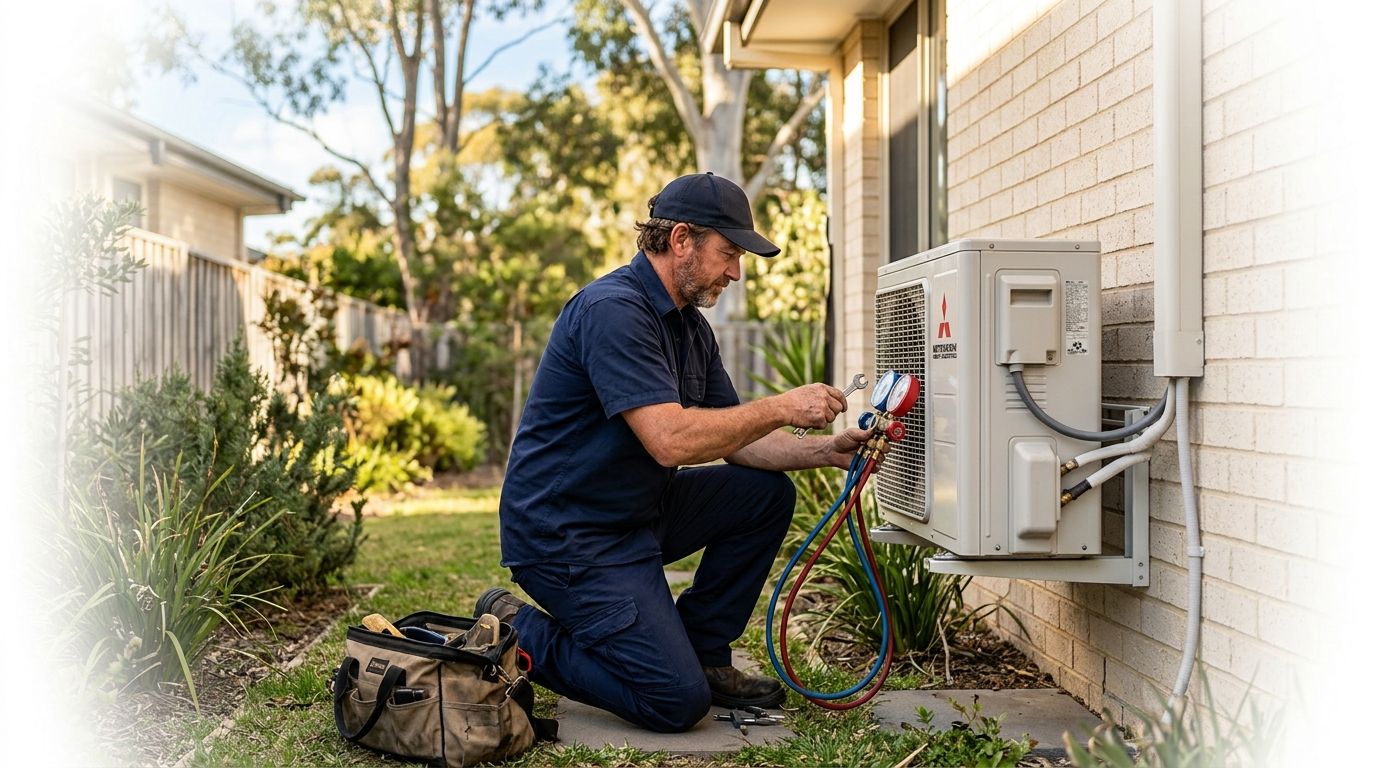
An ARC licence, also known as an ARCtick licence, is a federally regulated credential that any technician or business must hold before they can legally handle fluorocarbon refrigerants in refrigeration and air conditioning equipment in Australia. ARC stands for the Australian Refrigeration Council, the government-authorised body that administers the scheme. Established in 2003, the ARCtick programme now covers more than 130,000 individuals and businesses across the country. If you are hiring someone to install, service or repair your air conditioner, checking that they hold a current ARC licence is one of the most important things you can do as a homeowner.
Key takeaways
The ARC licence scheme exists because air conditioner refrigerant is not something that can be handled carelessly. Fluorocarbon refrigerants such as R32 and R410A, which are used in the vast majority of modern split systems and ducted units, are potent synthetic greenhouse gases. Some older variants also carry ozone-depleting properties. When these gases are vented or leaked into the atmosphere, the environmental damage is significant and measurable.
Australian law takes this seriously. The Ozone Protection and Synthetic Greenhouse Gas Management Act 1989 makes it a federal offence to intentionally discharge fluorocarbon refrigerants into the atmosphere. The penalties are substantial, and they apply to both the technician performing the work and, in some circumstances, the business that hired them. This is not a technicality buried in fine print. It is actively enforced.
The ARCtick licensing scheme was introduced specifically to back up that legislation with a practical framework. To obtain a licence, technicians must complete nationally recognised training and demonstrate that they understand safe refrigerant handling, recovery, recycling and disposal procedures. The scheme ensures that anyone touching refrigerant lines has been assessed as competent to do so without causing preventable emissions.
The scale of the issue is worth understanding. Australia's refrigeration and air conditioning sector is the country's single largest user of synthetic greenhouse gases. Across residential, commercial and industrial applications, the volume of refrigerant in circulation is enormous. That is precisely why the federal government treats licensing in this sector with more rigour than many other trades. A poorly trained technician who vents refrigerant during a routine service is not just cutting corners. They are releasing gases with a global warming potential hundreds of times greater than carbon dioxide.
For homeowners, the practical takeaway is straightforward. An unlicensed installer is not just operating illegally. They are also more likely to mishandle refrigerant in ways that reduce your system's efficiency, void your manufacturer warranty and contribute to emissions that the entire licensing scheme was designed to prevent.
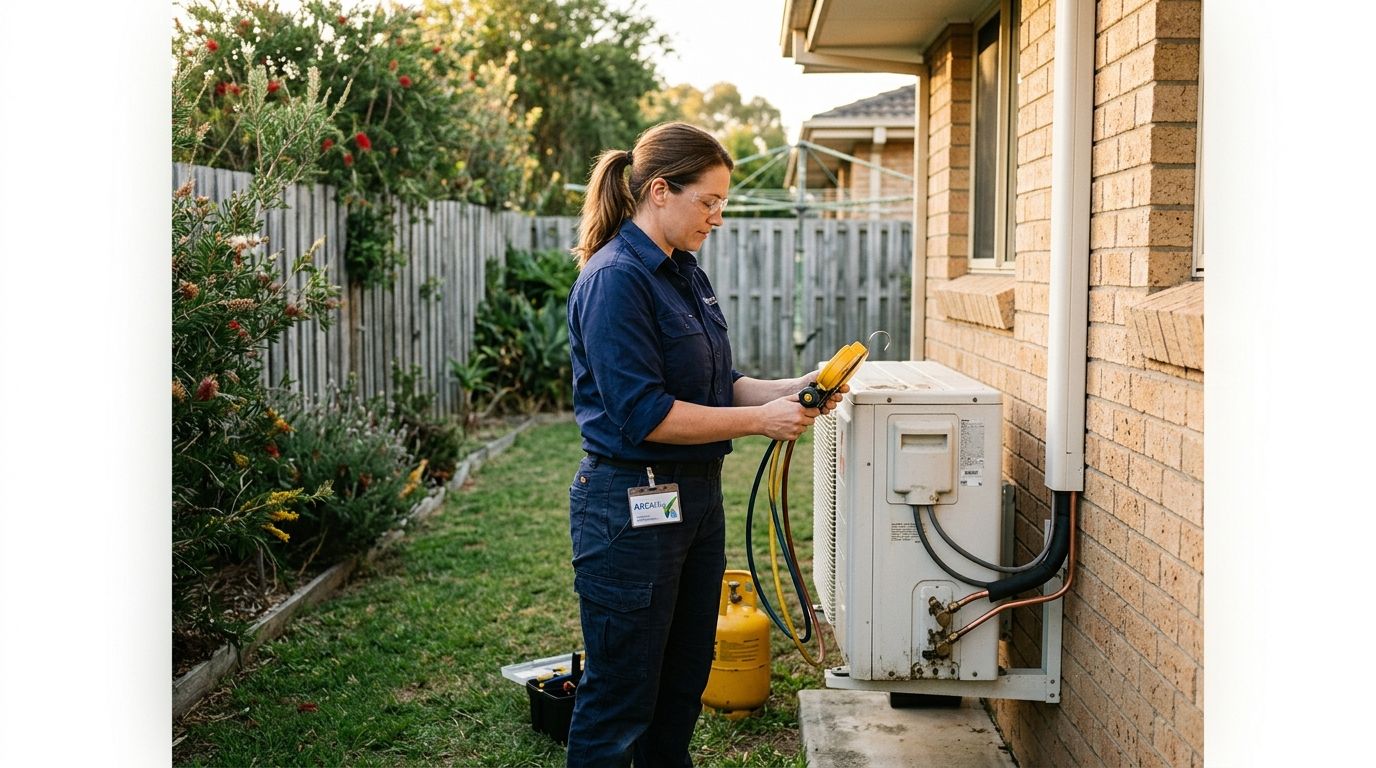
Any person who handles fluorocarbon refrigerant, or works on a component of refrigeration and air conditioning equipment in a way that risks refrigerant being emitted, must hold a current ARC licence. This covers the full range of RAC work: installation, commissioning, servicing, decommissioning and refrigerant recovery. Businesses that buy and sell refrigerants commercially also require their own authorisation. Installing a Daikin Cora 2.5kW split system, for example, involves connecting refrigerant lines and pressure-testing the circuit, which is exactly the kind of work that requires a current ARC licence before a technician can legally touch the job.
There are three main credential types under the ARCtick scheme, each covering a different scope of work. State licensing bodies add another layer on top of these federal requirements. In Queensland, for instance, the QBCC (Queensland Building and Construction Commission) imposes additional conditions that tradespeople must satisfy before they can legally carry out air conditioning work, even if they already hold a federal ARC licence.
| Licence Type | Who Needs It | Scope of Work |
|---|---|---|
| Refrigerant Handling Licence (RHL) | Technicians who install, commission, service or decommission RAC equipment where refrigerant is present | Full refrigerant handling including recovery, recharge, leak testing and system commissioning |
| Restricted Refrigerant Handling Licence | Technicians whose work is limited to a specific, narrower scope such as refrigerant recovery only | Restricted to the particular activity specified on the licence, not full installation or servicing work |
| Refrigerant Trading Authorisation (RTA) | Businesses that purchase and sell fluorocarbon refrigerants commercially | Authorises the buying and selling of refrigerants, not the physical handling or installation work itself |
If you are booking air conditioning installation in Sydney, confirming that your installer holds a current RHL before work begins is a straightforward step that protects you, your system and the environment.
Verifying your installer's ARC licence before any work starts is one of the simplest ways to protect your home, your investment and your peace of mind. It takes less than two minutes using the free licence check tool at arctick.org or the Look for the Tick directory at lookforthetick.com.au, and it tells you immediately whether the person turning up at your door is legally authorised to handle refrigerant.
There are three solid reasons to make this check a habit.
Safety. Refrigerant lines that are incorrectly connected or inadequately pressure-tested can develop slow leaks that are hard to detect. A leaking system loses cooling capacity, works harder than it should and drives up your electricity bill over time. In more serious cases, refrigerant leaks in enclosed spaces can pose health risks. A licensed technician has been trained and assessed specifically to avoid these outcomes.
Legal liability. If an unlicensed technician carries out work on your system and something goes wrong, your home and contents insurer may decline the claim on the grounds that the work was not performed by a qualified tradesperson. Manufacturer warranties carry the same risk. A Mitsubishi Electric MSZ-AP series unit is a significant investment, and pairing it with an unlicensed installer puts both the system warranty and your insurance cover at risk from the moment the job is done.
Environmental responsibility. Intentionally venting fluorocarbon refrigerant is a federal offence under Australian law. Even unintentional emissions caused by poor workmanship can attract scrutiny. Choosing a licensed installer means the refrigerant in your system is handled, recovered and disposed of correctly.
All Frozone Air technicians hold current ARC licences, and you are welcome to ask for credentials before any work begins. If you want to understand exactly what a qualified installer does from start to finish, our guide to how to install a split system aircon walks through the full process in plain language. The short version: there is a lot more to a proper installation than mounting a bracket and running some pipe, which is precisely why the licence requirement exists.
An ARC licence is a legal requirement, not a box-ticking exercise. It protects you as a homeowner, safeguards the environment from harmful refrigerant emissions and ensures your system is installed correctly so it performs the way it should for years to come. Every point covered in this article comes back to one practical conclusion: always confirm your installer is licensed before work begins.
Frozone Air technicians hold current ARC licences and bring hands-on installation and service experience across Sydney and Melbourne. We are straightforward about our credentials, and you are welcome to ask for them before we start any job.
Ready to get started? Request a free air conditioning installation quote and we will get back to you promptly with a clear, no-obligation price. Prefer to talk it through first? Call us on 1300 801 839 and one of our team will be happy to help.
ARC licence applications, including both new applications and renewals, can take up to 30 days to process. This processing time applies regardless of the licence type you are applying for. Technicians should factor this timeline into their training schedule and job planning to avoid working without a valid licence while their application is pending.
Getting an ARC licence is a two-step process. First, complete the required Certificate III in Refrigeration and Air Conditioning (or an equivalent approved qualification) through a registered training organisation. The specific qualification required depends on the licence type you are applying for. Second, submit your application to the Australian Refrigeration Council via arctick.org along with the relevant fee.
A Refrigerant Handling Licence costs $89 for one year, $178 for two years or $267 for three years. A Refrigerant Trading Authorisation costs $280 for one year up to $840 for three years. These fees are set by the Australian Refrigeration Council and are subject to change, so check arctick.org for the current 2026 fee schedule before applying.
ARCtick is the brand name for the Australian Refrigeration Council's national licensing scheme. 'ARC' stands for Australian Refrigeration Council, and the 'tick' refers to the Look for the Tick consumer campaign. That campaign encourages Australians to verify that their refrigeration or air conditioning technician holds a valid ARC licence before hiring them.