

What Is a Reverse Cycle Air Conditioner and How Does It Work?
Wondering what is a reverse cycle air conditioner? Learn how it heats and cools your home, how efficient it is, and which brands Australians trust most.


Wondering what is a reverse cycle air conditioner? Learn how it heats and cools your home, how efficient it is, and which brands Australians trust most.
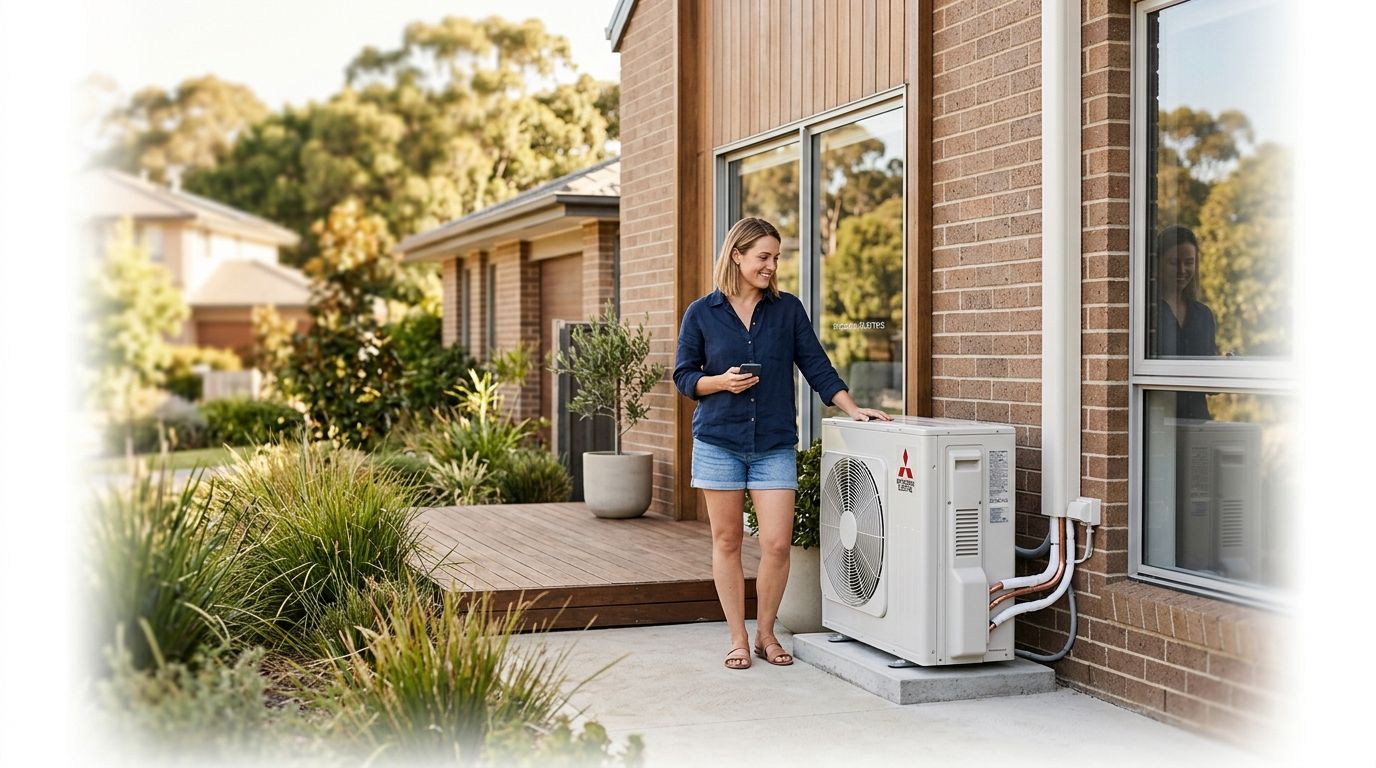
A reverse cycle air conditioner is a single electric system that both cools your home in summer and heats it in winter. It does this by reversing the direction of its refrigeration cycle, moving heat out of your home when it is warm and drawing heat in from outside when it is cold. If you want a broader look at how air conditioning works, we have a full explainer here. The term 'reverse cycle' is not a separate product category. It is a feature built into split systems, multi-split systems and ducted systems alike. This article covers how the technology works, why it is so efficient compared to other heating options, and what to look for when choosing the right system for your home.
Key takeaways
A reverse cycle air conditioner works by moving heat from one place to another using a refrigerant that continuously cycles between liquid and gas states. In cooling mode it pulls heat out of your home and expels it outside. In heating mode it does the opposite, extracting heat from the outside air and releasing it inside. The direction of refrigerant flow is controlled by a component called the reversing valve, which is what makes the whole system possible.
In cooling mode, warm indoor air is drawn across the evaporator coil inside your indoor unit. Liquid refrigerant flowing through that coil absorbs the heat from the air and evaporates into a gas. The compressor then pressurises that gas, raising its temperature further, and pumps it to the outdoor unit where the condenser coil releases the heat to the outside air. The refrigerant condenses back into a liquid, passes through the expansion valve to drop its pressure and temperature, and the cycle starts again, returning cool air to your room.
In heating mode, the reversing valve flips the direction of refrigerant flow. The outdoor unit now acts as the evaporator, absorbing heat from the outside air and evaporating the refrigerant into a gas. That gas is compressed, its temperature rises significantly, and it travels to the indoor unit where the coil now acts as the condenser, releasing warmth into your home. The system is not generating heat by burning electricity directly. It is moving heat that already exists in the outside air, which is why it is far more efficient than a resistive electric heater. Most modern reverse cycle units can extract enough heat to warm your home effectively down to around -15°C outside, making them a practical year-round solution across most Australian climate zones.
The four key stages of the cycle are the same in both modes. Only the direction changes:
Because the system moves heat rather than creates it, a reverse cycle air conditioner can deliver three or more units of heating or cooling energy for every one unit of electricity it consumes. That ratio, known as the coefficient of performance, is what makes reverse cycle technology so much cheaper to run than gas heating or electric bar heaters over a full year.

Reverse cycle air conditioning is the most versatile home climate system available in Australia because it is the only option that heats and cools from a single unit. Compared to gas ducted heating, electric panel heaters and evaporative cooling, reverse cycle consistently delivers lower running costs for year-round comfort. The table below shows how the main options stack up.
| Heating/Cooling Type | Heats and Cools? | Typical Running Cost | Energy Source | Best For |
|---|---|---|---|---|
| Reverse cycle air conditioner | Yes, both | Low (COP of 3 to 5) | Electricity | Year-round comfort in any climate zone |
| Gas ducted heating | Heating only | Moderate (varies with gas tariffs) | Natural gas or LPG | Whole-home heating in colder climates |
| Electric panel heater | Heating only | High (1 unit in = 1 unit out) | Electricity | Occasional use in small spaces |
| Evaporative cooling | Cooling only | Low (cooling only) | Electricity and water | Dry climates, large open-plan homes |
The standout advantage of reverse cycle technology is its efficiency. A typical reverse cycle unit delivers three to five units of heating energy for every one unit of electricity consumed. That ratio, known as the coefficient of performance, makes reverse cycle far cheaper to run than a direct electric panel heater, which converts electricity to heat at a flat one-to-one ratio. For a deeper look at all your heating options, see our guide to types of heaters compared for Australian homes.
Evaporative cooling cannot heat your home at all, and gas ducted systems cannot cool, so both require a separate solution for the other season. A reverse cycle system handles both jobs from a single installation, which also means a single point of maintenance and one set of running costs to manage.
Choosing a reverse cycle system comes down to three decisions: the system type that suits your home's layout, the capacity in kilowatts that matches your room size, and the features and brand that will deliver reliable efficiency over the long term. Getting any one of these wrong can mean a unit that runs constantly, short-cycles, or simply fails to keep up on the hottest and coldest days of the year. Browse our range of split system air conditioning to find a reverse cycle unit suited to your space.
A split system is the most common choice for Australian homes. It consists of one indoor unit and one outdoor unit, making it ideal for a single room or open-plan living area. Installation is straightforward and costs are lower than whole-home alternatives, which is why split systems are the go-to solution for bedrooms, lounge rooms and home offices.
A multi-split system connects two to four indoor units to a single outdoor unit. This suits homes where you want climate control in several rooms without running multiple outdoor units on the side of the house. It is a practical middle ground between a single split system and a full ducted installation.
Ducted reverse cycle systems distribute conditioned air through ceiling vents across the entire home from one central unit. They offer the most consistent whole-home comfort and can be zoned so you only heat or cool the rooms in use. All three system types can be reverse cycle, so the choice is really about how many zones you need and what your budget allows.
Most modern reverse cycle units use inverter technology, which allows the compressor to vary its speed rather than simply switching on and off. This keeps temperatures steady, reduces noise and cuts running costs considerably compared to older fixed-speed systems. For a full breakdown of how this works, read our explainer on what is an inverter air conditioner.
Energy star ratings are the quickest way to compare running costs at a glance. Each additional star represents a meaningful reduction in electricity use over a full year, so a six-star unit will cost noticeably less to run than a three-star model of the same capacity. Check both the cooling and heating star ratings on the label, as they can differ.
Cold-climate heating performance is worth checking if you live in Victoria, the ACT, Tasmania or the Southern Highlands. Look at the minimum operating temperature in the spec sheet. A unit rated to operate at -15°C will keep heating reliably through a Canberra winter, while a cheaper model may lose efficiency or cut out below -5°C.
Three systems we regularly install cover the main capacity brackets. The Daikin Cora 2.5kW (FTXM25WVMA) is an excellent entry-level reverse cycle inverter unit for bedrooms and small rooms. The Mitsubishi Electric MSZ-AP35VGD 3.5kW is a mid-range option with a strong energy star rating, well suited to medium-sized living areas. For larger open-plan spaces, the Fujitsu ASTG18KMTC 5.0kW reverse cycle inverter system delivers the capacity to handle bigger rooms without working flat out. All three are reverse cycle inverter systems and represent solid choices at their respective price points.
Yes, a reverse cycle air conditioner is a type of heat pump. Both work by moving heat from one place to another using a refrigerant cycle rather than generating heat directly. The term 'reverse cycle' is the phrase most commonly used in Australia, while 'heat pump' is more common in Europe and North America.
Most modern reverse cycle units can extract heat from outside air down to around -15°C, which covers the coldest nights in virtually every Australian city. Performance does reduce as temperatures drop, so if you live in a cold-climate area like the ACT or alpine Victoria, check the low-temperature heating capacity in the spec sheet before buying.
Running costs depend on the unit's capacity, its energy star rating and your local electricity tariff. As a rough guide, a 2.5kW reverse cycle split system in heating mode typically costs between $0.10 and $0.25 per hour to run, which is significantly cheaper than a resistive electric heater of equivalent output. An inverter model with a high star rating will sit at the lower end of that range.
No. A reverse cycle air conditioner handles both heating and cooling from a single unit, so there is no need for a separate heater in most Australian homes. The only exception might be a very exposed outdoor area or a space the indoor unit cannot reach, where a supplementary portable heater could fill the gap.
A reverse cycle air conditioner is the most practical and energy-efficient way to keep an Australian home comfortable year-round. One system handles summer cooling and winter heating, runs at a fraction of the cost of gas or resistive electric heating, and works reliably across every climate zone in the country.
At Frozone Air, our licensed technicians handle the full job from sizing and supply through to a clean, compliant installation. You get upfront pricing with no hidden fees and a real booking time, not a vague all-day window. Our team handles air conditioning installation in Sydney with the same straightforward approach on every job.
Call us on 1300 801 839 or request a free installation quote online and we will get back to you with a clear price and a time that suits you.