

Types of Heaters Compared: Which Is the Best Option for Australian Homes?
Comparing all types of heaters for Australian homes — electric, gas, and reverse cycle. Find out which is cheapest to run and best for your space in 2026.


Comparing all types of heaters for Australian homes — electric, gas, and reverse cycle. Find out which is cheapest to run and best for your space in 2026.
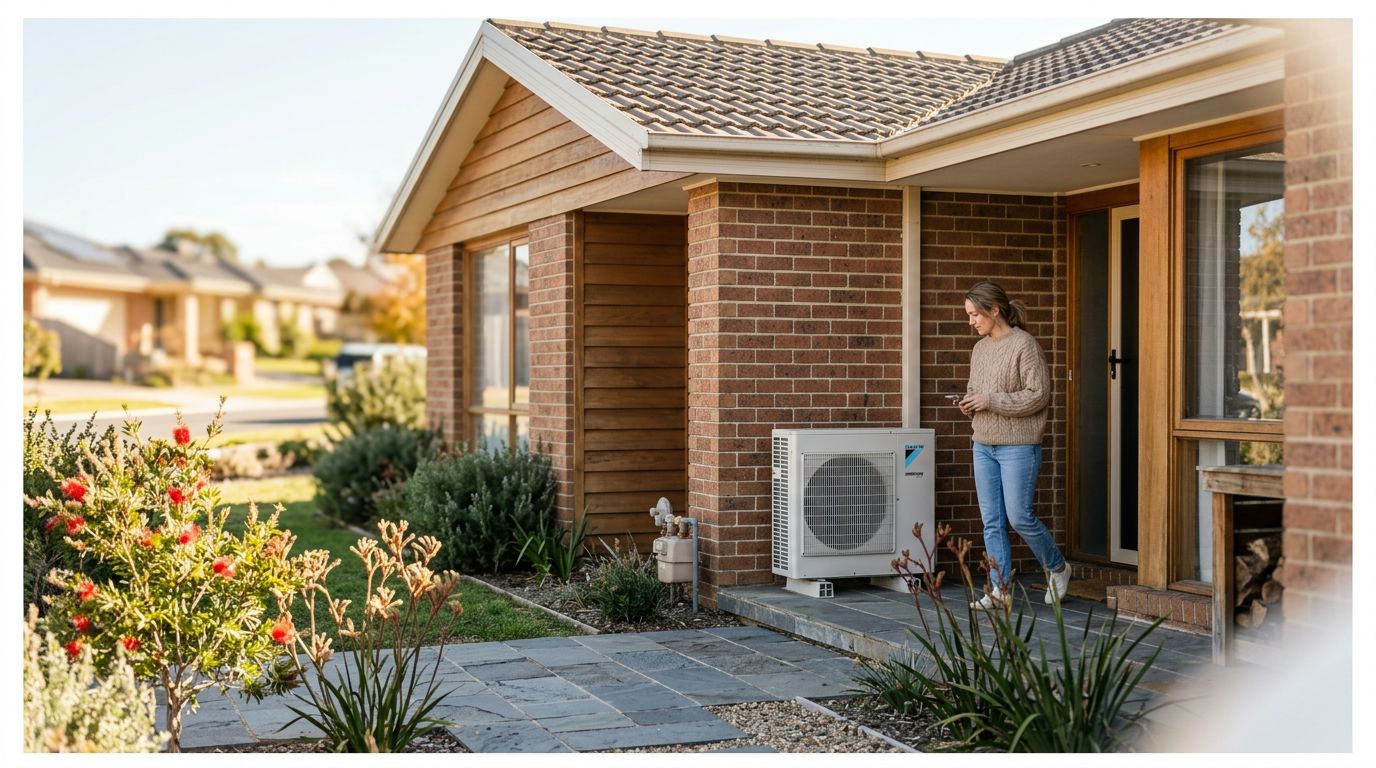
Walk into any hardware store or browse online and the sheer number of heating options can stop you in your tracks. For Australian homeowners facing cold winters in Melbourne, Canberra or the Sydney highlands, choosing between the types of heaters on the market is genuinely confusing. This article cuts through the noise by comparing three broad categories: electric heaters, gas heaters and reverse cycle air conditioners. We will look at each one through the lens of running cost, energy efficiency, safety and suitability for Australian conditions, so you can make a confident decision for your home.
Key takeaways
Electric heaters are the most accessible heating option in Australia, with purchase prices typically ranging from $50 to $300 and no installation required. The catch is that every watt of electricity they draw converts directly into heat with no efficiency multiplier, meaning they are among the most expensive ways to heat a room over a full winter. At current Australian electricity rates, running a 2,400W electric heater for four to five hours a day can add $150 or more to your quarterly bill. They suit renters, occasional use or small rooms where a fixed system is not practical.
Safety is worth keeping in mind with any portable electric heater. Look for models with tip-over switches and thermal cut-outs, and always keep them at least one metre clear of curtains, bedding and furniture. Never leave a portable heater running unattended in a room overnight.
Panel heaters and convection heaters work by warming the air around them, which then circulates naturally through the room. They operate silently, making them a popular choice for bedrooms and studies where fan noise would be disruptive. The trade-off is that they are slow to bring a cold room up to temperature. Once the room is warm, though, they hold that temperature steadily and efficiently. They are best suited to small to medium rooms where background or overnight heating is the goal rather than rapid warmth on demand.
Radiant and infrared heaters work differently. Instead of warming the air, they emit heat that warms people and objects directly in their line of sight. This makes them well suited to draughty spaces, outdoor areas or spot heating where warming the whole room would be wasteful. Fan heaters take the opposite approach, blowing air over a heating element to raise room temperature quickly. They are effective for short bursts of warmth but tend to be noisy and less economical for sustained use over several hours. Both types are best thought of as short-term solutions rather than primary heating for a whole home.
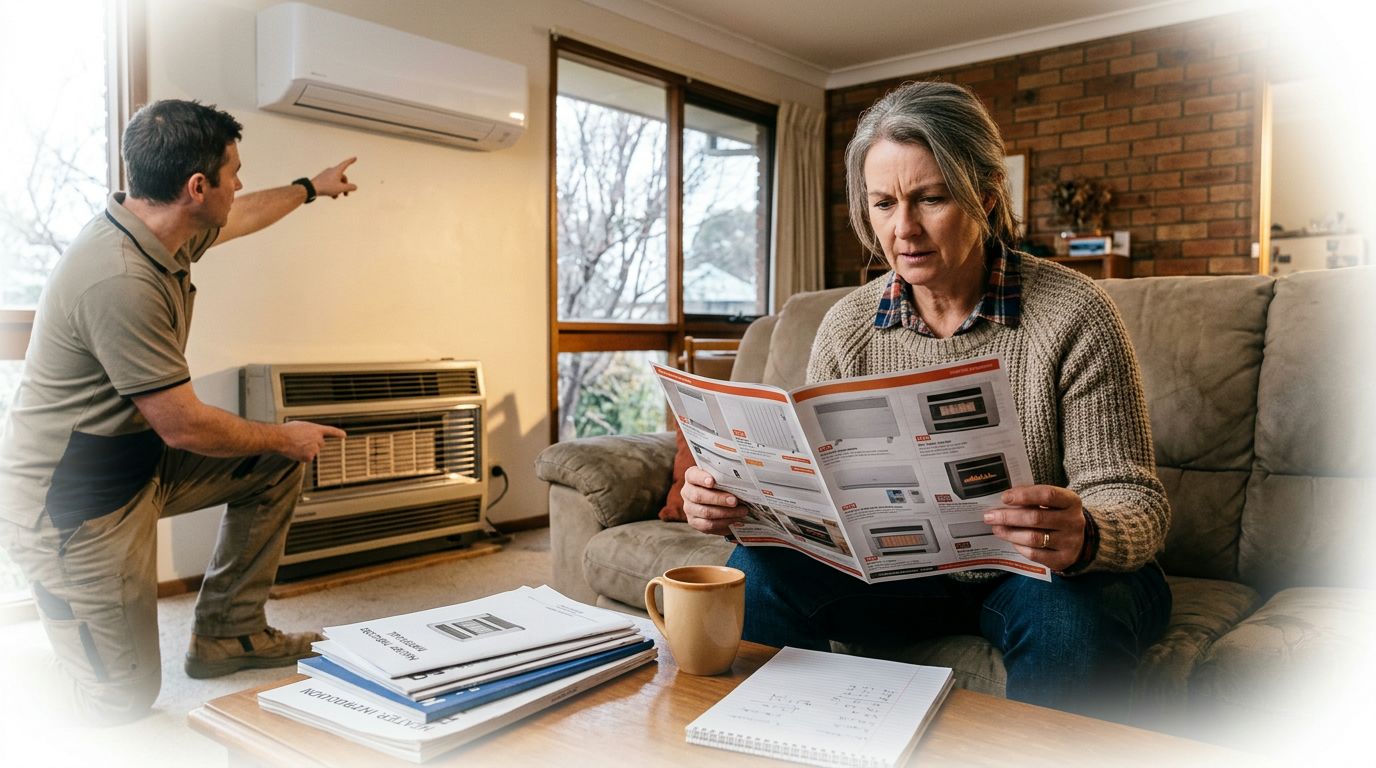
Gas heaters are a strong performer for heating large open-plan living areas, and natural gas has traditionally been cheaper per unit of heat than direct electric resistance heating. There are two distinct types to understand: flued gas heaters, which vent combustion gases outside the home, and unflued gas heaters, which release those byproducts directly into the room. The type you choose has real implications for safety, installation cost and indoor air quality.
Flued gas heaters, whether wall-mounted or ducted, pipe combustion gases outside through a flue. This makes them significantly safer for indoor air quality and better suited to large rooms where you want the heater running for extended periods. The Rinnai Energysaver range is a well-regarded example of a flued wall heater that Frozone Air carries, offering reliable output with a permanent, professionally installed setup. The trade-off is that flued models require a licensed gas fitter to install and are not portable.
Unflued gas heaters are portable and cheaper to buy upfront, but they release water vapour, CO2 and trace amounts of carbon monoxide directly into your living space. This is not a trivial concern, particularly in well-sealed modern homes. Read our guide on Are Gas Wall Heaters Safe? for a detailed breakdown of the risks and what Australian standards say about ventilation requirements. If you do use an unflued model, always crack a window open and never run it in a bedroom or small enclosed space.
For primary heating, flued is the right choice. Unflued models are best reserved for occasional use in well-ventilated areas. Gas prices across Australia have risen considerably in recent years, and the long-term cost advantage that gas once held over reverse cycle air conditioning has narrowed significantly. For many households, the economics now favour electric heat pump heating over gas.
A reverse cycle split system air conditioning unit is, for most Australian homes, the most efficient and cost-effective way to heat a room. Rather than generating heat by burning fuel or converting electricity directly into warmth, a reverse cycle system works as a heat pump. It extracts heat energy from the outside air and moves it indoors, even when temperatures outside are quite low. This process delivers a coefficient of performance (COP) of 3 to 5, meaning for every 1 kilowatt of electricity consumed, you get 3 to 5 kilowatts of heating output. Compare that to a direct electric heater with a COP of exactly 1, or a gas heater where efficiency losses through the flue reduce the effective output, and the advantage is clear.
Modern reverse cycle systems also handle Australian summers, so you are buying one appliance that covers both seasons. There is no combustion involved, which means no indoor air quality concerns, no carbon monoxide risk and no need for ventilation beyond normal room airflow. Inverter-driven compressors modulate their output continuously to hold your target temperature precisely, rather than cycling on and off at full power the way older fixed-speed systems did. This is both more comfortable and more economical over a full heating season.
Cold-climate performance is worth highlighting for readers in Victoria, the ACT or the NSW highlands. Premium models from Daikin, Mitsubishi Electric and Panasonic are rated to operate effectively down to -15°C outside, which covers even the coldest Australian winter nights. The Daikin Cora series, including the popular FTXM25Y at 2.5kW, is a well-priced entry point for small to medium rooms and is one of the models Frozone Air installs regularly. The Mitsubishi Electric MSZ-AP series, such as the MSZ-AP25VGD at 2.5kW, is another top-tier option known for whisper-quiet operation and high energy star ratings, making it a favourite for bedrooms and studies.
The Panasonic CS-Z series rounds out the premium tier, with strong cold-climate credentials and reliable long-term performance. All three brands are available through Frozone Air with professional installation included.
A single split system heats and cools one zone effectively, making it the most popular starting point for homeowners who want to upgrade one or two key rooms. Installation is straightforward and the upfront cost is manageable, typically starting from around $1,500 to $2,500 fully installed for a 2.5kW unit depending on the brand and site conditions.
For whole-home heating across multiple rooms, a ducted reverse cycle system is the better solution. A single outdoor unit connects to a network of ceiling vents throughout the house, delivering consistent temperature control to every room from one central system. Frozone Air installs both split systems and ducted systems, so the right choice depends on your home's layout, your budget and how many rooms you need to heat. If whole-home comfort is the goal, take a look at our ducted air conditioning page for system options and installation details.
Choosing between the types of heaters available in Australia comes down to balancing upfront cost, running cost, safety and how you actually use the space. The table below puts all eight major heater types on the same page so you can compare them at a glance, using relative terms rather than exact dollar figures to keep the comparison useful regardless of when you read it.
| Heater Type | Upfront Cost | Running Cost | Efficiency | Best For | Safety Notes |
|---|---|---|---|---|---|
| Panel / Convection Heater | Low | High | Low (COP 1) | Small rooms, background or overnight heating | Keep clear of curtains and bedding; use tip-over switch models |
| Fan Heater | Low | High | Low (COP 1) | Quick spot heating, short bursts | Never leave unattended; keep away from soft furnishings |
| Radiant Heater | Low | High | Low (COP 1) | Draughty spaces, outdoor areas, spot heating | High surface temperatures; keep children and pets at a safe distance |
| Oil-Filled Column Heater | Low to Medium | High | Low (COP 1) | Bedrooms, slow sustained warmth | Slow to heat up; lower surface temperature than radiant models |
| Unflued Gas Heater | Low to Medium | Medium | Medium | Occasional use in well-ventilated areas only | Releases CO2 and moisture indoors; never use in bedrooms or sealed rooms |
| Flued Gas Heater | Medium to High | Medium | Medium to High | Large open-plan living areas on a gas connection | Combustion gases vented outside; requires licensed gas fitter installation |
| Reverse Cycle Split System | Medium | Low | Very High (COP 3 to 5) | Single rooms or zones, year-round heating and cooling | No combustion, no indoor air quality concerns |
| Ducted Reverse Cycle | High | Low to Medium | Very High (COP 3 to 5) | Whole-home heating and cooling across multiple rooms | No combustion, no indoor air quality concerns |
The pattern in this table is hard to ignore. Portable electric heaters are cheap to buy but expensive to run, gas sits in the middle on both counts, and reverse cycle systems cost more upfront but deliver the lowest running costs by a significant margin. For most Australian homeowners, a reverse cycle split system offers the best balance of efficiency, safety and year-round value. If you want a deeper cost breakdown across these categories, our article on the best heating options for Australian homes covers the numbers in more detail.
The right heater depends on your situation, but the decision framework is fairly straightforward. Renters or anyone needing occasional spot heating can get by with a portable electric heater, keeping upfront costs low and avoiding any installation. If your home is already connected to natural gas and you have a large open-plan living area to heat, a quality flued gas heater such as the Rinnai Energysaver is a practical choice. For most homeowners, though, a reverse cycle split system is the smartest long-term investment. Models like the Daikin Cora FTXM25Y and the Mitsubishi Electric MSZ-AP25VGD deliver heating and cooling from a single unit, with running costs that leave every other option on this list well behind.
Frozone Air installs split systems and ducted reverse cycle systems across Sydney and Melbourne, with upfront pricing and real booking times. If you are ready to upgrade, get in touch with our team for air conditioning installation in Sydney and request a free quote today.
Reverse cycle air conditioners are the most efficient type of heater available in Australia. They operate as heat pumps with a coefficient of performance of 3 to 5, meaning they deliver 3 to 5 kilowatts of heat for every 1 kilowatt of electricity consumed. No gas heater or direct electric heater can match that efficiency ratio.
Flued gas heaters have traditionally been cheaper to run than direct electric resistance heaters, but that gap has narrowed considerably as gas prices have risen across Australia. Reverse cycle air conditioners now outperform both on running cost in most states. If you are comparing gas to electric, the type of electric heater matters enormously.
Unflued gas heaters release combustion byproducts including CO2, water vapour and trace carbon monoxide directly into the room. They are not recommended for bedrooms, small rooms or well-sealed modern homes. If you use one, always ensure adequate ventilation by keeping a window open.
Yes. Modern reverse cycle systems from brands like Daikin and Mitsubishi Electric are rated to operate effectively in temperatures as low as -15°C outside, making them suitable for cold Australian winters in Victoria, the ACT and the NSW highlands.