

New Air Conditioner Price in Australia: What to Expect in 2026
Wondering about new air conditioner prices in Australia? Get 2026 cost ranges for split systems, ducted, and multi-split units — plus what affects the final price.


Wondering about new air conditioner prices in Australia? Get 2026 cost ranges for split systems, ducted, and multi-split units — plus what affects the final price.
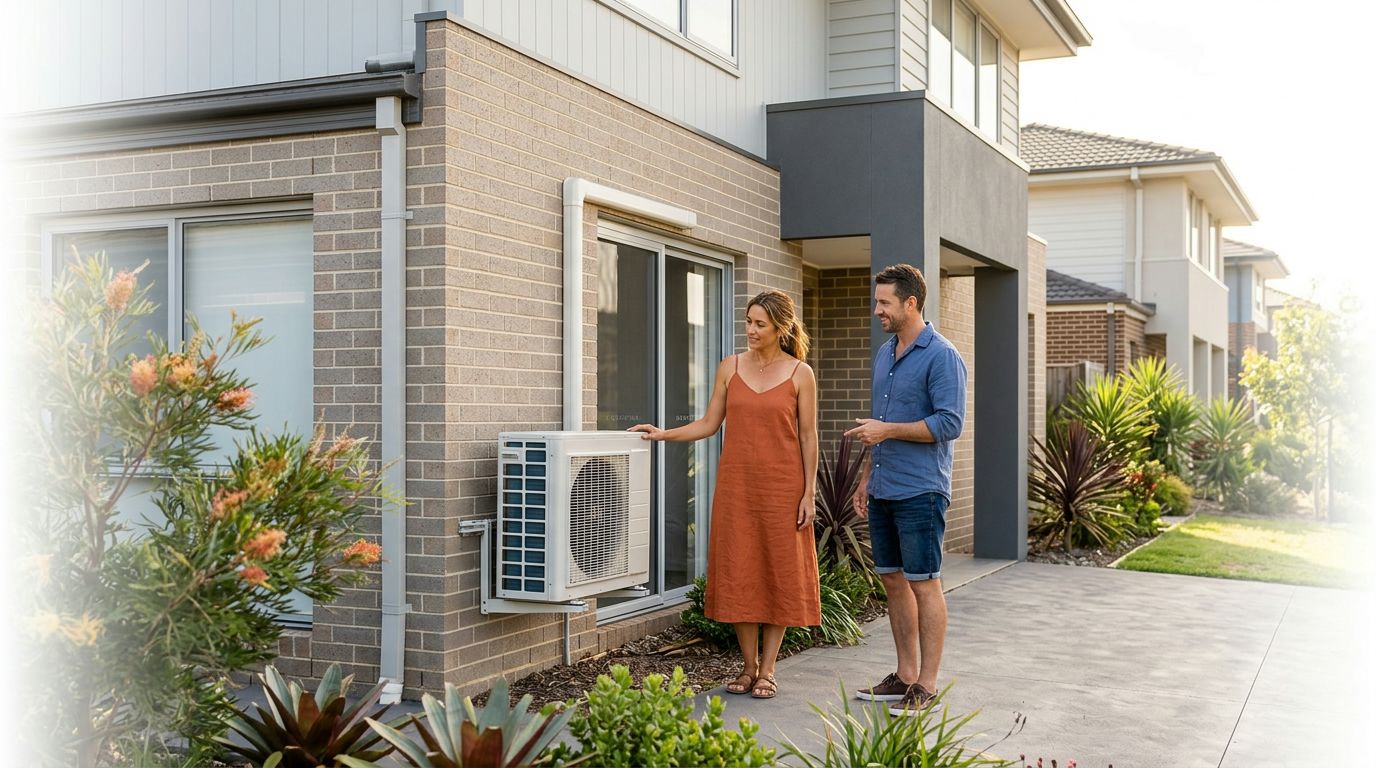
The new air conditioner price you see advertised is almost never the full story. There's the unit cost, the installation labour, any electrical work required, and then the ongoing running costs that follow you for the life of the system. Each of these figures can vary significantly depending on the system type, your home's layout and the brand you choose.
This guide covers the complete picture for 2026: what you'll pay for the unit itself, what a professional installation typically adds to that figure, and which factors push the total price up or down. We cover four main system types: wall-mounted split systems, multi-split systems, ducted reverse-cycle systems and portable or window units.
By the end, you'll have a realistic budget range for each option and a clear sense of which system suits your situation.
Key takeaways
New air conditioner prices in Australia in 2026 range from around $400 for a basic portable unit through to $20,000 or more for a fully ducted whole-home system. The table below gives you a quick reference across the four main system types, with typical unit costs, installation costs and total installed price ranges side by side.
| System Type | Unit Cost (AUD) | Typical Installation Cost | Total Installed Price Range | Best For |
|---|---|---|---|---|
| Wall-Mounted Split System | $700 – $3,500 | $600 – $2,000 | $1,500 – $5,500 | Single rooms, bedrooms, small living areas |
| Multi-Split System | $2,500 – $6,000+ | $1,000 – $3,000+ | $3,500 – $9,000+ | Multiple rooms without ducting |
| Ducted Reverse-Cycle | $4,000 – $10,000+ | $5,000 – $10,000+ | $9,000 – $20,000+ | Whole-home climate control |
| Portable / Window Unit | $400 – $1,200 | Nil (DIY setup) | $400 – $1,200 | Renters, temporary cooling, tight budgets |
These ranges reflect real-world installed costs across Sydney and Melbourne in 2026. Your actual quote will depend on factors like ceiling height, wall material, distance between indoor and outdoor units, and whether any additional electrical work is needed. Use these figures as a planning guide, not a fixed price.
Multi-split systems sit in the middle ground. One outdoor unit powers two or more indoor heads, which keeps the outdoor footprint small while covering several rooms. Ducted systems are the premium whole-home option, hiding all the hardware in the roof cavity for a clean finish throughout the house. Portable and window units require no professional installation at all, making them the fastest and cheapest way to get cooling into a space.
Split system air conditioning is the most popular choice for Australian homes, and it's easy to see why. A single indoor wall unit paired with an outdoor compressor can heat or cool a room efficiently, and the installed price is accessible for most budgets. Units start from around $700 for a basic 2.5kW model and climb to $3,500 or more for a high-capacity 7.1kW premium system.
The Daikin Cora 2.5kW (FTXM25Y) is one of the most commonly installed entry-level to mid-range models we see. Unit cost sits at roughly $900 to $1,100, with a standard back-to-back installation bringing the total to around $1,800 to $2,200. Back-to-back installs are the most affordable installation type because they minimise pipe runs and labour time. It's a reliable, energy-efficient choice for a standard bedroom or small living area.
Step up to the Mitsubishi Electric MSZ-AP Series and you're looking at unit prices from approximately $1,000 for a 2.5kW model through to $2,800 for a 7.1kW unit, covering everything from small bedrooms to large open-plan living areas. The Fujitsu ASTG Series, including the popular ASTG09KMCA 2.5kW, sits in a similar bracket at around $950 to $1,300 for the unit alone. Both are solid options for readers comparing brands before requesting a quote.
Frozone Air installs all major brands including Daikin, Mitsubishi Electric and Fujitsu across Sydney and Melbourne. If you're unsure which capacity suits your room size, our team can advise during a free quote.
Ducted reverse-cycle air conditioning is the whole-home solution, delivering conditioned air through a network of ducts and ceiling vents to every room in the house. The wide installed price range of $9,000 to $20,000 or more reflects just how many variables are involved in a ducted job.
Home size is the biggest driver. A three-bedroom home might come in at the lower end of that range, while a large five-bedroom property with multiple zones will push well past $15,000. The number of zones you want to control independently, the accessibility of your roof cavity, and whether new ductwork needs to be laid from scratch all add to the final figure. Homes with existing ductwork in good condition can save several thousand dollars on a replacement job.
ActronAir and Daikin are two of the most popular ducted brands Frozone Air installs. Both offer zoning capabilities and strong energy ratings suited to Australian conditions. ActronAir is manufactured locally and is well regarded for its performance in the Australian climate, while Daikin's ducted range offers broad capacity options from smaller homes through to large commercial spaces.
Ducted pricing has a lot of moving parts, so a site inspection is always the most reliable way to get an accurate number. For a full breakdown of what drives ducted costs, read our ducted air conditioning cost guide.
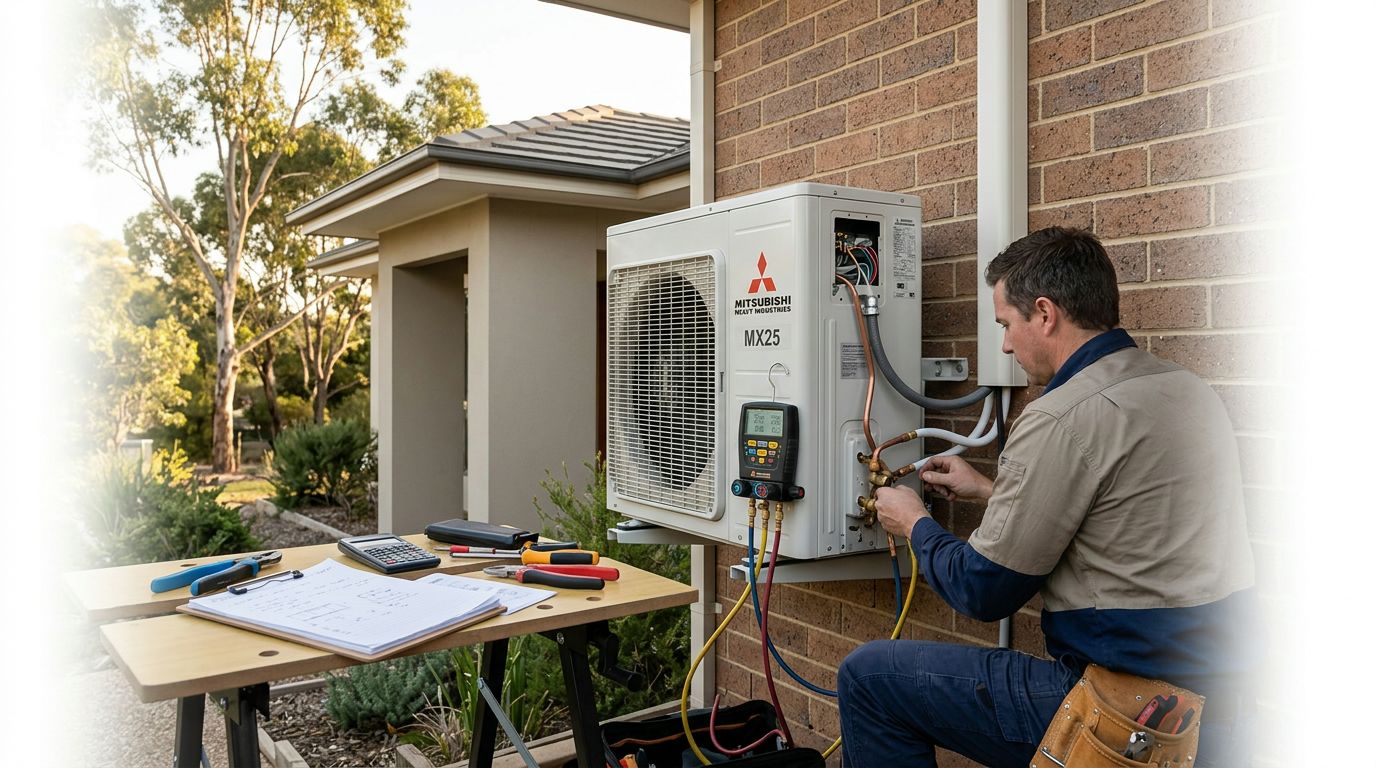
Two homeowners can get quotes that differ by thousands of dollars for what looks like the same job. System type, brand, installation complexity, electrical requirements and location all push the final price up or down. Understanding these five variables before you request a quote means you'll be better placed to compare what you're actually being offered.
Getting the capacity right is one of the most important decisions you'll make, and it affects both the upfront cost and what you pay to run the system for years to come. An undersized unit runs flat out trying to reach your target temperature and never quite gets there. An oversized unit short-cycles, switching on and off too frequently, which wears out the compressor faster and leaves the room feeling clammy rather than comfortable.
Capacity is measured in kilowatts, and the right figure depends on your room size, ceiling height, insulation, window area and local climate. A 2.5kW unit suits a standard bedroom in most Australian climates, while a large open-plan living area might need 7kW or more. Getting professional advice on what size air conditioner you need before you buy is worth the time.
Budget, mid-range and premium models all do the same basic job, but they differ in energy efficiency, reliability, noise levels and the quality of features like Wi-Fi control and air purification. Budget brands typically sit at the lower end of the installed price range and are fine for occasional use. Mid-range options from Daikin, Fujitsu and Mitsubishi Electric offer a better balance of upfront cost and long-term running efficiency. Premium tiers within those same brands add higher star ratings, quieter operation and more sophisticated zoning or smart-home integration.
For most Australian households, a mid-range model from a reputable brand is the sweet spot. You pay a little more upfront but save on electricity bills and are less likely to face repair costs in the first five years.
A straightforward back-to-back split system install on a single-storey weatherboard home is the cheapest scenario. Complexity adds cost quickly. Double-storey homes require longer pipe runs and more labour to route refrigerant lines safely. Brick or rendered walls take longer to core-drill than weatherboard. A large distance between the indoor and outdoor units means more copper pipe, more insulation and more time on the job. For ducted systems, roof cavity access is a major factor. A tight, poorly ventilated roof space with limited clearance can add several hours of labour to the job.
Older homes often don't have a dedicated circuit for an air conditioner, and some switchboards aren't rated to handle the additional load. If your installer identifies that a dedicated circuit or switchboard upgrade is needed, budget an extra $300 to $800 or more on top of the installation quote. This work must be carried out by a licensed electrician and is non-negotiable for safety and compliance reasons. It's worth asking about this upfront so the cost doesn't come as a surprise on the day.
Metro areas like Sydney and Melbourne generally have more competition among installers, which can keep pricing sharper. Regional and rural areas often attract higher labour rates and call-out fees, and parts may take longer to source. If you're outside a major metro area, factor in a 10 to 20 per cent premium on installation labour as a rough guide.
Given how much these variables can move the final number, getting two or three quotes from licensed installers is always sensible. For a full breakdown of what drives labour and installation fees, see our air conditioning installation cost guide.
Getting good value on a new air conditioner comes down to five practical decisions: buying and installing through the same supplier, choosing the right capacity, prioritising energy efficiency, opting for reverse-cycle over single-function systems, and timing your installation outside the summer rush. None of these require you to cut corners on quality.
New air conditioner prices in Australia in 2026 range from around $1,500 installed for a basic split system through to $20,000 or more for a full ducted whole-home system. The right choice depends on your home size, budget and how you live in the space. Getting a proper quote from a licensed installer is the only way to land on an accurate number for your specific situation.
Frozone Air supplies and installs all major brands including Daikin, Mitsubishi Electric and Fujitsu across Sydney and Melbourne. Our pricing is transparent, our installers are fully licensed, and we handle everything from the unit supply through to the electrical work and commissioning. No surprises on the day.
Call us on 1300 801 839 or request a free quote online and one of our team will get back to you with a clear, itemised price for your home.
A new split system air conditioner costs between $1,500 and $5,500 fully installed in Australia in 2026, depending on the brand, capacity and installation complexity. A basic 2.5kW model in a standard back-to-back installation typically comes in at the lower end of that range. Ducted systems are significantly more expensive, with installed costs generally starting at $9,000 and rising to $20,000 or more for larger homes.
The average installed price for a split system air conditioner in Australia sits between $2,000 and $3,500 for a mid-range 2.5kW to 5kW unit from a reputable brand. The unit itself typically costs $900 to $2,000, with installation labour adding $600 to $1,500 on top. More complex installations, such as double-storey homes or long pipe runs, will push the total higher.
No. Refrigerant handling in Australia is legally restricted to licensed technicians, which means the core installation work on any split or ducted system cannot be done as a DIY job. Attempting to self-install can void the manufacturer's warranty and create safety and compliance issues. The only air conditioning types that can be set up without a licensed installer are portable units and some window units, which require no refrigerant connections.
A quality split system from a reputable brand will typically last 10 to 15 years with regular servicing. Ducted systems have a similar lifespan, though the ductwork itself can last longer if it remains in good condition. Annual servicing, keeping filters clean and not running the system at extreme settings for extended periods are the main factors that extend the life of any air conditioning unit.