

How to Clean Your Air Conditioning Ducts: What's Involved and Is It Worth It?
Wondering if air duct cleaning is worth it? We explain what the process involves, when you actually need it, and what it costs in Australia.


Wondering if air duct cleaning is worth it? We explain what the process involves, when you actually need it, and what it costs in Australia.
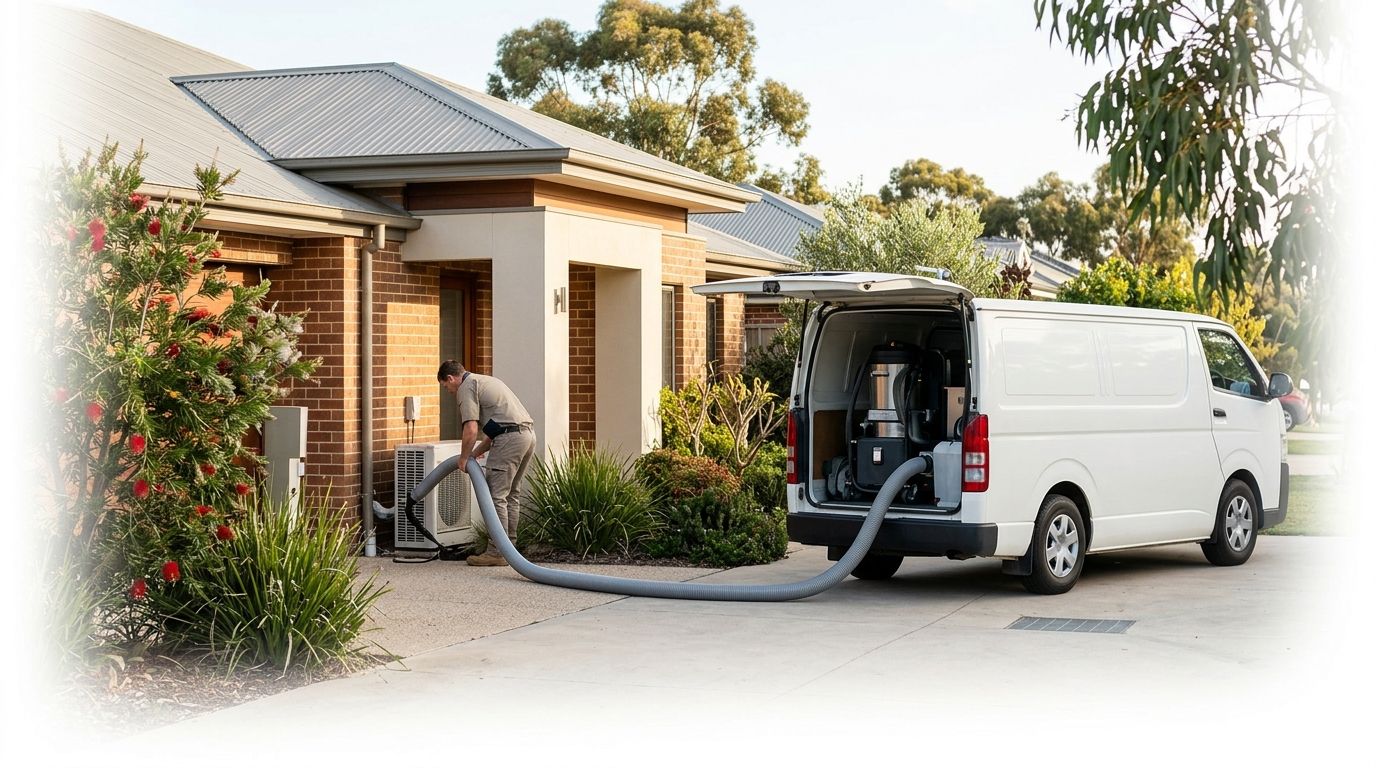
Most homeowners give their air conditioning filters a wipe down every few months and call it done. Fair enough. But the ductwork hidden inside your walls and ceiling? That rarely gets a second thought. Air duct cleaning is the process of removing accumulated dust, debris, allergens, mould spores and other contaminants from the internal surfaces of a ducted air conditioning system, including the supply and return ducts, grilles and the air handler unit itself.
Over time, every ducted system collects a build-up of particles that circulate through your home every time the system runs. For households with pets, allergy sufferers or older ductwork, that build-up can become significant.
This article covers what the cleaning process actually involves, when it's genuinely necessary, whether DIY is a realistic option and whether the cost is worth it for most Australian homes.
Key takeaways
Professional air duct cleaning is a structured process that goes well beyond vacuuming out a grille or two. A qualified technician works through the entire duct network systematically to dislodge and extract contaminants without spreading them back into your living spaces. Here is what a thorough job looks like from start to finish.
A thorough professional job typically takes two to four hours for an average-sized home, depending on the number of outlets and the condition of the system. One thing to confirm before booking is that the operator uses HEPA-filtered vacuum equipment. Without HEPA filtration, fine particles dislodged during the cleaning process can be exhausted back into the home, which defeats the purpose entirely.
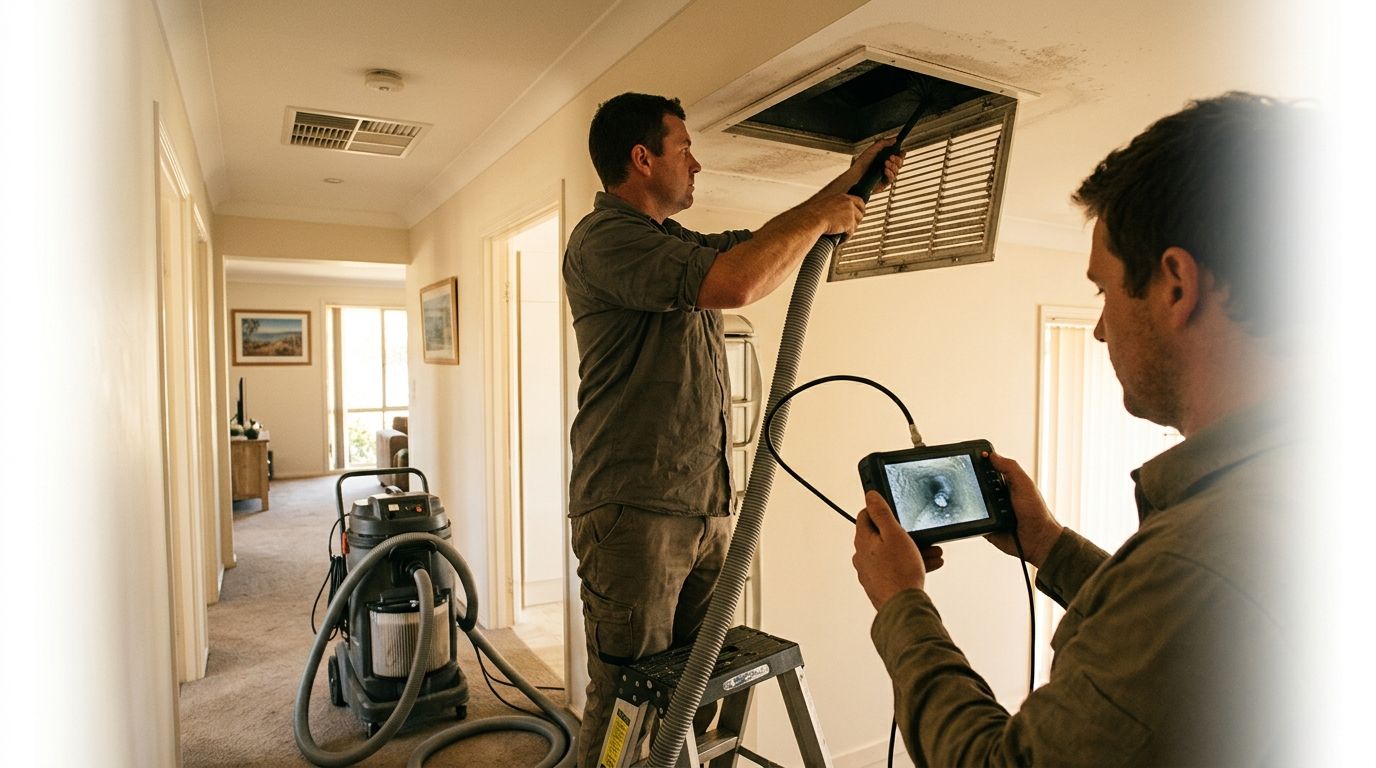
Not every ducted system needs cleaning on a fixed schedule. The decision should be based on what you can actually see, smell and measure, not a calendar reminder. These are the clearest signs that your ductwork has reached a point where professional cleaning is genuinely warranted, rather than just a nice-to-have.
The single most effective thing you can do to keep your ducts cleaner for longer is to clean or replace your return-air filter regularly. A clogged filter lets far more dust and debris bypass into the duct system. Our guide on how to clean your ducted aircon filter walks through exactly how to do this properly.
For most Australian homes with a well-maintained ducted system, professional duct cleaning every three to five years is a reasonable interval. That assumes the return-air filter is being cleaned every four to six weeks during heavy use periods, which is the real frontline defence against duct contamination.
Homes with pets, allergy sufferers or anyone with asthma may benefit from cleaning closer to the three-year mark. If you have recently completed a renovation or moved into a home with no service records, it makes sense to get an inspection done regardless of how long it has been. The condition of the system matters far more than the date on a calendar.
Filter maintenance, by contrast, is not optional. During peak summer and winter periods, a four to six week cleaning cycle for your return-air filter is the minimum. Neglecting the filter is the fastest way to undo any benefit from a professional duct clean.
The value of duct cleaning is genuinely debated, and it is worth being straight about that. Bodies like the US Environmental Protection Agency have noted there is no evidence that duct cleaning prevents health problems in the absence of specific contamination issues such as mould, infestation or heavy debris accumulation. For a clean, well-maintained system, routine duct cleaning is unlikely to produce a measurable health benefit. That said, when ducts are visibly contaminated, the case for cleaning is much stronger.
The honest verdict is this: duct cleaning is worth it in specific circumstances, and those circumstances are outlined in the signs section above. It is not a necessary annual expense for every household, and any operator who tells you otherwise is overselling the service.
On cost, professional duct cleaning in Australia typically ranges from $300 to $700 for a standard home. The variation comes down to system size, the number of outlets and the condition of the ductwork. Larger homes with 10 or more outlets, or systems with significant contamination, will sit toward the upper end of that range. Some operators charge separately for the air handler unit, so it is worth confirming what is included before you book.
The cost-benefit calculation shifts considerably depending on your situation. For a household with a severe allergy sufferer, a system full of pet hair and dander, or visible mould at the grilles, $400 to $500 for a thorough clean is money well spent. For a two-year-old system in a pet-free home with a clean filter history, it probably is not.
When the conditions genuinely call for it, a thorough professional clean delivers real, measurable improvements. Here is what you can reasonably expect:
If the signs are there and you are ready to act, a professional air conditioning cleaning service from a qualified technician is the right next step.
Homeowners can handle some parts of duct maintenance themselves, but the internal ductwork is a different matter entirely. For surface-level upkeep, DIY is not only realistic but genuinely encouraged. For a full internal clean, you need a licensed technician with the right equipment.
Here is what you can reasonably do yourself:
What you should not attempt without professional equipment:
The bottom line is straightforward. Regular filter cleaning and grille maintenance are well within any homeowner's capability and should be done consistently. For a full internal clean, book a licensed technician. Frozone Air's technicians service ducted systems from brands including Daikin, Mitsubishi Electric, Fujitsu and ActronAir, so you are covered regardless of what is installed in your home. An air conditioning service Sydney technician has the equipment and training to do the job properly without making the problem worse.
Air duct cleaning is a legitimate and worthwhile maintenance task, but it is not something every home needs every year. The decision should be driven by what you can actually see, smell and measure in your system, not a fixed schedule or a sales call. For most well-maintained homes, a professional clean every three to five years is plenty.
The most impactful thing you can do between professional services is keep your return-air filter clean. A fresh filter is your first line of defence against duct contamination and costs nothing but a few minutes every four to six weeks.
If your system is showing the signs covered in this article, or you simply have no idea when it was last serviced, it is worth getting a professional set of eyes on it. Call Frozone Air on 1300 801 839 to book a ducted system service or request a free quote, or book online at frozoneair.com.au.
The clearest signs are visible mould growth on or around your vent grilles, a musty smell that appears when the system runs, excessive dust settling on surfaces shortly after cleaning, or noticeably reduced airflow from certain vents. If you have recently completed a renovation or moved into a home with no service history, an inspection is a sensible first step regardless of how the system looks.
For an average-sized Australian home, a thorough professional duct clean typically takes two to four hours. Larger homes with more outlets, or systems with significant contamination or mould, can take longer. The job should include the air handler unit and fan coil, not just the duct runs, so factor that into your expectations when booking.
Heavily contaminated ducts containing mould, pest debris or large accumulations of allergens can contribute to respiratory irritation, allergy flare-ups and worsened asthma symptoms. For most homes with modest dust build-up and no mould, the health impact is less clear-cut. The risk is highest for households with young children, elderly residents or anyone managing a respiratory condition.
Professional air duct cleaning in Australia generally costs between $300 and $700 for a standard home in 2026. The price varies based on system size, the number of outlets and the condition of the ductwork. Always confirm whether the quote includes the air handler unit, as some operators charge for this separately. Get at least two quotes and check that the operator uses HEPA-filtered vacuum equipment.