

Different Types of Heaters for Home: Which Is Right for Your Australian Home?
Explore the main types of heaters for home use in Australia — from reverse cycle split systems to panel heaters — and find out which suits your space and budget.


Explore the main types of heaters for home use in Australia — from reverse cycle split systems to panel heaters — and find out which suits your space and budget.
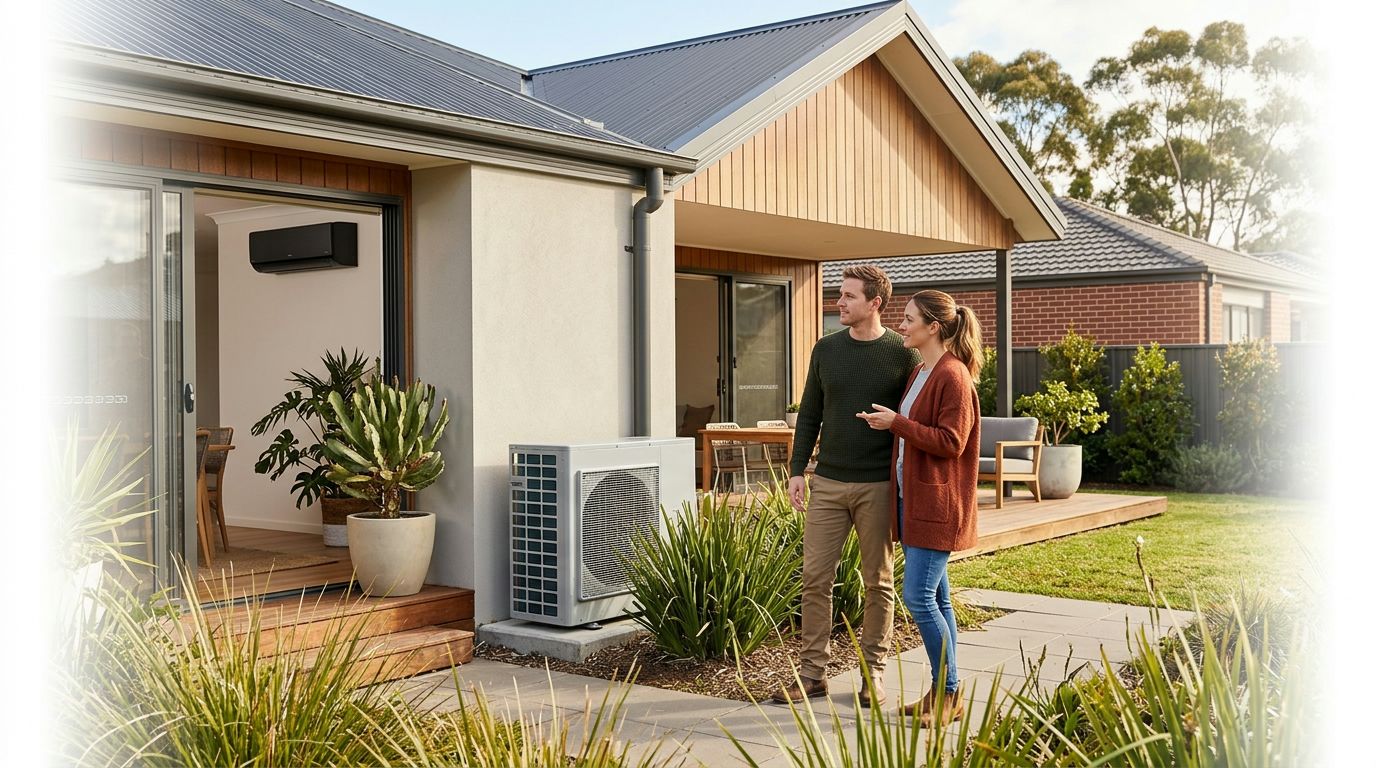
Choosing a heater for an Australian home is trickier than it sounds. A household in Hobart faces months of genuine cold, while a home in Brisbane might only need warmth on a handful of nights each year. Understanding the different types of heaters for home use means weighing up running costs, upfront price, room size and whether you want heating alone or a system that cools in summer too.
This article covers six main options: reverse cycle split systems, ducted reverse cycle systems, panel and convection heaters, radiant and infrared heaters, oil-filled column heaters and gas heaters. Each suits a different combination of climate, budget and home layout. Read on to find out which one fits your situation.
Key takeaways
For a deeper cost breakdown, see our guide to best heating for home in Australia. The table below gives you a fast overview of how the six main heater types stack up across the factors that matter most.
| Heater Type | Heat Method | Best For | Running Cost (relative) | Upfront Cost (relative) | Heats Whole Home? |
|---|---|---|---|---|---|
| Reverse Cycle Split System | Heat pump (refrigerant cycle) | Single rooms, open-plan living areas | Low | Medium | No (zone by zone) |
| Ducted Reverse Cycle | Heat pump (refrigerant cycle) | Whole-home heating and cooling | Low to medium | High | Yes |
| Panel/Convection Heater | Electric resistance, convection airflow | Small rooms, occasional use | High | Low | No |
| Radiant/Infrared Heater | Infrared radiation | Spot heating, outdoor areas | High | Low | No |
| Oil-Filled Column Heater | Electric resistance, radiant and convection | Bedrooms, small living spaces | High | Low | No |
| Gas Heater | Natural gas or LPG combustion | Larger rooms, homes with existing gas | Medium | Medium to high | Ducted versions can |
This table is a general guide only. Actual running costs depend on your electricity or gas tariff, how well your home is insulated and how many hours a day you run the heater. A reverse cycle system in a poorly insulated home can cost more to run than a gas heater in a well-sealed one, so the full picture always matters.
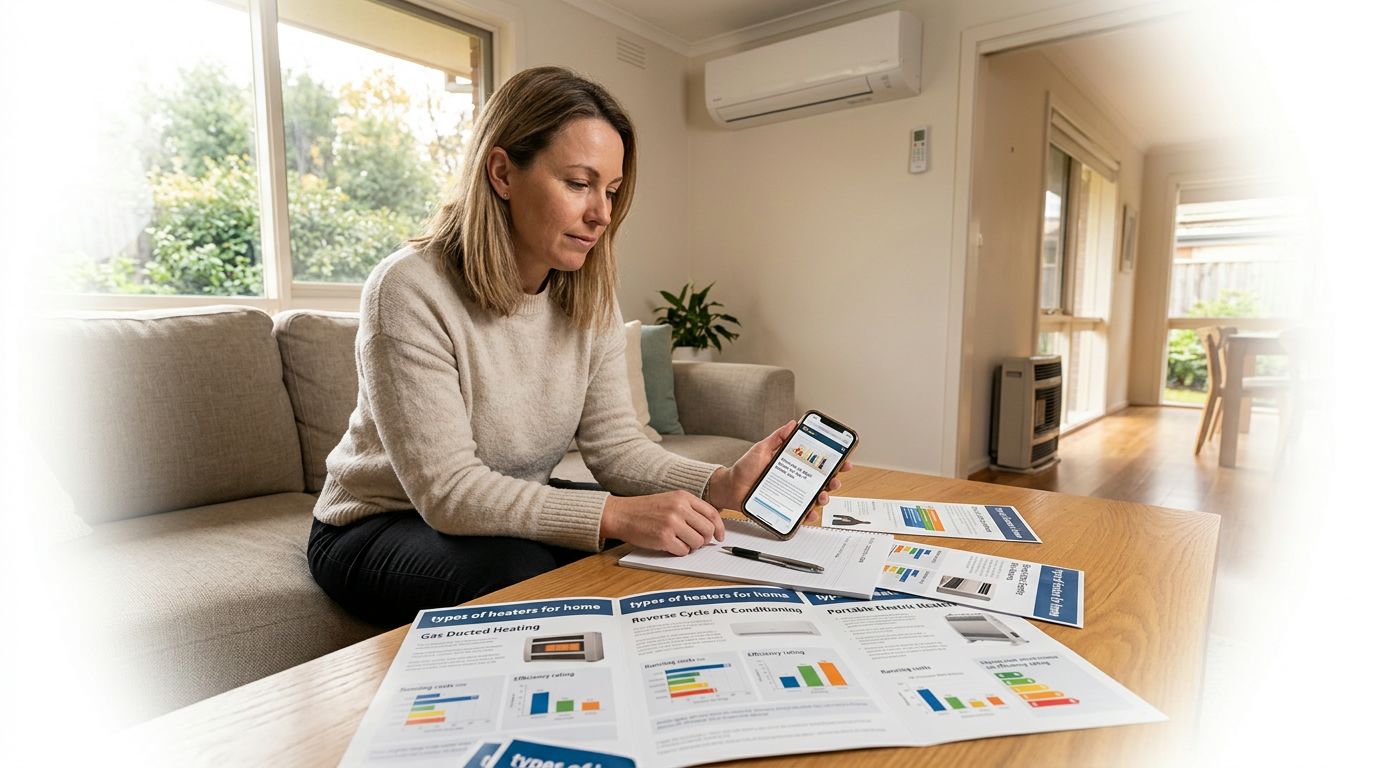
Portable electric heaters are the most accessible heating option in Australia, with units available from $30 to $300 at any hardware store. They suit renters who cannot install fixed systems, or anyone needing supplementary warmth in a single room. The catch is running cost. Electric resistance heaters convert electricity to heat at a 1:1 ratio, making them among the most expensive ways to heat your home per kilowatt-hour compared to a reverse cycle system.
Convection heaters work by drawing cool air across a heating element and circulating the warmed air upward through natural airflow. Panel heaters are a wall-mounted variant of the same principle, offering a tidier installation for renters or semi-permanent setups. Both types are quiet, which makes them a reasonable choice for bedrooms, but they are slow to heat larger spaces because they rely on air movement rather than direct radiation.
Typical wattage sits between 1,000W and 2,400W. At the higher end, the running costs add up quickly. A 2,400W panel heater running four hours a day at roughly $0.30 per kWh costs around $1.05 per day, or about $32 per month. Run it through a full three-month winter and you are looking at close to $95 for a single room. For a whole home, that figure multiplies fast. For a broader look at how electricity costs compare across heating and cooling options, see our guide to how much power does an air conditioner use.
Radiant heaters emit infrared radiation that warms objects and people directly rather than heating the surrounding air. This makes them fast-acting. Point one at a desk or a bathroom vanity area and you feel the warmth within seconds. They are also useful for semi-outdoor spaces like covered patios, where heating the air would be pointless.
The trade-offs are real. Radiant heaters only warm what sits in their direct line of sight, so anyone outside the beam stays cold. Bar-style radiant heaters also run very hot on the surface, which is a genuine burn risk around young children or pets. Infrared heaters are a more refined version of the same principle, often with a more focused and energy-efficient output, but the line-of-sight limitation still applies. Neither type is suited to heating a whole room evenly.
Oil-filled column heaters are a type of convection heater that uses sealed thermal oil as a heat reservoir. The element heats the oil, which then radiates warmth from the column fins and drives gentle convection airflow around the room. Because the oil retains heat after the element switches off, these heaters can maintain a room temperature more efficiently than a bare bar heater cycling on and off.
They are silent in operation and the outer surface stays warm rather than dangerously hot, making them safer around children than radiant bar heaters. The main downsides are weight and warm-up time. Oil-filled heaters take 15 to 20 minutes to reach full output, so they reward planning ahead rather than instant comfort. Despite their efficiency advantages over other portable types, they still run on electric resistance heating, meaning their per-hour cost is significantly higher than a reverse cycle split system doing the same job.
Gas heaters produce heat by burning natural gas or LPG, delivering fast, powerful warmth that many Australians associate with the family living room in winter. They come in two main forms for residential use: ducted gas heating systems that distribute warm air through ceiling or floor vents across the whole home, and gas wall heaters that heat a single room directly. Both can be effective, but the decision to install gas heating in 2026 deserves careful thought.
Gas can still be cheaper per unit of energy than electricity in some states, particularly Victoria and parts of South Australia where gas networks are well established. However, wholesale gas prices have risen sharply over the past few years, and the cost advantage over a high-efficiency reverse cycle system has narrowed considerably. Anyone comparing options should run the numbers for their specific tariff rather than assuming gas is automatically cheaper.
The bigger practical consideration is ventilation. Gas heaters fall into two categories: flued and unflued. Flued heaters vent combustion byproducts outside through a flue pipe, making them safe for enclosed spaces. Unflued gas heaters release carbon dioxide, water vapour and trace combustion gases directly into the room. They are legal in most Australian states but require adequate ventilation to prevent moisture and air quality problems. If you are considering an unflued unit, read our article on are gas wall heaters safe for Australian homeowners before making a decision.
Homes without an existing gas connection face a significant upfront cost to connect to the network, often $1,000 or more before the heater itself is purchased and installed. Given the current direction of Australian energy policy toward electrification, installing new gas infrastructure is a decision worth weighing carefully. For many households, a reverse cycle system is now the more future-proof choice, even in climates where gas once dominated.
Reverse cycle air conditioners are the most energy-efficient type of heater available for Australian homes. Rather than generating heat by burning fuel or converting electricity through a resistance element, they use heat pump technology to move heat from the outside air into your home. This process delivers a coefficient of performance (COP) of 3 to 5, meaning you get three to five units of heat for every single unit of electricity consumed. A portable electric heater has a COP of exactly 1. That gap in efficiency is enormous over a full winter.
Modern inverter-driven units adjust their output continuously to match the room's demand, which keeps efficiency high even when outdoor temperatures drop. This matters in cities like Melbourne and Canberra, where winter nights can push toward zero. Older fixed-speed units struggled in the cold, but current models from the major brands maintain strong heating performance well below 0 degrees Celsius. The dual-function benefit is also worth stating plainly. The same unit that heats your home in winter cools it in summer, so you are not paying for two separate appliances.
Frozone Air installs and recommends split system air conditioning across Sydney and Melbourne, and three models come up consistently as the best fit for most homes. The Daikin Cora Series is a reliable all-rounder with strong energy ratings and Daikin's wide Australian service network behind it. A 2.5kW Cora installed typically runs from around $2,600 to $3,400 depending on capacity and installation complexity, making it a popular choice for living areas and bedrooms alike. The Mitsubishi Electric MSZ-AP Series is the go-to recommendation for quiet operation, with an indoor noise floor as low as 18 dB(A) on its lowest fan setting. It is particularly well suited to bedrooms and nurseries, with installed pricing from around $2,400 to $3,200. The Fujitsu Lifestyle (ASTG) Series is the most accessible of the three, with installed pricing from around $2,200 to $2,900. Installers consistently recommend it as a well-priced, dependable unit that punches above its price point on efficiency and build quality.
A split system heats one zone, typically a single room or an open-plan living and dining area, while a ducted reverse cycle system distributes conditioned air across the whole home through ceiling vents. Split systems are the more affordable entry point, with supply and installation from around $1,800 for a basic setup, and they suit most apartments and smaller homes well. Ducted air conditioning suits larger homes where whole-home comfort is the priority, but the upfront cost is significantly higher, often starting from $8,000 to $12,000 or more depending on home size and the number of zones required.
For homes that need heating in multiple rooms but are not ready for a full ducted installation, a multi-split system is a practical middle ground. One outdoor unit connects to two or more indoor heads, letting you heat separate rooms independently without running separate refrigerant lines for each. It costs more than a single split system but considerably less than a full ducted setup, and it avoids the ceiling space requirements that ducted systems demand.
The right heater depends on four practical questions about your home, your budget and how you actually live. Working through them in order will point you toward the right category before you start comparing brands and models.
For most Australian homeowners, a reverse cycle split system offers the best balance of upfront cost, running efficiency and year-round versatility. That said, portable heaters have a genuine place. Renters who cannot install fixed systems, or anyone needing a bit of extra warmth in a room that a split system does not quite reach, will find a good oil-filled column heater or panel heater a perfectly reasonable solution. The goal is matching the tool to the job, not chasing the most expensive option.
Reverse cycle split systems are the cheapest type of heater to run in Australia for most households. They use heat pump technology to deliver three to five units of heat for every unit of electricity consumed, making them far more efficient than any electric resistance heater. Portable heaters like oil-filled column heaters and panel heaters have lower upfront costs but significantly higher running costs over a full winter.
Yes, reverse cycle air conditioners are excellent heaters and are the most efficient home heating option available in Australia. Modern inverter models maintain strong heating output even when outdoor temperatures drop below zero, which makes them well suited to Melbourne, Canberra and alpine areas. The added benefit is that the same unit cools your home in summer, so you are not paying for two separate appliances.
The answer depends on your state and your specific tariffs. Gas can still be cheaper per unit of energy in Victoria and parts of South Australia, but the cost gap between gas and a high-efficiency reverse cycle system has narrowed considerably as wholesale gas prices have risen. For homes without an existing gas connection, the cost of connecting to the network often makes electricity the more practical and affordable choice.
A reverse cycle split system is the best long-term choice for a bedroom, offering efficient heating, cooling and precise temperature control. For quiet operation specifically, the Mitsubishi Electric MSZ-AP Series is a standout, with an indoor noise floor as low as 18 dB(A). If a fixed system is not an option, an oil-filled column heater is the safest and quietest portable alternative, though its running costs are considerably higher.
The right heater for your home comes down to three things: how much space you need to heat, what your budget looks like upfront versus over time, and whether you want year-round climate control. For most Australian homes, a reverse cycle split system delivers the best combination of efficiency, versatility and long-term value. It heats in winter, cools in summer and pays back its installation cost through lower running bills.
Frozone Air installs split systems and ducted systems across Sydney and Melbourne. If you are ready to upgrade, request a free quote online or call us on 1300 801 839 and we will help you find the right system for your home and budget.