

Split System vs Multi Split System Air Conditioning: Which Is Right for Your Home?
Comparing split system vs multi split system air conditioning? We break down costs, pros, cons and which setup suits Australian homes best.


Comparing split system vs multi split system air conditioning? We break down costs, pros, cons and which setup suits Australian homes best.
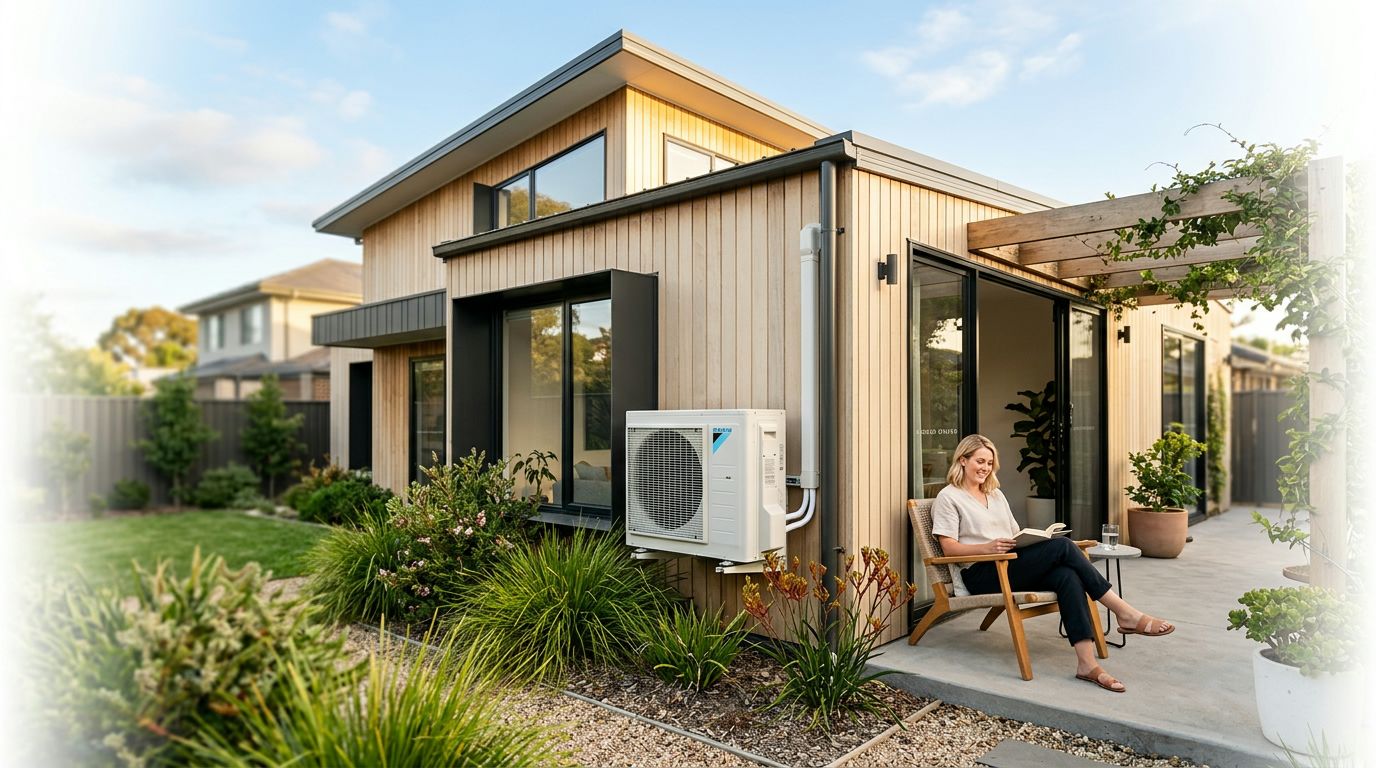
Picture this: you want to cool your bedroom, the living room and maybe a home office, and you're trying to figure out whether to install separate units in each room or connect them all to one outdoor box. It's one of the most common questions we get at Frozone Air, and the answer depends on a few key factors. Understanding multi split system air conditioning versus standard split systems is the first step to making the right call for your home.
A standard split system pairs one indoor unit with its own dedicated outdoor unit. A multi split system (also called a multi-head split) connects two to five indoor units to a single shared outdoor compressor. Both approaches can heat and cool your home effectively, but they suit different situations and budgets. This article covers how each system works, what they cost to install, the pros and cons of each, and which setup makes the most sense for different types of homes.
Key takeaways
Both split systems and multi split systems use the same basic refrigerant cycle to move heat in or out of your home. If you want a deeper explanation of the underlying mechanics, our guide on how air conditioning works covers the full process. The key difference between the two system types comes down to how many indoor units share a single outdoor compressor.
A standard split system is straightforward: one indoor wall-mounted unit connects via refrigerant lines to its own dedicated outdoor compressor. The two units are a matched pair, and they operate completely independently of any other system in your home. If you cool the bedroom, it has no effect on the living room unit, and vice versa.
Standard split systems are the most common residential air conditioning type in Australia, and for good reason. They are reliable, widely available and easy to service. Capacity typically ranges from 2.5kW for a small bedroom up to 9kW for a large open-plan living area, so there is a size to suit almost every room. Each unit is also straightforward to replace or upgrade without touching the rest of the house.
A multi split system works differently. Two to five indoor units, each installed in a separate room, share a single outdoor compressor. The outdoor unit is larger and more powerful than a standard single-split outdoor unit because it needs to handle the combined load of all the indoor heads connected to it.
Each indoor unit still has its own remote control and its own temperature setting, so occupants in different rooms can set different temperatures independently. However, the outdoor unit must work harder when multiple rooms call for cooling or heating at the same time. Modern multi split outdoor units are inverter-driven, meaning they ramp their output up and down to match demand rather than switching on and off at full power, which helps manage that combined load efficiently.
One trade-off worth knowing upfront: if the shared outdoor unit develops a fault, all connected indoor units go offline until it is repaired. With separate split systems, a fault in one outdoor unit only affects that single room. That is a practical consideration for households where continuous comfort in multiple rooms is a priority.

A standard split system costs less per room upfront and suits buyers who want simplicity, while a multi split system costs more initially but saves on outdoor unit numbers and suits homes where outdoor space is limited. The table below breaks down the key differences across the factors that matter most to Australian homeowners.
| Factor | Split System Air Conditioning | Multi Split System Air Conditioning |
|---|---|---|
| Upfront Cost | Lower per room. Each unit is priced and installed independently. | Higher upfront. One larger outdoor unit plus multiple indoor heads, with more complex installation labour. |
| Installation Complexity | Straightforward. Each unit is a self-contained job. | More complex. All refrigerant lines must be planned and run to a single outdoor unit, ideally in one installation visit. |
| Number of Outdoor Units | One per room. Three rooms means three outdoor units. | One outdoor unit for two to five indoor zones. |
| Independent Room Control | Fully independent. Each unit operates on its own schedule and temperature. | Each indoor head has its own remote and temperature setting, but all share the one outdoor compressor. |
| Flexibility to Expand | High. Add a new room any time by installing a new independent unit. | Limited. The outdoor unit has a fixed maximum capacity. Adding a room beyond that capacity requires a second outdoor unit. |
| Running Costs | Comparable. Modern inverter split systems are highly efficient. | Comparable. Inverter-driven outdoor units manage combined load efficiently, though running all zones simultaneously draws more power. |
| Best For | Single rooms, two separate rooms, renters, or buyers wanting to expand gradually. | Apartments, townhouses, strata buildings, or any home where outdoor unit numbers are restricted. |
The bottom line is straightforward. A multi split system is the smarter choice for homes where outdoor space or body corporate rules limit how many outdoor units you can install, since one compressor handles multiple rooms without cluttering your balcony or roofline. Standard split systems suit buyers who want a simpler, lower-cost entry point per room and the freedom to expand their setup over time without being locked into a single outdoor unit's capacity.
The right air conditioning system depends on your home type, how many rooms you need to cool, your budget and whether you have any restrictions on outdoor unit placement. Most homeowners fall clearly into one of four situations, and each one points toward a different answer.
A standard split system is the practical choice in most of these situations:
A multi split system is the better fit in these scenarios:
Frozone Air installs both system types and can help you work out which setup suits your home before you commit to anything. If you are based in New South Wales or Victoria, our team offers air conditioning installation in Sydney and Melbourne, including a free quote and site assessment so you know exactly what you are getting into before any work begins. Get in touch and we will give you a straight answer on which system makes the most sense for your situation.
A 2-zone multi split system typically costs between $3,500 and $6,000 fully installed in Australia, a 3-zone system runs from $5,000 to $8,500, and a 4-zone system can reach $7,000 to $12,000 or more. These are indicative ranges that shift depending on the brand you choose, the capacity of each indoor unit, how complex the refrigerant pipework is, and whether the installation requires ceiling penetrations or long pipe runs.
Two of the most popular multi split options Frozone Air installs are the Daikin MXS Series and the Mitsubishi Electric MXY Series. The Daikin MXS outdoor unit supports two to five indoor zones and pairs with Daikin FTXM (Cora) indoor units, making it a strong choice for homeowners already familiar with the Daikin ecosystem. The Mitsubishi Electric MXY Series pairs with MSZ-AP or MSZ-EF indoor units and is particularly well regarded for quiet outdoor unit operation, which matters in apartments and townhouses where the compressor sits close to living areas or neighbouring properties.
Comparing multi split costs to separate standard split systems is not as straightforward as it looks. While each individual standard split system costs less per room, installing three or four of them means paying for three or four outdoor units, three or four separate installation jobs and three or four sets of refrigerant line sets. When you add all of that up, the total cost of multiple standard splits can be comparable to, or even higher than, a single multi split system covering the same number of rooms.
Running costs between the two approaches are broadly similar when both use inverter technology. The one trade-off worth noting is that a multi split outdoor unit working at full load across all zones simultaneously can be marginally less efficient than independent units each running at their own optimal load. In practice, most households do not run every zone at full capacity at the same time, so real-world efficiency differences tend to be small. For a full breakdown of supply and installation costs across system types, see our new air conditioner price guide.
If outdoor space is limited or strata rules cap you at one outdoor unit, a multi split system is almost certainly the right answer. If you are cooling one or two rooms on a straightforward budget, standard split systems are hard to beat for simplicity and value. The decision usually becomes clear once someone has looked at your home and understood your situation.
Frozone Air installs both system types across Sydney and Melbourne, and our team can assess your home, recommend the right system type and brand, and give you an upfront price with no hidden fees. Call us on 1300 801 839 or visit our air conditioning installation page to request a free quote. We will give you a straight answer on what suits your home and what it will cost before any work begins.
Multi-split air conditioners do have real trade-offs worth considering before you commit. The upfront cost is higher than a single split system, and if the outdoor unit fails, every indoor zone loses cooling at once. The outdoor unit must also be sized for the combined load of all indoor heads, which can reduce efficiency when only one or two rooms are running. Installation is more complex, requiring longer refrigerant line runs and a licensed installer experienced with multi-head systems.
Multi-head split systems are worth it in the right circumstances. They make strong sense for apartments or strata properties with limited outdoor space, homes where a cleaner aesthetic with fewer outdoor units matters, or any situation where you need to cool three or more rooms. They are less compelling when budget is tight and each room can be cooled independently with standard single splits. Getting a quote comparing both options side by side is the best way to decide.
The '$5,000 rule' is a general repair-versus-replace guideline: multiply your system's age in years by the repair cost quoted. If the result exceeds $5,000, replacing the unit is usually more cost-effective than repairing it. This is a rough heuristic rather than an industry standard, so a licensed technician's assessment should always guide your final decision.
Installing a multi-split system in Australia typically costs $3,500 to $6,000 fully installed for a 2-zone system, $5,000 to $8,500 for a 3-zone system, and $12,000 or more for a 4-zone system depending on brand, capacity and installation complexity. Prices vary by location and the specifics of your home. Frozone Air provides upfront quotes with no hidden fees, so you know exactly what you're paying before any work begins.