

Types of Air Conditioners Explained: Which System Is Right for Your Home?
Not sure which types of air conditioner suit your home? We break down split systems, ducted, multi-split, cassette and more to help you choose. 150 chars.


Not sure which types of air conditioner suit your home? We break down split systems, ducted, multi-split, cassette and more to help you choose. 150 chars.
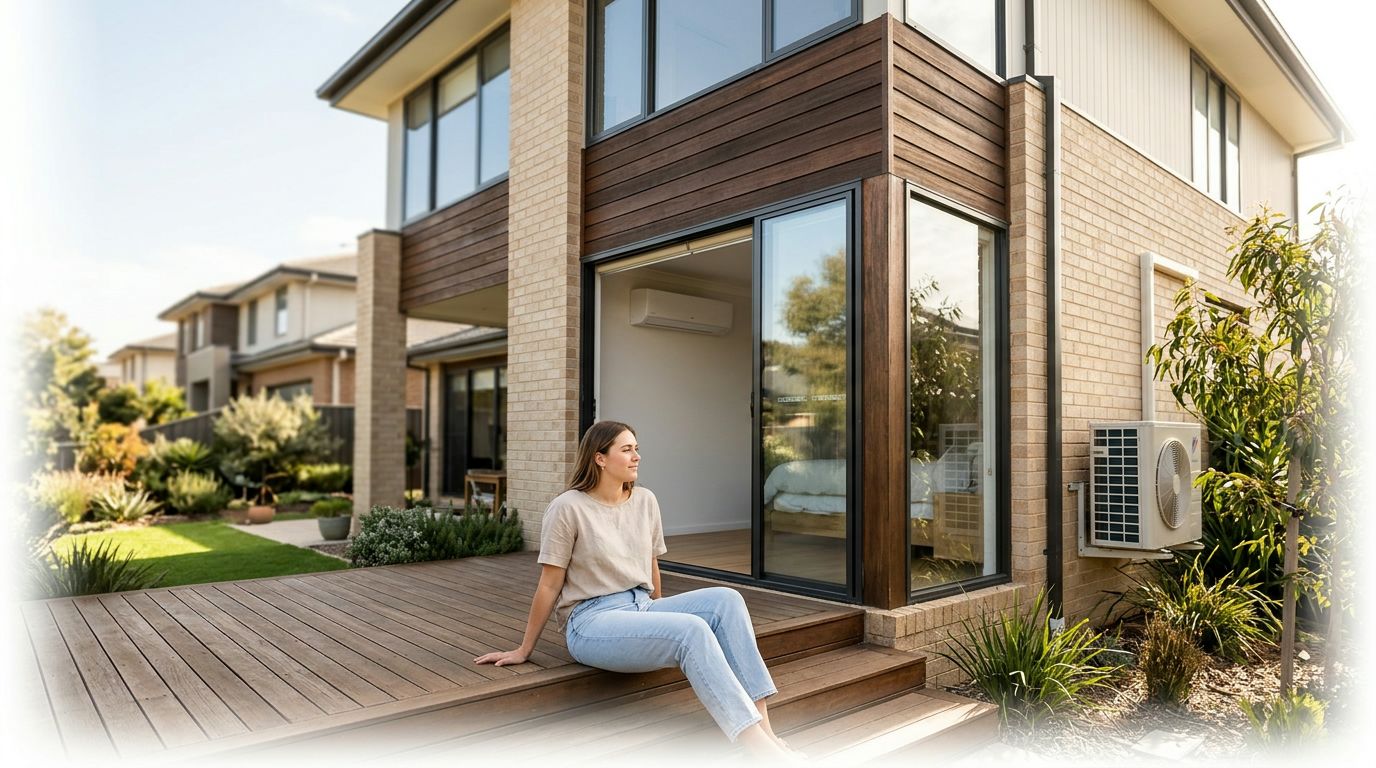
Walk into any air conditioning conversation in Australia and you'll quickly find yourself buried in acronyms, kilowatt ratings and brand names. There are more types of air conditioner on the market than most people realise, and picking the wrong one for your home can mean years of regret, whether that's an undersized unit struggling through a Sydney summer or an expensive ducted system in a two-bedroom unit that didn't need it.
This guide cuts through the noise. We'll cover the five main system types available to Australian homeowners: split systems, multi-split systems, ducted air conditioning, cassette systems, and portable or window units. For each one, you'll get a plain-English explanation of how it works, what it costs, and who it actually suits. No jargon, no upselling. Just the information you need to make a confident decision.
Key takeaways
The three most common air conditioning systems installed in Australian homes are split systems, multi-split systems and ducted units. Each suits a different home size, budget and lifestyle. Understanding the differences upfront will save you from either overspending on capacity you don't need or underspending on a system that can't keep up with your home.
A split system consists of two components: one indoor wall-mounted unit and one outdoor compressor connected by refrigerant lines. The indoor unit blows conditioned air directly into the room, while the outdoor unit handles the heat exchange. It's a simple, proven setup that suits the vast majority of Australian households.
Most modern split systems are reverse-cycle, meaning they provide both heating and cooling from the one unit. Inverter technology allows the compressor to vary its speed rather than switching on and off at full power, which makes these systems significantly more energy-efficient than older fixed-speed models. A well-sized split system can comfortably handle a single room or an open-plan living area up to around 60 square metres.
Supply and install costs typically range from $1,200 to $2,500 depending on the capacity and brand. The Daikin Cora 2.5kW Split System (FTXM25WVMA) is a popular entry-level pick for smaller rooms, with a supply-and-install price of around $1,300. It's quiet, efficient and backed by Daikin's strong local warranty support.
The main trade-off is coverage. A single split system only conditions one zone, so if you need multiple rooms cooled independently, you'll either need multiple units or a different system type altogether. Browse our range of split system air conditioners to compare capacities and brands.
A multi-split system connects two to five indoor units to a single outdoor compressor. Each indoor unit operates independently, so different rooms can be set to different temperatures at the same time. This makes multi-split a smart middle ground for homes where two or more rooms need climate control but a full ducted installation isn't practical or affordable.
Because there's only one outdoor unit, multi-split systems are a good solution for homes with limited outdoor space or strict body corporate rules about external equipment. Installation is more complex than a standard split system, but far less disruptive than ducted work, since there's no need to access the roof cavity or run ductwork through the ceiling.
The Mitsubishi Electric MSZ-AP series is a reliable option for multi-split setups, offering strong energy ratings and quiet indoor operation across a range of capacities. Frozone Air installs the MSZ-AP series regularly in Sydney and Melbourne homes where two or three rooms need independent control.
Costs range from approximately $3,500 to $8,000 or more depending on the number of indoor units and the total system capacity. The more indoor heads you add, the closer the price creeps toward entry-level ducted territory, so it's worth comparing both options if you're looking at four or five zones. Explore our multi-split system options to see what's available for your home.
Ducted air conditioning uses a central unit, typically installed in the roof cavity, connected to a network of insulated ducts that deliver conditioned air through vents in each room. A single system can cover an entire home, with one thermostat or a zoning controller managing the temperature across multiple areas. It's the most comprehensive whole-home solution available.
Zoning is a key advantage of ducted systems. With a zoning controller, you can divide your home into separate areas and only condition the rooms that are in use, which reduces running costs significantly compared to conditioning the whole house at once. This is particularly useful in larger homes where different family members use different parts of the house at different times.
ActronAir is a strong ducted brand that Frozone Air installs across Sydney and Melbourne. ActronAir systems are designed and manufactured in Australia, which means they're built with local climate conditions in mind. Supply and install costs for ducted systems typically range from $8,000 to $20,000 or more depending on home size, ceiling access and the number of zones required.
The higher upfront cost is the obvious trade-off. However, a well-installed ducted system adds genuine value to a property and delivers a level of whole-home comfort that no collection of individual units can fully replicate. For homeowners planning to stay in their property long-term, the investment generally pays off. Find out more about our ducted air conditioning installations and what's involved in the process.
| System Type | Best For | Approx. Supply & Install Cost | Energy Efficiency | Whole-Home Coverage |
|---|---|---|---|---|
| Split System | Single rooms or open-plan areas up to 60 sqm | $1,200 to $2,500 | Excellent (inverter technology) | No, one zone only |
| Multi-Split System | Two to five rooms needing independent control | $3,500 to $8,000+ | Very good | Partial (selected rooms) |
| Ducted System | Whole-home comfort in medium to large homes | $8,000 to $20,000+ | Good with zoning enabled | Yes, full home coverage |
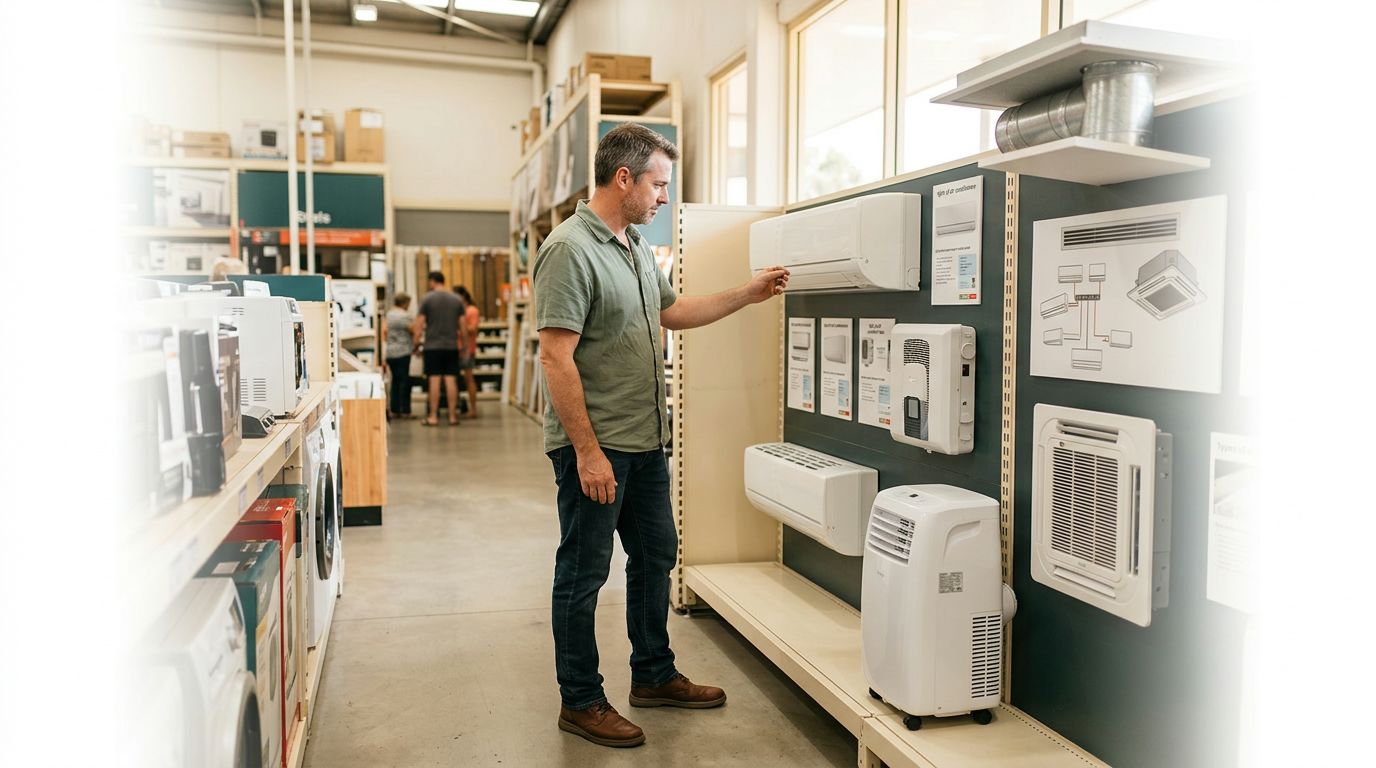
Beyond split systems, multi-splits and ducted, there are three other air conditioning types that come up regularly: ceiling cassettes, portable units and window units. Most homeowners won't need these as their primary solution, but understanding what they are and who they suit helps you rule them in or out with confidence.
A ceiling cassette unit is recessed flush into the ceiling and distributes air in four directions simultaneously, giving it much more even coverage than a wall-mounted split system. Because the indoor unit sits in the ceiling rather than on a wall, cassettes are particularly well suited to open-plan spaces, commercial fit-outs, or homes where wall space is limited or aesthetics matter. The four-way airflow pattern means fewer hot or cold spots across a large area.
Frozone Air installs ceiling cassette systems from Daikin and Mitsubishi Electric, both of which offer reliable cassette ranges suited to residential and light commercial applications. The trade-off is cost. Cassette systems typically sit higher than a comparable wall-mounted split system, both for the unit itself and for installation, since ceiling access and additional carpentry work are usually required. They also need a suspended or drop ceiling to recess into, which rules them out for many standard homes.
If you're weighing up whether a cassette system is the right fit for your space, our ceiling cassette air conditioner guide covers the pros, cons and key considerations in detail.
Portable air conditioners are free-standing floor units that require no permanent installation. They vent hot air through a hose fitted to a window or sliding door, which makes them a practical option for renters who can't modify their property or for temporary cooling in a room that doesn't have a fixed system. The convenience comes at a cost. Portables are significantly less energy-efficient than split systems, they can be noisy, and they only cool the immediate area around the unit.
Window units are installed directly into a window frame and are a low-cost option for small rooms or older homes where a split system installation isn't feasible. Like portables, they lag well behind modern split systems on energy efficiency and are not a practical solution for whole-home cooling. Frozone Air does not install portable or window units, but they're worth knowing about as part of the full picture of what's available on the market.
Choosing the right air conditioner comes down to four practical factors: how many rooms you need to cool, what you're prepared to spend upfront and ongoing, whether you own or rent, and where in Australia you live. Work through each one and the right system type usually becomes clear.
Home size and number of rooms
A single split system handles one room or open-plan area well. If you need two or three rooms cooled independently, a multi-split system is worth considering. For whole-home comfort across four or more rooms, ducted is generally the most practical and cost-effective long-term solution. Ceiling cassettes suit large open-plan areas or commercial spaces where wall mounting isn't ideal.
Budget, upfront and ongoing
Split systems are the most affordable entry point, starting from around $1,200 to $2,500 supply and install. Multi-splits sit in the $3,500 to $8,000 range, and ducted systems typically start at $8,000 and can exceed $20,000 for larger homes with multiple zones. Running costs matter too. A well-sized inverter split system will cost far less to run than an oversized ducted system conditioning rooms that aren't in use. For a detailed breakdown of what to expect to pay, our guide to air conditioner prices in Australia covers supply, install and running costs across all system types.
Rental vs. ownership
If you're renting, your options are limited to what your landlord will approve. Portable units are the only truly no-permission-required option, though they're a compromise on performance. Some landlords will agree to a split system installation, particularly if you're on a long lease. If you own your home, the full range of system types is available to you and it's worth investing in a permanent solution that suits the property long-term.
Climate zone
Australia's climate varies enormously. In humid coastal areas like Sydney or Brisbane, a reverse-cycle system with a strong dehumidification mode makes a real difference to comfort. In dry inland regions, evaporative cooling can be a cost-effective alternative to refrigerative air conditioning, though it loses effectiveness on humid days. In Melbourne, where temperatures swing from cold winters to hot summers, a reverse-cycle system that handles both heating and cooling is almost always the right call.
If you're still unsure which system suits your home, the most reliable way to get it right is a professional assessment. A qualified installer can evaluate your floor plan, ceiling height, insulation and local climate to recommend the right system type and capacity. Getting the sizing right from the start avoids years of an underpowered or inefficient system. We'd always recommend getting at least one in-home assessment before committing to a system type.
There is no single best type of air conditioner. The right system depends on your home layout, your budget and how you actually live in the space. A split system suits most single-room needs, a multi-split handles two or three rooms without major disruption, and ducted delivers whole-home comfort for those who want it. Cassette systems fill the gap for open-plan spaces where wall mounting isn't practical.
Frozone Air installs and services all of these system types across Sydney and Melbourne. Our team works with leading brands including Daikin, Mitsubishi Electric and ActronAir, and we'll give you an honest recommendation based on your home rather than a one-size-fits-all answer.
If you're ready to take the next step, call us on 1300 801 839 or request a free quote online. For Sydney homeowners, learn more about our air conditioning installation in Sydney service and what the process involves from start to finish.
The five main types of air conditioners are split systems, multi-split systems, ducted systems, ceiling cassettes and portable or window units. Split systems are the most popular choice for single rooms, while ducted systems cool or heat an entire home through concealed ductwork. Multi-splits connect several indoor units to one outdoor unit, ceiling cassettes suit commercial spaces with high ceilings, and portable or window units offer a low-cost, no-installation option for renters or temporary use.
A reverse cycle air conditioner works by using a refrigerant cycle to extract heat from the outside air and transfer it indoors for heating, then reverses that process to push heat outside for cooling. Because it moves heat rather than generating it, reverse cycle is the most energy-efficient heating method available. The vast majority of split systems and ducted systems sold in Australia today are reverse cycle as standard.
R32 is the better refrigerant for the environment, with a global warming potential roughly 68% lower than R410A, and most new air conditioners sold in Australia now use R32 as standard. R32 is also slightly more energy-efficient, which can contribute to lower running costs over time. That said, refrigerant type is largely a behind-the-scenes specification. The brand, system type and installation quality will have a far greater impact on day-to-day performance than the choice between R32 and R410A.
The '$5,000 AC rule' is an informal guideline used by some technicians. If the cost of repairing an air conditioner exceeds roughly $5,000, it is generally more economical to replace the unit outright rather than repair it. This is not an official industry standard, and the right threshold depends on the system's age, brand and remaining lifespan. A professional assessment is the best way to make the call before committing to either option.