

How Does a Ceiling Cassette Air Conditioner Work?
Learn how a ceiling cassette air conditioner works, its key components, and whether it's the right choice for your home or business. Expert guide by Frozone Air.


Learn how a ceiling cassette air conditioner works, its key components, and whether it's the right choice for your home or business. Expert guide by Frozone Air.
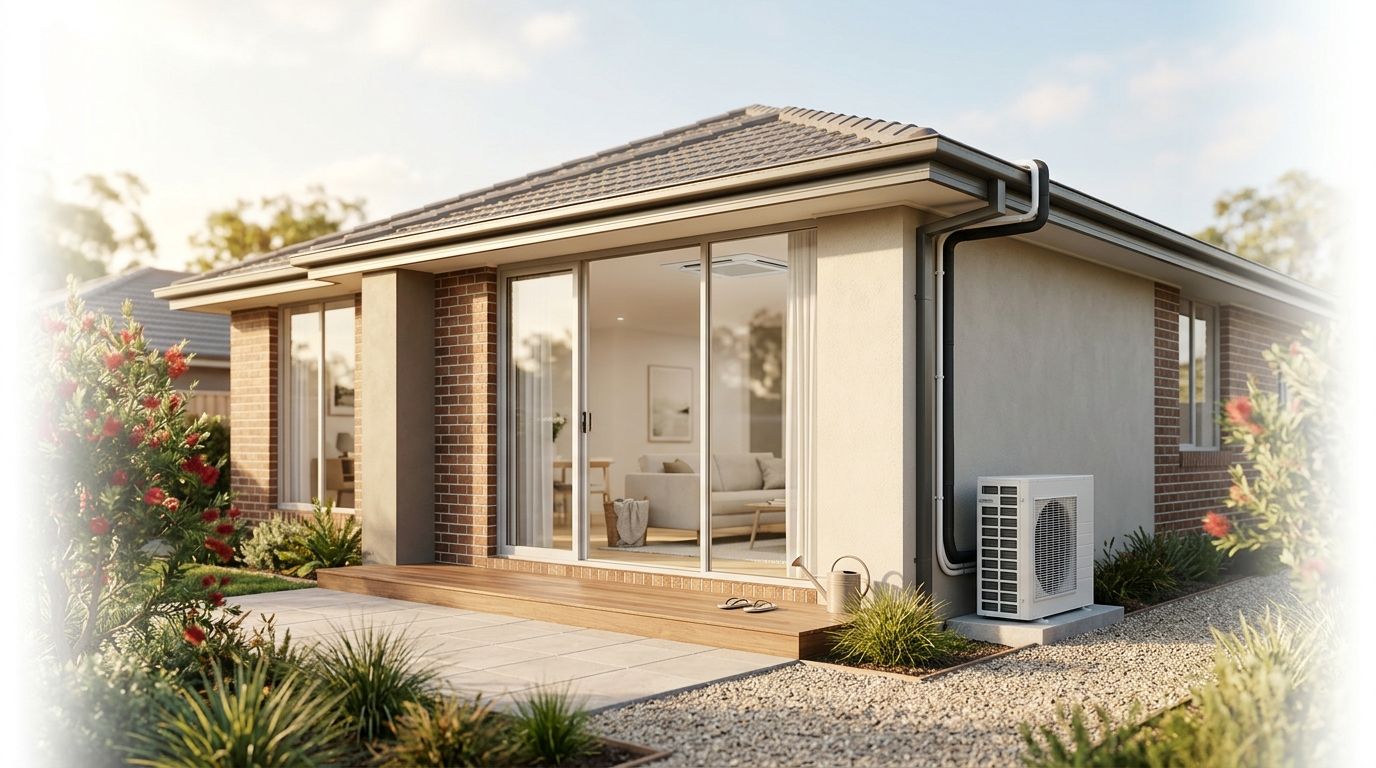
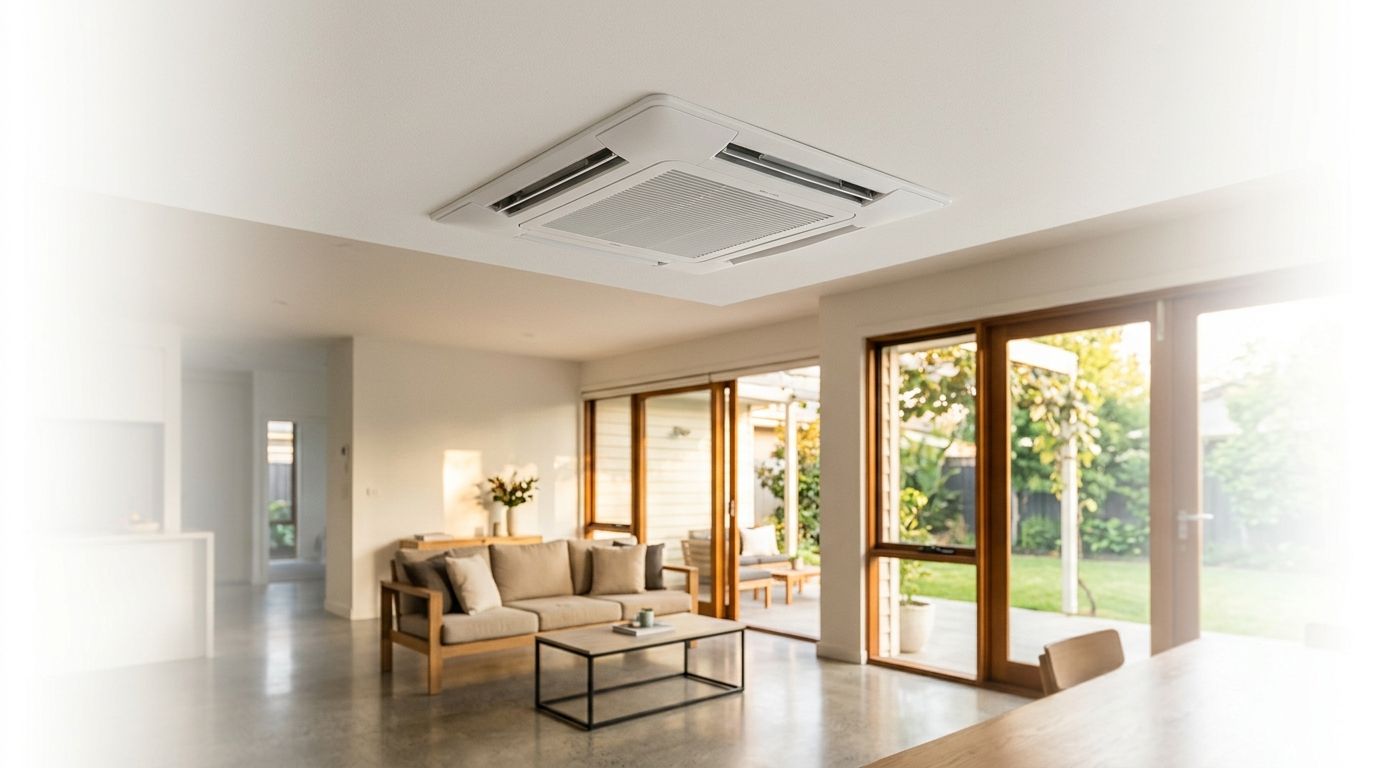
A ceiling cassette air conditioner is a type of split system where the indoor unit sits recessed inside the ceiling cavity, leaving only a flat square grille panel visible from below. Unlike a wall-mounted split system that hangs on the wall, a ceiling cassette distributes air in four directions simultaneously, making it well suited to open-plan rooms and commercial spaces. This article covers how a ceiling cassette works, its key components, and the types of spaces it suits best. If you are already across the basics and want help deciding whether one is right for your home, check out our guide to ceiling cassette pros, cons and whether one is right for your home.
Key takeaways
A ceiling cassette system has three main parts: the indoor cassette unit recessed in the ceiling, the outdoor condenser unit mounted outside, and the refrigerant lines and condensate drain pipe that connect the two. Each part plays a specific role in moving heat between the inside of your home and the outside air. Understanding what each component does makes it much easier to follow how the whole system works.
The indoor cassette unit is the part that sits inside your ceiling cavity, supported by a mounting bracket fixed to the ceiling joists or a suspended ceiling grid. From inside the room, all you see is the flat panel grille, which typically measures around 600 x 600 mm and sits flush with the ceiling surface.
Inside the cassette housing, the evaporator coil is the core heat exchange component. Warm room air passes over the coil, which contains cold refrigerant, and the heat transfers from the air into the refrigerant. The blower fan draws room air in through a central return air grille at the middle of the panel, passes it across the evaporator coil, and then pushes the conditioned air back out through the louvres around the perimeter.
Washable filters sit just behind the return air grille and catch dust, pet hair and airborne particles before they reach the coil. Keeping these filters clean is one of the most important maintenance tasks for any cassette system. Four directional louvres around the edge of the panel can be angled independently to distribute conditioned air evenly across the room. A drain pan underneath the evaporator coil collects condensation and channels it away through a condensate drain pipe.
The outdoor condenser unit is mounted on an exterior wall bracket or on the roof, connected to the indoor cassette by refrigerant lines that run through the ceiling cavity and an exterior wall. This is where the heat extracted from your room is expelled to the outside air.
The compressor is the heart of the outdoor unit. It pressurises the refrigerant gas, raising its temperature so it can release heat effectively. The condenser coil then transfers that heat from the refrigerant into the outside air, assisted by a large fan that draws air across the coil. The expansion valve sits between the condenser and the indoor unit and controls the flow of refrigerant, dropping its pressure and temperature before it cycles back inside to absorb more heat from the room.
A ceiling cassette air conditioner works by circulating refrigerant between the indoor cassette unit and the outdoor condenser, continuously absorbing heat from inside the room and releasing it outside. The process follows the standard refrigeration cycle, but the ceiling-mounted position and four-way airflow pattern make it particularly effective at conditioning large, open spaces evenly. Here is how the cycle runs from start to finish.
Most ceiling cassette units sold in Australia are reverse-cycle, which means they can run the refrigeration cycle in the opposite direction to provide heating in winter. Instead of extracting heat from inside and dumping it outside, the system extracts heat energy from the outside air and transfers it indoors, even on cold days. This makes reverse-cycle cassettes efficient year-round and well suited to Australia's varied climates, from Sydney winters to Melbourne cold snaps. Heating efficiency is measured by the Coefficient of Performance (COP), and the higher the star rating on the unit's energy label, the less electricity it uses to deliver the same amount of warmth.
Ceiling cassettes and wall-mounted split systems both use the same refrigeration cycle, but they differ significantly in how they distribute air, how they are installed and what they cost. The right choice depends on your room size, ceiling type and budget. The table below covers the key differences side by side.
| Feature | Ceiling Cassette | Wall-Mounted Split System |
|---|---|---|
| Airflow Direction | Four-way, distributes air in all directions simultaneously | One-way, directs air in a single direction from the wall |
| Installation Complexity | Requires accessible ceiling cavity or suspended ceiling grid; more labour involved | Simpler wall bracket installation; suitable for most homes without ceiling access |
| Aesthetics | Flush with the ceiling, minimal visual impact from below | Visible unit on the wall; more noticeable in the room |
| Room Coverage | 360-degree spread suits large, open-plan and commercial spaces | Directional airflow suits smaller rooms and single-zone areas |
| Typical Installed Price | Higher; generally from $2,500 upward depending on brand and capacity | Lower; standard 5kW installations typically from $1,400 to $2,200 |
| Maintenance Access | Filters accessed from below by removing the return grille panel | Filters easily accessible on the front of the wall unit |
A ceiling cassette is the stronger choice for open-plan living areas, commercial fit-outs and any space where aesthetics matter and the ceiling cavity is accessible. A wall-mounted split system is the more practical and cost-effective option for bedrooms, smaller rooms and homes where ceiling access is limited or where budget is the primary concern. For a full breakdown of what a wall-mounted unit offers, see our article on wall-mounted air conditioner benefits and costs.
A ceiling cassette air conditioner suits open-plan rooms, commercial spaces and new builds where ceiling cavity access is available. It is not the right fit for every situation, and the honest answer depends on your ceiling type, room size and budget. Here is a practical breakdown of where cassettes work well and where a different system will serve you better.
Ceiling cassettes are at their best in the following situations:
There are also situations where a cassette is not the best choice:
Frozone Air installs ceiling cassette units from Daikin, Mitsubishi Electric and Fujitsu across Sydney and Melbourne. For a commercial-grade option, the Daikin FDYQ 5kW ceiling cassette is a popular choice, with installed pricing from approximately $2,800. The Mitsubishi Electric SLZ-M 5kW is a strong residential cassette option, installed from approximately $2,600. The Fujitsu AUTG 5kW is a reliable mid-range alternative that works well in open-plan spaces and suits a range of budgets. If you are unsure which unit suits your space, Frozone Air offers a free quote and can assess your ceiling access, room size and load requirements before recommending a system. For professional air conditioning installation in Sydney, get in touch with the team to book a site visit.
Ceiling cassette installation in Australia typically starts from around $2,600 to $2,800 for a quality 5kW unit including labour, depending on the brand and the complexity of the installation. Commercial-grade units or installations requiring longer refrigerant line runs, additional drainage work or difficult ceiling access will cost more. Getting a site-specific quote is the most reliable way to understand the full cost for your space.
Yes. Most ceiling cassette units sold in Australia are reverse-cycle, which means they provide both cooling and heating from the same system. In heating mode, the refrigeration cycle runs in reverse, extracting heat energy from the outside air and transferring it indoors. This makes reverse-cycle cassettes efficient year-round, even during Sydney and Melbourne winters.
Ceiling cassette filters should be cleaned every four to six weeks during periods of regular use. The filters sit behind the central return air grille and can be removed from below without any tools on most models. Blocked filters reduce airflow, force the unit to work harder and can lead to ice forming on the evaporator coil, so keeping them clean is one of the simplest ways to protect your system.
As a general guide, a 5kW ceiling cassette suits open-plan areas up to around 50 square metres, while larger spaces of 60 to 80 square metres typically require a 7kW to 8kW unit. These figures vary depending on ceiling height, insulation, window area and the local climate zone. A qualified installer can perform a proper heat load calculation to confirm the right capacity for your specific room before any equipment is purchased.
Ceiling cassette air conditioners work by drawing room air over an evaporator coil, distributing conditioned air in four directions and expelling heat through the outdoor unit. That combination of discreet ceiling-flush installation and even, 360-degree airflow makes them one of the most effective choices for open-plan living areas, commercial spaces and new builds where ceiling cavity access is available.
Because installation involves working inside the ceiling cavity, running refrigerant lines and fitting a condensate drain, professional installation by a licensed refrigeration mechanic is essential. Getting it right from the start protects your warranty and ensures the system performs as it should for years to come.
If you are ready to take the next step, request a free quote from Frozone Air for ceiling cassette installation across Sydney and Melbourne, or call 1300 801 839 to speak with the team about your space.