

How Much Does Duct AC Installation Cost in Australia? (2026 Price Guide)
Wondering about duct AC installation costs in Australia? Get 2026 price ranges, key cost factors, and expert advice from Frozone Air's licensed technicians.


Wondering about duct AC installation costs in Australia? Get 2026 price ranges, key cost factors, and expert advice from Frozone Air's licensed technicians.
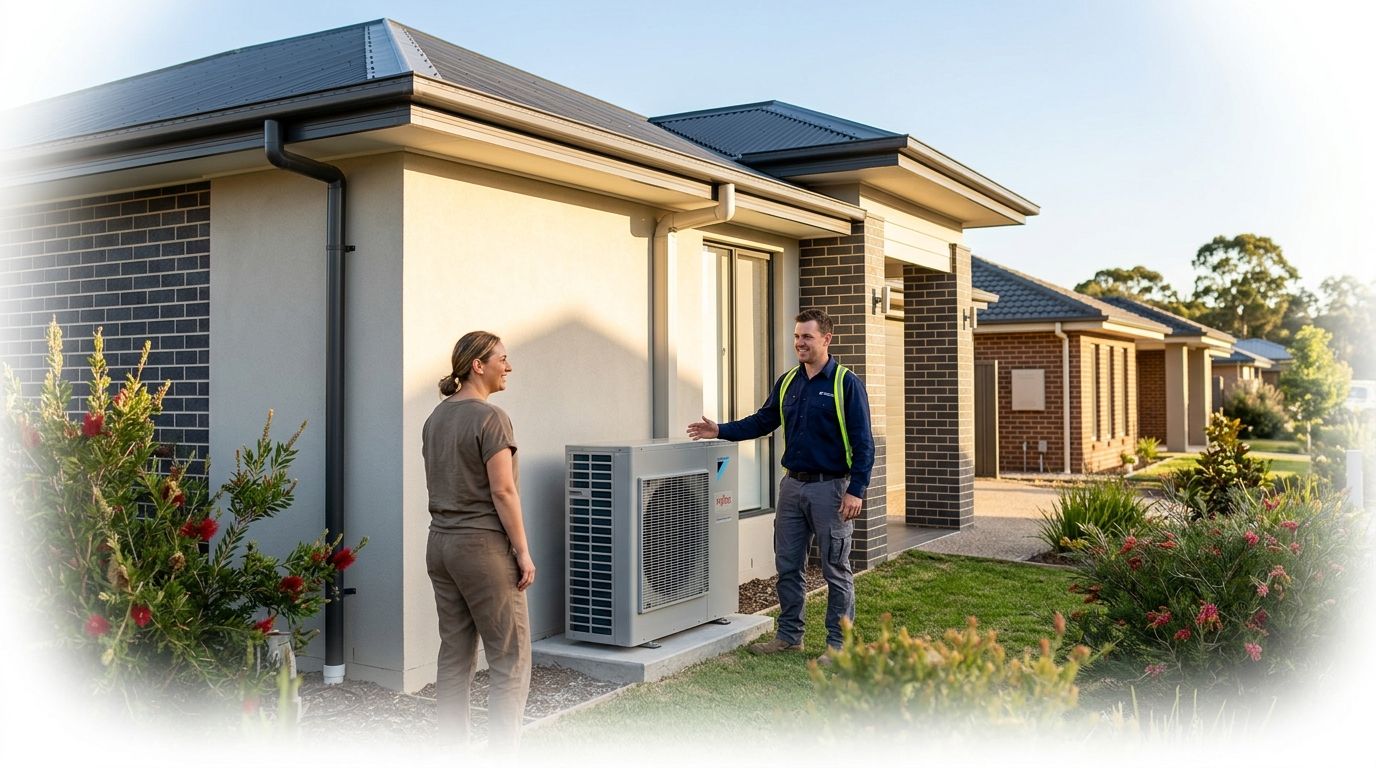
Duct AC installation in Australia typically costs between $5,000 and $20,000 or more, depending on your home size, the brand and capacity of the system, and how complex the installation is. A compact 10kW system in a single-storey home with easy roof access is a very different job to a 25kW multi-zone system in a two-storey house with limited ceiling clearance.
This guide breaks down the four main factors that drive the final price: the cost of the ducted air conditioning unit itself, installation labour and materials, zoning complexity, and any site-specific challenges. Understanding each one will help you read quotes more confidently and avoid surprises. No online guide replaces a proper site inspection, as prices vary too much between homes for any ballpark figure to be treated as a firm number.
Key takeaways
The total cost of a ducted AC installation comes down to two main components: the supply cost of the system unit and the labour and materials required to install it. Both vary considerably based on your home's size, layout and the brand you choose. The table below gives indicative ranges across the three home sizes we most commonly quote for.
| Home Size | Recommended Capacity | Approximate Supply Cost | Approximate Installation Cost | Typical Total |
|---|---|---|---|---|
| Small (up to 150m²) | 10–14kW | $2,500–$4,500 | $2,500–$4,500 | $5,000–$9,000 |
| Medium (150–250m²) | 14–18kW | $3,500–$5,500 | $3,500–$6,000 | $7,000–$11,500 |
| Large (250m²+) | 18–25kW | $4,500–$6,500 | $5,000–$8,000+ | $9,500–$14,500+ |
These figures are indicative only. A site inspection is always required before any accurate quote can be provided, as roof space access, duct run length and zone count all affect the final price significantly. Use Frozone Air's ducted air conditioning cost calculator to get a ballpark figure before booking a consultation.
The unit itself is usually the single largest line item on any ducted AC quote. Frozone Air installs and recommends Daikin, Mitsubishi Electric and Panasonic as its three preferred ducted brands, and all three sit in a broadly similar price range at equivalent capacities.
For smaller homes up to 150m², a Daikin Ducted Reverse Cycle System in the 10–14kW range is a strong entry-level choice, with unit supply cost starting from approximately $2,500–$3,500. Frozone Air installs Daikin across Sydney and Melbourne and it is consistently one of the most requested brands for ducted work.
For medium-sized homes in the 150–250m² range, the Mitsubishi Electric Ducted Reverse Cycle System at 14–18kW is a popular option. Unit supply cost typically sits between $3,500 and $5,500. Mitsubishi Electric's inverter technology delivers strong efficiency across varying load conditions, and its zoning capability makes it well suited to homes where different rooms need different temperatures at different times.
For larger homes above 250m², the Panasonic Ducted Inverter System at 18–25kW is one of Frozone Air's preferred options, with unit supply cost ranging from approximately $4,500 to $6,500. The unit cost alone is only part of the picture. Installation labour and materials add significantly to the total, as covered below.
Installation is where the cost variation really opens up. Labour and materials for a ducted system typically range from $2,500 to $8,000 or more, and the spread comes down to a handful of site-specific factors.
A standard installation includes ceiling or underfloor unit mounting, ductwork fabrication and routing through the roof cavity, outdoor condenser placement and refrigerant line connection, electrical connections to the switchboard, zone controller wiring and commissioning. Each of those steps takes time, and some homes make them considerably harder than others.
Homes with limited ceiling access, low-pitch roofs or no accessible roof cavity require more labour to route ductwork correctly. Multi-storey homes add complexity because duct runs are longer and penetrations between floors need careful planning. Every additional zone also adds to the wiring and controller cost. As a general rule, the more zones you want and the harder your roof space is to work in, the higher the installation component of your quote will be.
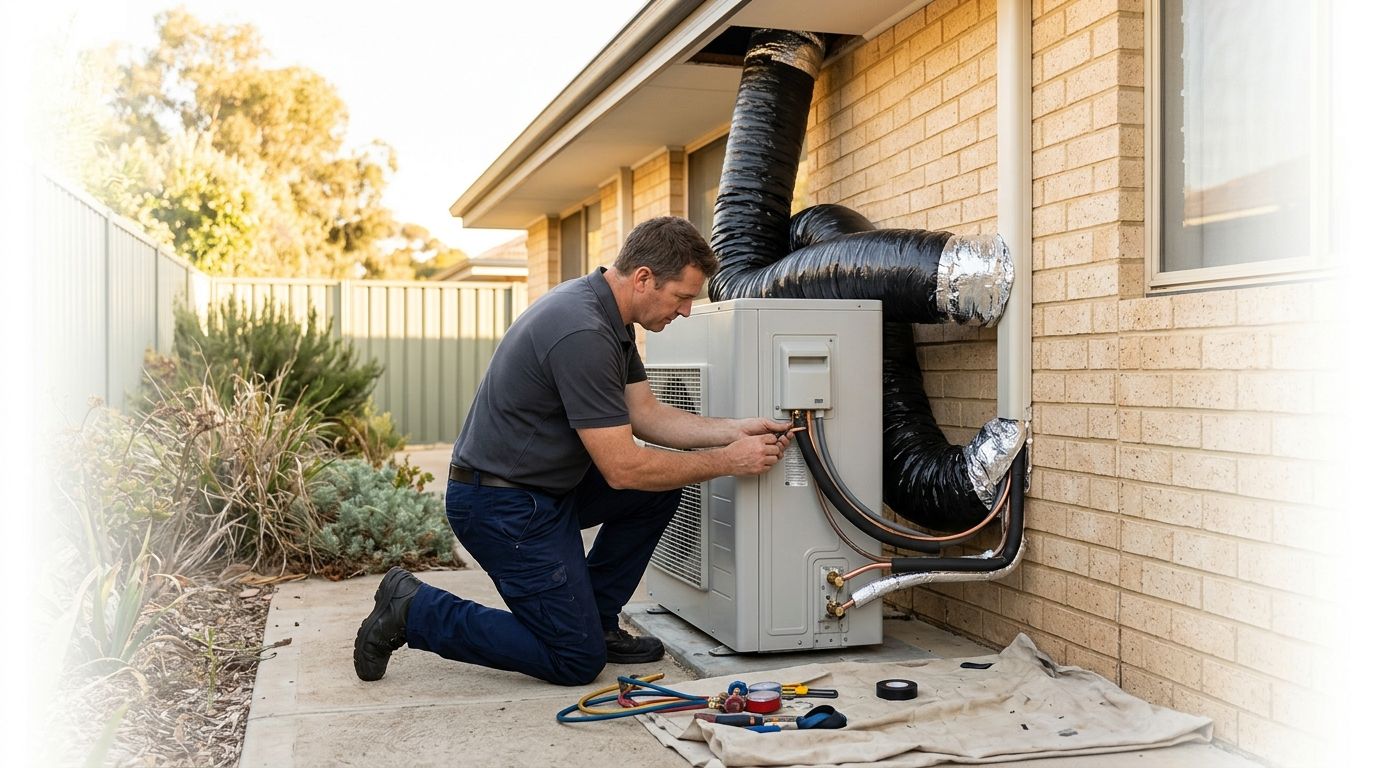
Six variables have the biggest influence on what you will pay for a ducted AC installation in Australia. Understanding them helps you read quotes accurately and spot where your home might push costs higher than the averages. For a broader look at how much ducted air conditioning costs in Australia, our dedicated cost guide covers the full picture across different home types and climates.
A professional ducted AC installation follows a clear sequence of steps, typically completed over one to two days depending on the size of the home and the complexity of the duct layout. Knowing what each stage involves helps you prepare your home and ask the right questions when your technician arrives.
Never hire an installer who cannot produce their ARC licence on request. It is a legal requirement, and using an unlicensed technician can void your manufacturer warranty and create serious liability issues if something goes wrong.
Ducted AC installation in Australia typically costs between $5,000 and $20,000 or more, shaped by your home size, chosen brand, roof access and the number of zones you need. That is a significant investment, but it delivers something no split system can match: whole-home comfort from a single, quiet system with the flexibility to heat or cool only the rooms you are actually using.
Beyond day-to-day comfort, a quality ducted system from Daikin, Mitsubishi Electric or Panasonic adds genuine value to your property. Buyers and renters consistently rate ducted air conditioning as one of the most desirable home features in both Sydney and Melbourne markets.
Frozone Air provides free, no-obligation quotes for ducted installations across Sydney and Melbourne, carried out by licensed technicians. Call us on 1300 801 839 to talk through your home, or book a ducted air conditioning installation online and we will arrange a site inspection at a time that suits you.
You cannot legally install AC ducts yourself in Australia. Ducted air conditioning involves handling refrigerants, which requires an ARC-licensed refrigeration mechanic, and electrical connections, which require a licensed electrician. DIY installation is illegal, voids your manufacturer warranty and poses serious safety risks. Homeowners can help by clearing roof access before the crew arrives, but all technical work must be carried out by licensed professionals.
A fully installed ducted air conditioning system in Australia typically costs between $5,000 and $20,000 or more, depending on your home's size, the system's capacity, the number of zones and the complexity of the installation. No two homes are the same, so a site inspection is needed for an accurate quote. Use Frozone Air's cost calculator to get a ballpark figure before booking.
The $5,000 rule is a general guide for deciding whether to repair or replace an ageing air conditioner. Multiply the system's age in years by the cost of the repair. If the result exceeds $5,000, replacement is usually the more cost-effective choice. This is a rule of thumb only, and a licensed technician's assessment should always inform your final decision.
Ductwork installation in Australia must comply with AS 4254 (Ductwork for Air Handling Systems), which covers materials, sealing, insulation and airflow requirements. All electrical work associated with the installation must also meet AS/NZS 3000 (Wiring Rules). Licensed installers are required to meet both standards, which is one of the key reasons choosing a properly licensed contractor matters.