

How to Clean Your Ducted Aircon Filter: A Step-by-Step Guide
Learn how to clean your ducted aircon filter in a few simple steps. Keep your system running efficiently with our practical DIY maintenance guide.


Learn how to clean your ducted aircon filter in a few simple steps. Keep your system running efficiently with our practical DIY maintenance guide.
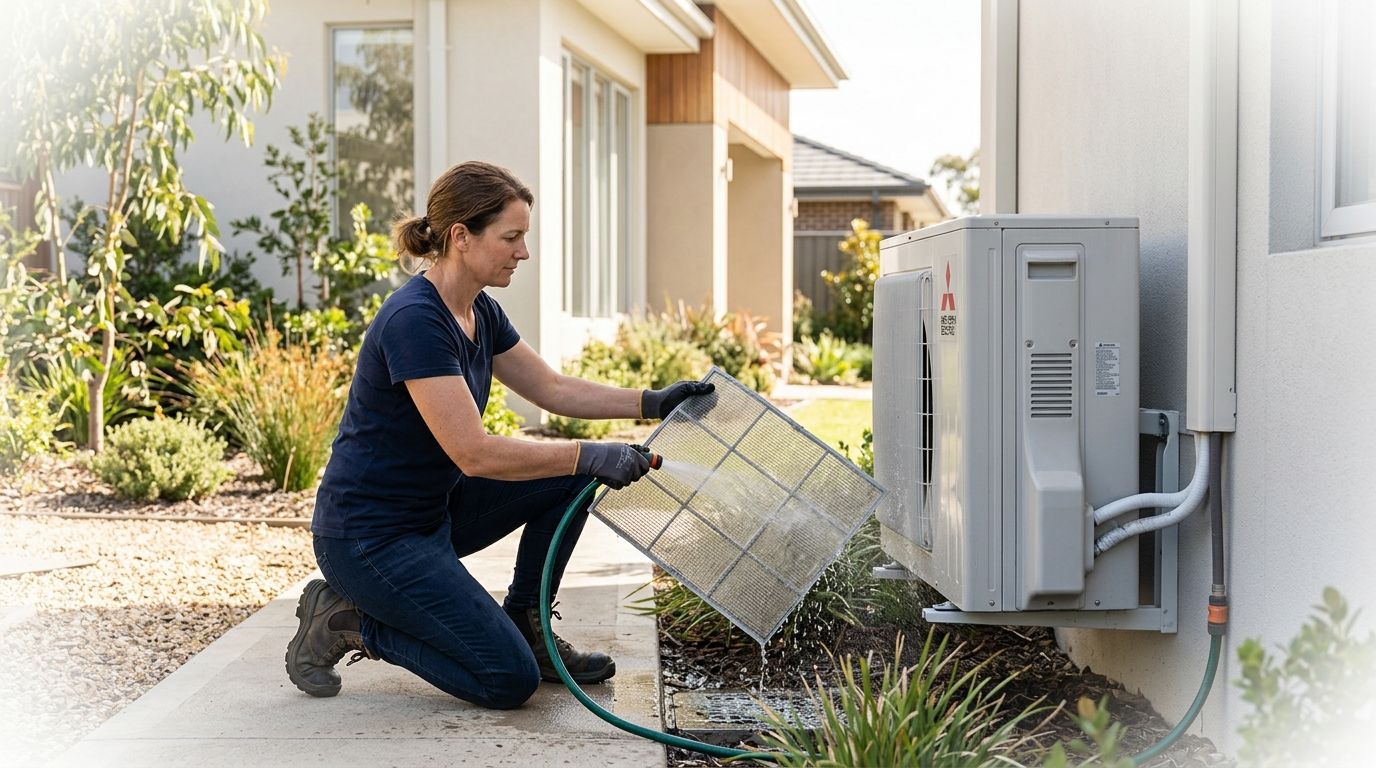
If your ducted air conditioning system has started feeling less powerful, or your power bills have crept up without explanation, a clogged return air filter is often the culprit. Knowing how to clean a ducted aircon filter is one of the simplest things you can do to keep your system running efficiently, and this guide walks you through every step.
The return air filter sits inside your system's return air grille and acts as the first line of defence for your ducted unit. Every time the system runs, it pulls air from your home back through this filter, trapping dust, pet hair, pollen and other airborne debris before that air gets recirculated through your home.
When the filter becomes blocked, your system has to work much harder to pull air through. That extra strain drives up energy consumption, puts unnecessary wear on the fan motor and compressor, and can eventually lead to costly repairs. A clean filter keeps airflow strong and your running costs in check.
Key takeaways
In this guide you will find out where to locate your filter, how to remove and wash it safely, how often to repeat the process, and what to look for if the filter alone does not solve the problem.
In most ducted systems, the filter is not inside the indoor unit itself. It sits behind the return air grille, which is the large louvred panel typically mounted in a hallway ceiling or a wall near the centre of your home. This is the point where your home's air gets drawn back into the system, so it makes sense for the filter to sit right there.
To find your return air grille, look for the largest grille in your home. It is usually noticeably bigger than the supply air outlets in each room, and it may have a hinged or clip-on cover that swings open for easy access. The filter sits directly behind this cover, either clipped into a frame or simply resting in a slot.
Some systems are set up differently. If your installer positioned the return air intake at the indoor unit in the roof cavity rather than at a ceiling grille, the filter will be up there instead. This is less common in residential installations but does occur, particularly in older homes or where the roof space layout made a ceiling grille impractical. If you are not sure which setup you have, check your owner's manual first. The manual will include a diagram showing exactly where the filter is located.
The general layout is consistent across all the major brands. Daikin ducted systems, Mitsubishi Electric ducted systems and ActronAir ducted systems all use the same return air filter principle, even though the grille designs and clip mechanisms vary between brands and installers. The steps in this guide apply to all of them. If you cannot find your manual, a quick search of your model number online will usually bring up a PDF version from the manufacturer's website.
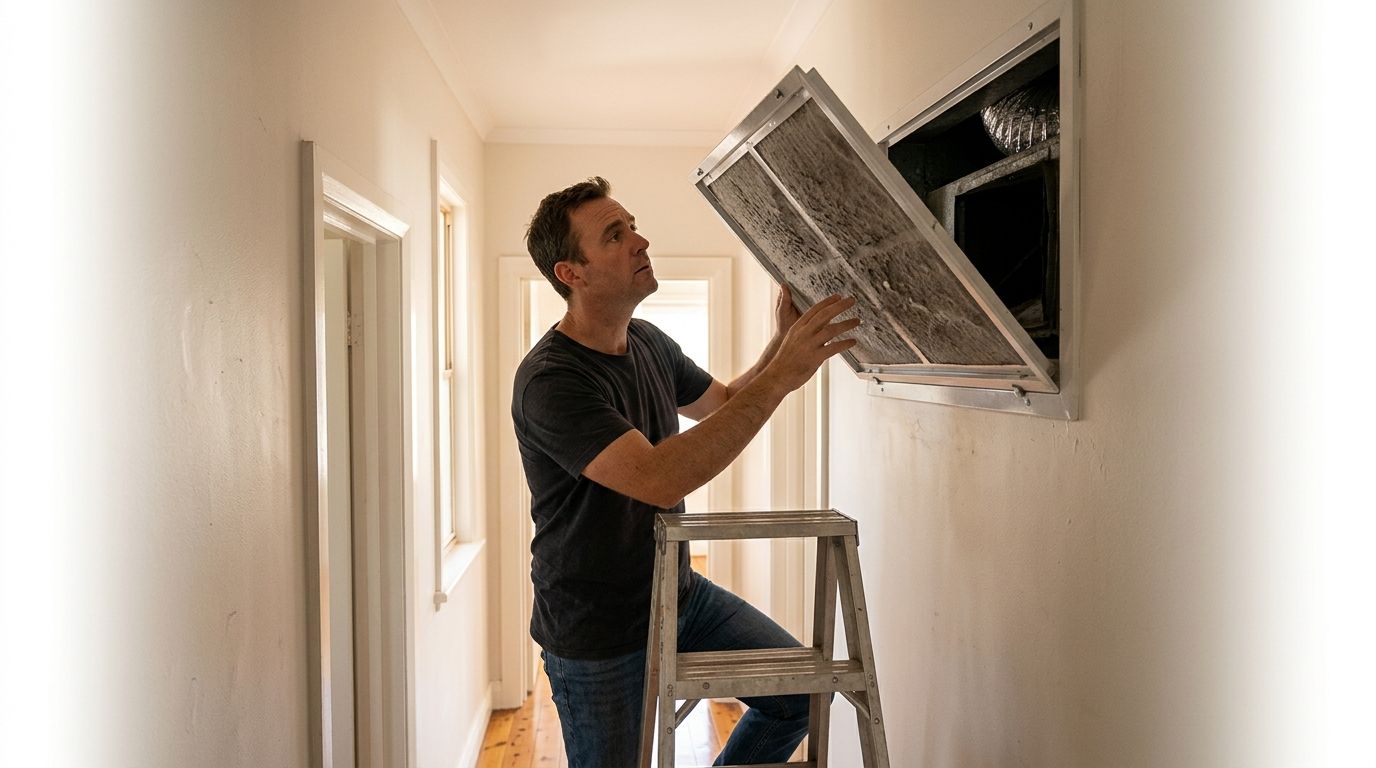
No specialist tools are required to clean a ducted aircon filter. Before you begin, gather a step ladder (if your return air grille is ceiling-mounted), a vacuum cleaner with a brush attachment, mild dish detergent, warm water, a soft cloth or sponge, and a dry towel or drying rack. Having everything ready before you open the grille makes the job quicker and means you are not leaving the system open while you hunt for supplies.
While the filter is out, take a moment to inspect it closely. Small tears in the mesh, warping of the frame, or heavy discolouration that does not wash out are all signs the filter needs replacing rather than cleaning. A damaged filter lets unfiltered air bypass the mesh entirely, which defeats the purpose. If you find damage, or if the system still feels sluggish after a thorough clean, it may be time to book a professional air conditioning cleaning service to check the coils, fan and ductwork for deeper buildup.
For most households, cleaning the ducted aircon filter every four to six weeks during periods of heavy use (typically summer and winter) and at least every three months during lighter use is the right approach. Homes with pets, high dust levels or allergy sufferers should lean toward the shorter end of that range, as filters in these environments can become clogged much faster than average.
Most major manufacturers include a recommended cleaning interval in their owner's manuals. Daikin ducted systems, Mitsubishi Electric ducted systems and Fujitsu ducted systems all specify regular filter maintenance as a condition of keeping the warranty valid. ActronAir, as an Australian-made brand, also includes this guidance and designs its systems with the same easy-access return air grille layout. Following the manufacturer's schedule is the simplest way to protect your investment and keep the warranty intact.
Skipping filter cleans has a compounding effect. A partially blocked filter reduces airflow, which forces the fan to work harder and draws more electricity. Over time, restricted airflow causes the evaporator coil to run colder than it should, which can lead to ice forming on the coil and the system shutting down on a fault. The compressor, which is the most expensive component in any ducted system, also takes on extra load when airflow is poor. What starts as a minor maintenance oversight can turn into a repair bill that far outweighs the 15 minutes it takes to clean the filter.
If your system is already showing signs of reduced performance, higher running costs or unusual noises, a dirty filter may not be the only issue. Read our guide to common air conditioner problems to work out whether something else needs attention.
DIY filter cleaning handles the most common cause of reduced ducted aircon performance, but there are situations where a clean filter is not enough. If your filter is torn, warped or showing visible mould growth, it needs to be replaced rather than washed. A damaged filter lets unfiltered air bypass the mesh entirely, and a mouldy filter is often a sign of a deeper moisture problem that a rinse under the tap will not fix.
If you have reinstalled a clean, dry filter and the system is still underperforming, the problem lies further inside the system. Weak airflow after a filter clean usually points to dirty evaporator coils or blocked ductwork. Warm air coming from the vents despite the system running normally can indicate a refrigerant issue. Unusual noises such as rattling, grinding or a high-pitched squeal suggest a mechanical fault that needs a technician's attention. None of these are problems you can solve with a vacuum and a bucket of soapy water.
Mould is worth treating seriously. If you notice a musty smell coming from your vents even after cleaning the filter, read our guide to mould in your aircon to understand what causes it, the health risks involved and what a professional service involves.
The best way to stay ahead of all of this is an annual professional service alongside your regular filter cleaning. A qualified technician will clean the evaporator coil, check refrigerant levels, inspect the ductwork and test the system's overall performance. Frozone Air services all major ducted brands, including Daikin, Mitsubishi Electric and ActronAir, across Sydney and Melbourne. Booking a yearly service is far cheaper than waiting for a fault to develop into a full repair.
Clean your ducted aircon filter every four to six weeks during periods of heavy use, such as summer and winter, and at least every three months during lighter use. Homes with pets, high dust levels or allergy sufferers should clean more frequently. Most manufacturers, including Daikin and Mitsubishi Electric, specify regular filter maintenance in their owner's manuals as a warranty condition.
Running a ducted system without a filter is not recommended, even for a short period. Without the filter in place, dust, pet hair and debris are drawn directly onto the evaporator coil, where they accumulate and restrict airflow. Coil cleaning is a job for a professional and costs significantly more than a replacement filter, so it is always worth sourcing a replacement before running the system again.
If your system is still underperforming after a thorough filter clean, the issue is likely deeper in the system. Dirty evaporator coils, blocked or leaking ductwork and low refrigerant are the most common culprits. A professional service will identify the cause and resolve it before it leads to more serious damage.
Replace your filter if you find tears or holes in the mesh, warping of the frame, or heavy discolouration that does not wash out. Visible mould growth on the filter is also a clear sign it needs replacing, and it warrants a professional inspection to check whether mould has spread further into the system. A damaged filter should never be reinstalled, as it allows unfiltered air to pass straight through to the coil.
Cleaning your ducted aircon filter is one of the simplest maintenance tasks a homeowner can do, and one of the most effective. A clean filter protects your system's efficiency, keeps your indoor air quality high, and extends the life of expensive components like the compressor and fan motor. Most households can handle it themselves every four to six weeks with nothing more than a vacuum and some warm soapy water.
That said, DIY filter cleaning is not a substitute for professional maintenance. An annual service by a qualified technician covers everything the filter clean cannot: coil cleaning, refrigerant checks, ductwork inspection and a full system performance test. Staying on top of both means your ducted system runs reliably for years rather than limping along until something fails.
Ready to get your system back in top shape? Call Frozone Air on 1300 801 839 or book an air conditioning service online and we will take care of the rest.