

What Happens During an Air Conditioning Installation? A Step-by-Step Overview
Wondering what the air conditioning installation process involves? We walk you through every step, from site assessment to final testing. 2026 guide.


Wondering what the air conditioning installation process involves? We walk you through every step, from site assessment to final testing. 2026 guide.
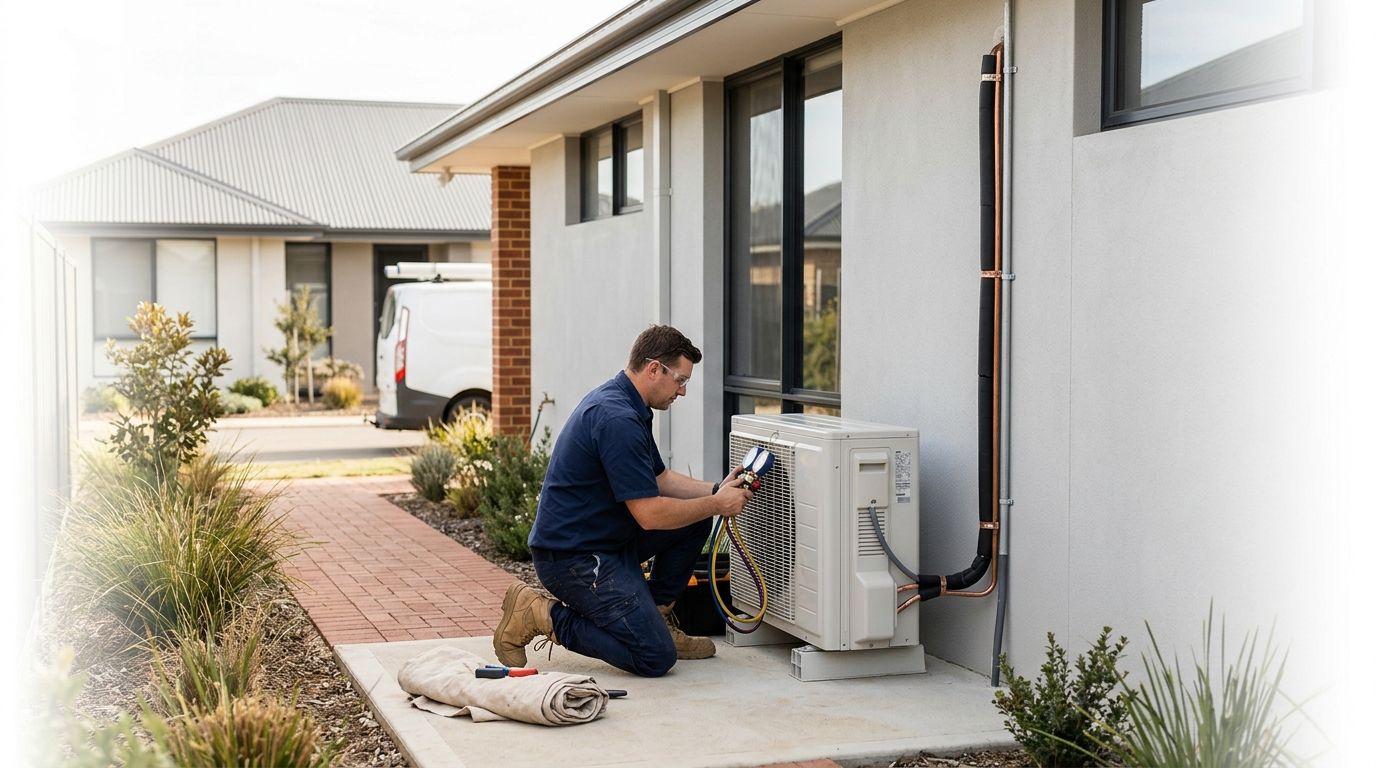
Most homeowners book an air conditioning installation and then spend the days before wondering what the tradies will actually do when they show up. The air conditioning installation process covers more ground than most people expect, from a detailed site assessment before a single bracket goes up, through to refrigerant line work, electrical connections and a full system test at the end. This article walks you through each stage so you know exactly what to expect.
For a standard split system, a professional installation typically takes between two and four hours. Ducted systems are a bigger job and usually run across one to two full days depending on the size of the home and ceiling access. Frozone Air handles installations across Sydney and Melbourne, with online quotes available before you commit to a booking date. If you're based in New South Wales, you can find out more about air conditioning installation in Sydney on our service page.
Key takeaways
Before any tools come out, a licensed technician works through a structured pre-installation assessment. Skipping this step is one of the most common reasons homeowners end up with an undersized system that can't cool the room, or an indoor unit mounted in a spot that creates noise problems and uneven airflow. Here is what a proper site assessment covers.
Frozone Air offers online consultations and quotes before you book, so the assessment findings can be discussed and any switchboard or structural issues can be factored into the final price upfront. There are no hidden costs added on the day.
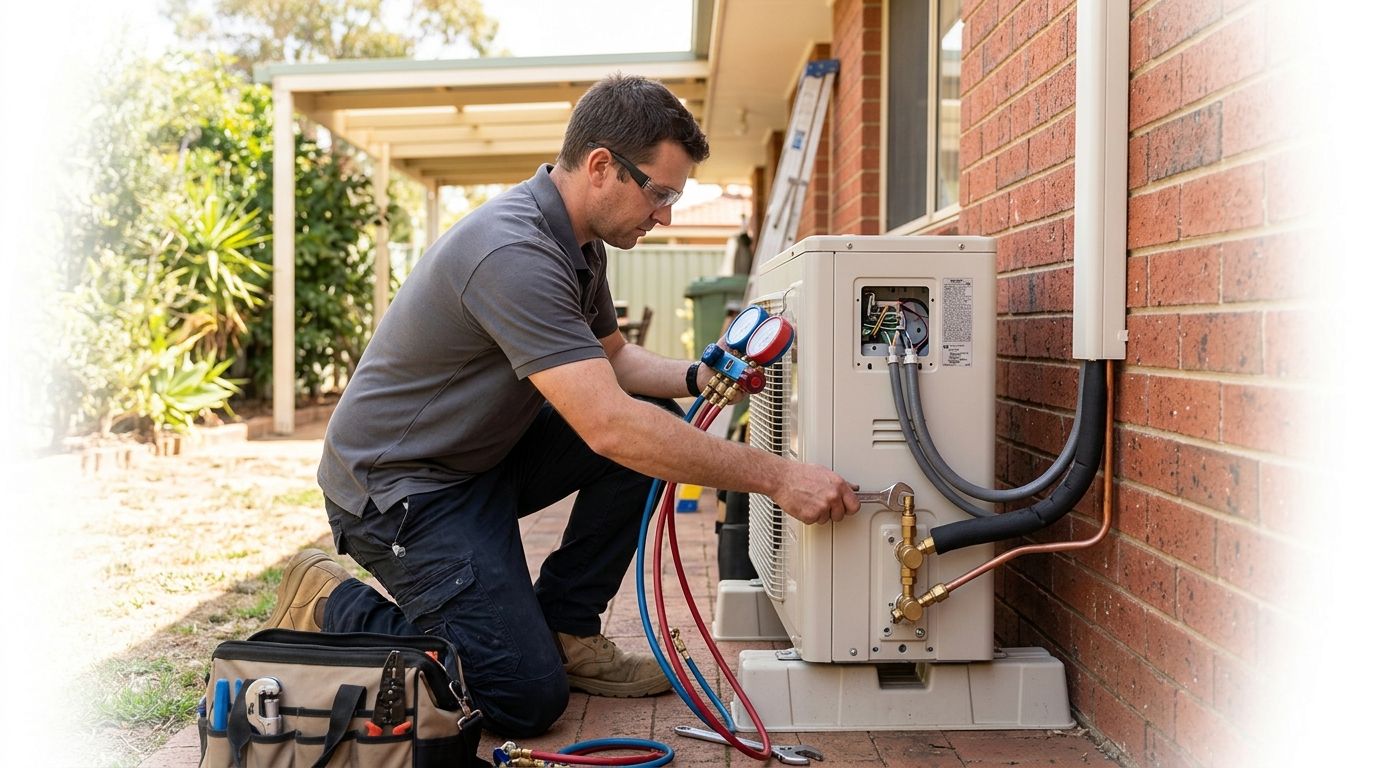
Mounting the indoor and outdoor units is the most physically demanding part of a split system installation. The technician secures the indoor unit bracket to the wall, drills the penetration hole for the refrigerant lines and cables, positions the outdoor condenser on a stable base, and routes the copper line set between the two units. Done correctly, this stage takes around 60 to 90 minutes for a standard single-storey installation.
For ducted systems, this stage expands significantly. The air handler unit must be positioned in the ceiling cavity, duct runs measured and cut, and flexible or rigid ductwork connected to each outlet. Depending on the number of zones and the ceiling access available, this work alone can add four to six hours to the job, which is why ducted installations are typically quoted as a full-day or two-day project.
The electrical and refrigerant stages are the two most technically regulated parts of any air conditioning installation in Australia. The technician connects both units via an inter-unit cable, wires the system to the switchboard, pressure-tests the refrigerant lines with nitrogen and then releases refrigerant into the system. Both tasks carry legal requirements that protect the homeowner, the technician and the environment.
On the electrical side, the technician runs the inter-unit cable between the indoor and outdoor units and connects it to the terminal blocks inside each unit according to the manufacturer's wiring diagram. The system is then wired back to the switchboard, where it connects to a dedicated circuit breaker. If the switchboard assessment from Step 1 flagged that a new breaker was needed, this is where that work happens. All electrical work must comply with AS/NZS 3000, the Australian wiring rules, and in most states must be carried out by a licensed electrician or a licensed air conditioning technician with the appropriate electrical endorsement.
On the refrigerant side, the process is more involved than most homeowners expect. Before any refrigerant enters the system, the technician pressure-tests the copper line set using dry nitrogen. The lines are pressurised to a specified level, typically around 4.15 MPa for R32 systems, and then monitored for a set period. A pressure drop indicates a leak that must be found and repaired before the system is charged. Only once the lines hold pressure is the refrigerant valve opened and the factory charge released into the system.
Under Australian law, anyone who purchases, handles or recovers refrigerant must hold a current licence issued by the Australian Refrigeration Council (ARC). This applies to every refrigerant type used in residential air conditioning, including R32 and R410A. Handling refrigerant without an ARC licence is a criminal offence under the Ozone Protection and Synthetic Greenhouse Gas Management Act, with penalties applying to both the individual and the business. For a full breakdown of what the licence covers and how to verify your installer holds one, read our article on the ARC licence and why your installer must have one.
The reasons behind this requirement are practical as well as legal. Modern refrigerants like R32 are classified as mildly flammable, and R410A, while non-flammable, is a potent synthetic greenhouse gas with a global warming potential roughly 2,088 times that of carbon dioxide. Improper handling, venting or recovery of these gases causes direct environmental harm and creates safety risks on site. A licensed technician has completed formal training in safe handling, leak detection and refrigerant recovery procedures.
Before work begins, ask your installer to confirm their ARC licence number. You can verify it directly on the ARC public register at arctick.org. Every Frozone Air technician holds a current ARC licence, and we're happy to provide that detail before we arrive on site.
Commissioning is the final stage of an air conditioning installation, and it covers everything from the first power-on through to handing the remote to the homeowner. For a split system, a thorough commissioning process takes 30 to 45 minutes. Skipping or rushing this stage is one of the most common reasons a new system develops faults or water leaks within the first few months of use.
The technician starts by powering on the system and checking the indoor unit display for any fault codes. A fault code on first start-up usually points to a wiring error or a refrigerant pressure issue that needs to be resolved before the homeowner takes over. Once the system starts cleanly, the technician cycles through every operating mode: cool, heat, fan and dry. In each mode, they check that the airflow direction and fan speed respond correctly to remote commands.
Condensate drainage is checked next. The technician confirms that water produced during cooling is flowing freely through the drain pipe and exiting at the correct discharge point outside. A blocked or incorrectly pitched drain line is one of the leading causes of water dripping from an indoor unit, so this check is not optional.
Refrigerant pressures are also verified at this stage. The technician connects gauges to the service ports and confirms that suction and discharge pressures fall within the manufacturer's specified range for the ambient temperature on the day. Pressures outside that range indicate either an undercharge or an overcharge, both of which reduce efficiency and shorten compressor life.
Once the system checks out, the technician walks the homeowner through the remote control functions, timer settings and the recommended filter cleaning schedule. Most manufacturers specify cleaning the filters every two to four weeks during heavy use. For systems like the Mitsubishi Electric MSZ-AP25VGD, a quality installer will also register the product warranty on the homeowner's behalf at this point, so the full warranty period starts from the correct date without the homeowner needing to chase it up.
To understand what a full professional installation like this should cost from start to finish, bookmark our guide to air conditioning installation cost in Australia for reference.
Installation time for an air conditioner depends on the system type, the complexity of the line run and the condition of the existing electrical setup. A straightforward split system can be done in a morning, while a ducted system across a large home is a multi-day project. Here is a realistic breakdown by system type.
| System Type | Typical Installation Time |
|---|---|
| Back-to-back split system (indoor and outdoor on the same wall) | 2 to 3 hours |
| Standard split system with a longer line run | 3 to 4 hours |
| Multi-split system (2 to 3 indoor units) | 4 to 6 hours |
| Ducted system (new build or retrofit) | 1 to 3 days |
Several variables can push a job past these estimates. Difficult roof or wall access adds time because the technician needs to work around structural obstacles or use additional equipment to reach the installation point safely. A switchboard upgrade, if flagged during the site assessment, adds at least an hour and sometimes requires a separate electrician visit. Long refrigerant line runs take more time to insulate and pressure-test correctly, and an outdoor unit base that requires a concrete slab pour needs to cure before the condenser can be secured.
For the fastest turnaround on a straightforward job, Frozone Air's back-to-back split system installation service is the most efficient option. With the indoor and outdoor units positioned on the same wall, the line run is minimal, the penetration is a single short hole, and the whole job can typically be completed in under three hours with no disruption to the rest of the home.
Ducted installations at the longer end of the range, particularly retrofits into existing homes with limited ceiling access, involve cutting new penetrations, running flexible ductwork through tight ceiling cavities and commissioning multiple zones. It is realistic to plan for two full days on a home with four or more zones, and some larger properties require three.
A standard split system installation takes two to four hours for a straightforward job. Multi-split systems with two or three indoor units typically take four to six hours. Ducted systems are a larger project and usually run across one to three full days depending on the number of zones and ceiling access.
Yes, someone over 18 should be present for the full duration of the installation. The technician needs access to the switchboard, may need to discuss unit placement decisions on the day, and will walk you through the system at handover. Leaving a neighbour or property manager in charge is acceptable if they have authority to make decisions on your behalf.
Your installer must hold a current Australian Refrigeration Council (ARC) licence to legally handle refrigerant, and must be a licensed electrician or hold the appropriate electrical endorsement for the state where the work is carried out. You can verify an ARC licence number directly on the public register at arctick.org before work begins.
A professional installer should register the product warranty on your behalf at the time of commissioning. This ensures the warranty period starts from the correct date and that the installation is recorded against your unit's serial number with the manufacturer.
No. Handling refrigerant without an ARC licence is a criminal offence under Australian law, and electrical connection to the switchboard must be carried out by a licensed electrician or endorsed technician. DIY installation also voids the manufacturer's warranty on the unit.
A professional air conditioning installation follows a clear, structured process: site assessment, unit mounting, electrical and refrigerant work, and a full commissioning before handover. Every stage matters, and the quality of your installer determines how well the system performs over its lifetime and whether your warranty stays valid.
Frozone Air's licensed technicians install Daikin Cora Series systems like the 2.5kW FTXM25WVMA, Mitsubishi Electric MSZ-AP Series units like the MSZ-AP25VGD, Fujitsu ASTG Series models like the 2.5kW ASTG09KMCA and Panasonic systems across Sydney and Melbourne. Every job comes with upfront pricing, no hidden costs added on the day, and real booking times so you know exactly when your team arrives.
Request a free quote online today and get your installation locked in with a team that does the job properly from start to finish.