

Mitsubishi Electric vs Mitsubishi Heavy Industries: What's the Difference and Which Should You Buy?
Confused by Mitsubishi Electric vs Mitsubishi Heavy Industries? We explain the key differences, product ranges, and which brand suits your home best.


Confused by Mitsubishi Electric vs Mitsubishi Heavy Industries? We explain the key differences, product ranges, and which brand suits your home best.
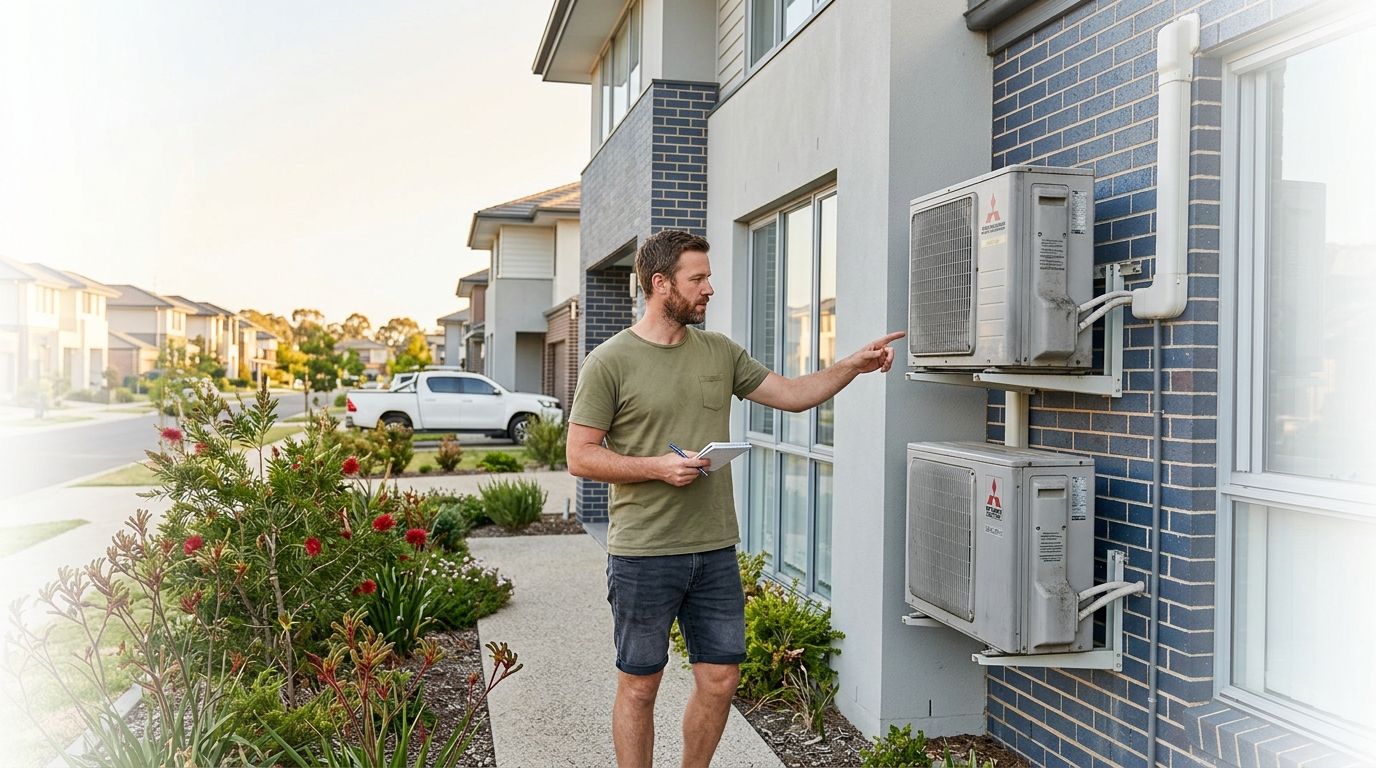
If you've ever searched for a Mitsubishi air conditioner and ended up more confused than when you started, you're not alone. Mitsubishi Electric vs Mitsubishi Heavy Industries is one of the most common points of confusion in the Australian air conditioning market. Both brands carry the Mitsubishi name and the iconic three-diamond logo, yet they are two entirely separate companies with different ownership structures, different engineering priorities and different product lines.
This article breaks down exactly what sets them apart. We'll cover where each company came from, how their products differ in the real world, how they compare on performance and value, and which one we'd recommend for your home or business.
Key takeaways
Both Mitsubishi Electric and Mitsubishi Heavy Industries trace their roots to the original Mitsubishi zaibatsu, the vast Japanese industrial conglomerate that was broken up after World War II. The two companies that emerged are not parent and child, and neither owns the other. They are independent entities that happen to share a name and a logo because of that common ancestry. Think of them as distant cousins rather than siblings.
Mitsubishi Electric is a global electronics and electrical equipment manufacturer, operating as part of the broader Mitsubishi Group. Its air conditioning division is one of the most recognised in the world, with a strong reputation for advanced inverter technology, precise temperature control and quiet operation. In Australia, the brand covers a wide residential range from entry-level wall-mounted split systems through to premium multi-zone and ducted solutions. You can browse the full Mitsubishi Electric range that Frozone Air installs and recommends.
Mitsubishi Electric has invested heavily in smart home integration. Their MELCloud platform lets you control your system remotely via a smartphone app, and many models are compatible with Google Home and Amazon Alexa. Their units consistently earn strong energy star ratings, and the brand is particularly well regarded for whisper-quiet indoor units, with some models operating as low as 19 decibels.
Mitsubishi Heavy Industries (MHI) is a separate industrial conglomerate whose business spans shipbuilding, aerospace and power generation. Its air conditioning division, sold in Australia as Mitsubishi Heavy Industries Air-Conditioners Australia (MHIAA), applies that same industrial engineering philosophy to residential and commercial HVAC. The result is a product line built with a focus on robust construction and long-term reliability, particularly in harsh operating conditions. Frozone Air stocks and installs the Mitsubishi Heavy Industries range across Sydney and Melbourne.
MHI units are generally priced more competitively than their Mitsubishi Electric counterparts, making them a strong option for budget-conscious buyers who don't want to compromise on build quality. The SRK series in particular has earned a loyal following for its quiet operation and solid performance in Australian conditions. Smart features are available but the range is less extensive than Mitsubishi Electric's offering, which is a genuine trade-off worth considering.

Across the six criteria that matter most to Australian buyers, Mitsubishi Electric and Mitsubishi Heavy Industries are closer than most people expect. Both deliver strong energy efficiency, quiet operation and solid warranties. The real differences come down to price positioning, smart feature depth and the breadth of available configurations.
| Feature | Mitsubishi Electric | Mitsubishi Heavy Industries |
|---|---|---|
| Price Range (unit only) | $900 to $2,200+ AUD | $750 to $1,800+ AUD |
| Energy Efficiency Rating | Very high (up to 6+ star rated models) | High (up to 5.5 star rated models) |
| Smart / Wi-Fi Features | Extensive (MELCloud app, Google Home, Alexa) | Available on select models (Wi-Fi adapter required on some) |
| Noise Level | 19 to 26 dB (indoor unit) | 21 to 28 dB (indoor unit) |
| Warranty (residential) | 5 years parts and labour | 5 years parts and labour |
| Best Suited For | Tech-forward homes, wide size range, premium comfort | Budget-conscious buyers, harsh climates, robust reliability |
On price, Mitsubishi Electric sits a notch above MHI across most capacity classes. The gap is not enormous, typically $100 to $200 on comparable 2.5kW to 3.5kW models, but it is consistent. For buyers comparing unit costs side by side, MHI will almost always come out ahead. That said, Mitsubishi Electric's higher price reflects genuine additional features rather than just badge premium.
Smart features are where the gap is most noticeable. Mitsubishi Electric's MELCloud platform is one of the more polished app-control systems available in Australia, with reliable remote access, scheduling and energy monitoring built in. MHI has added Wi-Fi capability to more of its recent models, but the ecosystem is less developed and some older units require a separate Wi-Fi adapter to connect. If smart home integration is a priority, Mitsubishi Electric has a clear advantage.
On warranty, both brands match each other at five years for residential installations, which is reassuring. The practical difference is in how each brand's units tend to perform over that warranty period. MHI's industrial engineering heritage means its units are built with durability in harsh conditions as a core design goal, which is worth factoring in if you're in a region with extreme summer heat or coastal salt air.
Both Mitsubishi Electric and Mitsubishi Heavy Industries rank among the best split system air conditioners in Australia, so the decision comes down to your specific priorities rather than one brand being objectively better than the other. Here is how we'd guide buyers in four common situations.
Go with Mitsubishi Heavy Industries. The SRK series is the sweet spot for buyers who want a well-built, quiet and efficient unit without stretching the budget. The SRK25ZSX (2.5kW) comes in at roughly $750 to $950 AUD for the unit alone and delivers performance that punches well above its price point. It's a particularly strong choice for bedrooms, home offices and smaller living areas where you want consistent, reliable cooling without fuss.
Mitsubishi Electric is the better fit here. The MSZ-AP and MSZ-GL series both support MELCloud out of the box, with no additional adapters required. The MSZ-AP25VGD (2.5kW) is our recommended entry-to-mid option for small rooms, priced at approximately $900 to $1,100 AUD. For medium-sized rooms, the MSZ-GL35VGD (3.5kW) steps up the capacity and sits in the $1,100 to $1,400 AUD range. Both models work with Google Home and Amazon Alexa, making them straightforward to fold into an existing smart home setup.
MHI's industrial engineering background gives it a genuine edge in demanding conditions. Its units are designed to operate reliably across a wide temperature range and are built with corrosion resistance in mind, which matters in coastal areas where salt air accelerates wear on outdoor units. The SRK35ZSX (3.5kW) is a solid choice for medium rooms in these environments, offering robust performance without the premium price of comparable Mitsubishi Electric models.
Mitsubishi Electric has the broader residential lineup. If you're looking at multi-zone setups, larger capacity units or a full ducted solution for a new build or renovation, Mitsubishi Electric offers more configurations and more flexibility. MHI's residential range is strong but narrower, and for complex or large-scale installations, Mitsubishi Electric's depth of product options is a practical advantage.
Whichever brand you choose, professional installation is non-negotiable. A poorly installed unit will underperform regardless of the brand on the badge. Our team handles split system air conditioning installation across Sydney and can advise on the right model and capacity for your space before any work begins.
No, they are two entirely separate companies. Both trace their origins to the original Mitsubishi industrial group that was broken up after World War II, which is why they share a name and logo. They operate independently, with different ownership structures, different engineering priorities and different product lines.
Neither brand is objectively better. Mitsubishi Electric suits buyers who want advanced smart home integration, a wider range of configurations and the quietest possible indoor units. Mitsubishi Heavy Industries is the stronger choice for buyers prioritising value for money, robust build quality and reliable performance in harsh or coastal conditions.
Yes. Both brands offer a five-year parts and labour warranty on residential split system installations in Australia. The warranty terms are comparable, so this is not a deciding factor between the two brands. What matters more is choosing a licensed installer, as an improper installation can void the warranty regardless of brand.
Generally, yes. Across comparable capacity classes, MHI units typically come in $100 to $200 less than equivalent Mitsubishi Electric models. The price gap reflects the difference in smart feature depth and product range rather than a difference in core build quality. Both brands represent solid value at their respective price points.
Both Mitsubishi Electric and Mitsubishi Heavy Industries are quality brands backed by serious Japanese engineering. The right choice simply depends on what matters most to you. Smart features and a broader range of configurations, or straightforward reliability at a sharper price point. Either way, you're getting a unit built to last.
At Frozone Air, we install and service both brands across Sydney and Melbourne. Our team can assess your space, your budget and your priorities and give you a straight recommendation without the sales pitch. Shop Mitsubishi Electric units online, or call us on 1300 801 839 to talk through your options and request a free quote tailored to your home.