

Fujitsu Air Conditioner Error Codes: What They Mean and How to Fix Them
Fujitsu air conditioner error codes explained — what each code means, what causes it, and whether you can fix it yourself or need a technician.


Fujitsu air conditioner error codes explained — what each code means, what causes it, and whether you can fix it yourself or need a technician.
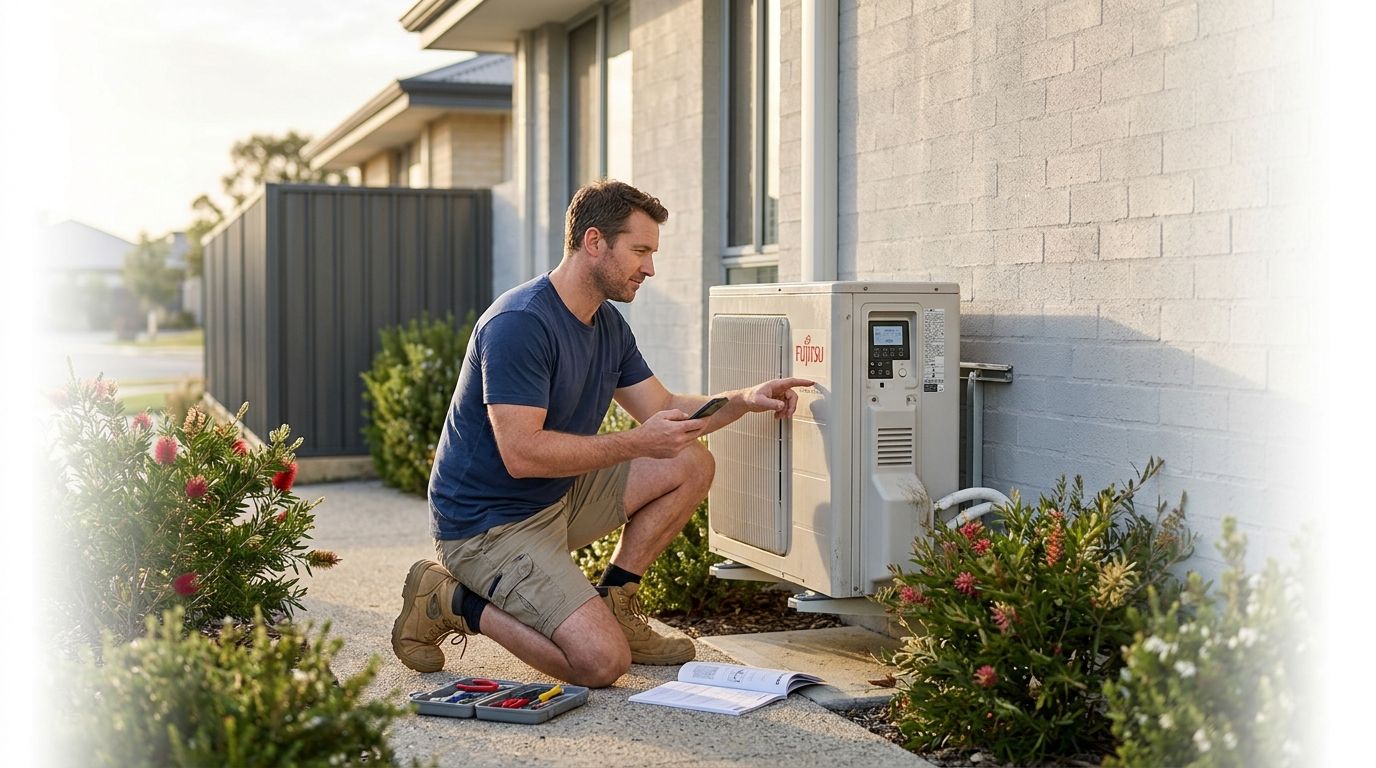
You walk over to your Fujitsu split system and it has stopped cooling. The operation light is blinking in a steady, repeating pattern and the unit will not respond to the remote. Before you call a technician, that flashing light is actually telling you something useful. Fujitsu air conditioner error codes are part of a built-in self-diagnostic system that flags faults through flashing indicator lights and alphanumeric codes on the display or wired controller.
This article covers everything you need to decode what your Fujitsu is trying to tell you. You will learn how to read the flash sequences, what the most common error codes mean, which issues you can safely address yourself, and which ones require a licensed technician to fix properly.
Key takeaways
Fujitsu communicates faults in two ways depending on the model: flashing LED indicator lights on the indoor unit, or alphanumeric codes shown on a wired controller or remote display. Both methods point to the same underlying fault list, so understanding how to read each one will get you to an answer quickly.
On most wall-mounted Fujitsu split systems, the indoor unit has three indicator lights: the operation light (green), the timer light (orange or yellow) and the economy light (green or orange). When a fault occurs, one or more of these lights will flash in a repeating sequence. The number of flashes before the pause is the fault code number. For example, three flashes, a pause, then three flashes again indicates fault code 3.
The combination of which lights are flashing and how many times they flash together identifies the specific fault. Some codes use a single light flashing, while others use two lights flashing simultaneously or in alternation. Always count a full sequence from the first flash to the pause before cross-referencing the code.
Newer Fujitsu models and systems fitted with a wired controller will display an alphanumeric code directly on the screen, such as 'E1', 'E6' or 'A3'. On compatible wired controllers, you can also retrieve the stored error code manually by pressing and holding the 'Check' or 'Test' button for three to five seconds. The display will cycle through any logged fault codes.
If the lights stop flashing before you finish counting, switch the unit off at the wall, wait 30 seconds and power it back on. The fault sequence will usually repeat within a minute or two if the underlying issue is still present.

Fujitsu air conditioners use a self-diagnostic system that maps every detected fault to a specific error code or LED flash pattern. The table below covers the most common codes you are likely to encounter across Fujitsu's wall-mounted split system range, along with a plain-English description of the fault and the most appropriate first response.
| Error Code / Flash Pattern | Fault Description | Recommended Action |
|---|---|---|
| E0 / EE | Communication error between indoor and outdoor unit. The two units have lost their signal connection. | Check that the interconnecting cable between indoor and outdoor units is secure and undamaged. Reset power. If the code returns, call a technician. |
| E1 | Indoor unit PCB (printed circuit board) fault. The main control board has detected an internal error. | Do not attempt to repair the PCB yourself. Switch the unit off and call a licensed technician for diagnosis and board replacement. |
| E3 | Indoor fan motor fault. The indoor unit's fan is not operating within expected parameters. | Check for obvious obstructions around the indoor unit. If clear, the motor or capacitor likely needs professional replacement. |
| E4 | Drain pump or float switch fault. Water has accumulated in the drain pan beyond the safe level. | Check and clean the air filter first, as a blocked filter is a common cause. Inspect the condensate drain line for blockages. If the float switch is faulty, a technician is needed. |
| E6 | Outdoor unit communication fault. The outdoor unit is not responding to signals from the indoor unit. | Check the outdoor unit is powered and the isolator switch is on. Reset power. Persistent E6 codes require a technician to inspect wiring and the outdoor PCB. |
| E8 | High-pressure protection. The refrigerant circuit pressure has exceeded the safe operating limit. | Check for a dirty air filter or blocked outdoor unit airflow. Clear any debris around the outdoor unit. If the code persists after cleaning, call a technician. |
| E9 | Low-pressure fault or refrigerant issue. The system may have a refrigerant leak or insufficient charge. | Do not attempt to top up refrigerant yourself. Refrigerant handling is legally restricted to licensed technicians in Australia. Book a repair immediately. |
| EA | Four-way valve fault. The reversing valve that switches the system between heating and cooling modes has failed. | This is a mechanical component fault. Switch the unit off and arrange a technician visit. Do not continue running the system. |
| 3 Flashes (LED pattern) | Fan motor fault on models without a display. Equivalent to E3 on display models. | Check for obstructions. If clear, the fan motor requires professional inspection. |
| 5 Flashes (LED pattern) | Drain or float switch fault on models without a display. Equivalent to E4 on display models. | Clean the air filter and check the condensate drain line. If the fault persists, a technician should inspect the float switch. |
Exact codes can vary between Fujitsu series. The ASTG wall-mounted range, the ARTG Series ducted systems and older ARTG inverter models each have slightly different fault code lists, and some codes carry different meanings across generations. Always cross-reference the code you see with the installation manual specific to your model before taking action.
Not every Fujitsu error code means an expensive call-out. Some faults are triggered by simple maintenance issues you can resolve in a few minutes. Others involve refrigerant, electrical components or mechanical parts that must be handled by a licensed professional. Here is how to tell the difference.
The following issues are safe for a homeowner to investigate and, in many cases, resolve without any tools or technical knowledge. These checks apply to common faults including E4, E8 and apparent communication errors caused by a simple power interruption.
If any of these checks resolve the fault, monitor the unit for the next 24 hours to confirm it does not return. For further help with common faults, our general air conditioner troubleshooting guide covers a wider range of brands and fault types.
The following fault codes should not be self-diagnosed beyond the basic checks above. Attempting to repair these yourself risks personal injury, voiding your warranty and, in the case of refrigerant work, breaking Australian law.
Book our air conditioning repairs service if any of these codes appear and a basic reset has not resolved the issue.
Resetting a Fujitsu error code clears the active fault from the unit's memory and allows it to attempt a fresh start. This is a useful first step for any code, but it does not fix the underlying problem. If the fault is still present, the code will return within a short time.
Watch the unit for the first few minutes after restart. If the same error code or flash pattern reappears quickly, the fault is still active and a reset alone will not solve it. At that point, the unit needs a technician to carry out a proper diagnosis rather than repeated resets, which can mask the fault and potentially cause further damage.
Many of the most common Fujitsu fault codes are not random failures. They are the direct result of neglected maintenance. E4 (drain overflow), E8 (high-pressure protection) and most communication-related codes are frequently triggered by clogged filters, blocked condensate drains and dirty coils restricting airflow. A consistent maintenance routine will prevent the majority of these faults before they ever appear.
Follow this routine to keep your Fujitsu running cleanly between professional services:
Even well-maintained units will develop faults over time. Components wear, refrigerant circuits age and electrical connections loosen with years of thermal cycling. Regular maintenance reduces the frequency of fault codes significantly, but it does not eliminate the need for occasional professional repairs. The goal is to catch small issues before they become expensive ones.
A flashing light on a Fujitsu air conditioner indicates a fault code. The number of times the light flashes before pausing corresponds to a specific fault, such as a drain issue, fan motor problem or high-pressure fault. Count the flashes in one complete sequence, then cross-reference with your model's fault code list or the table in this article.
To reset a Fujitsu error code, turn the unit off at the remote, switch off the isolator switch or circuit breaker, wait at least 30 seconds and then restore power. If the same code reappears within a few minutes of restarting, the underlying fault is still active and a reset alone will not fix it. A technician will need to diagnose the root cause.
Error code E8 on a Fujitsu air conditioner is a high-pressure protection fault. It means the refrigerant circuit pressure has exceeded the safe operating limit, which is most commonly caused by a dirty air filter or a blocked outdoor unit restricting airflow. Clean the filter, clear any debris around the outdoor unit and reset the system. If E8 returns, call a licensed technician to inspect the refrigerant circuit.
Some Fujitsu error codes can be resolved with basic DIY checks. Cleaning a clogged air filter, clearing debris from the outdoor unit and resetting the circuit breaker are all safe for a homeowner to do. However, codes involving refrigerant (E9), control board faults (E1), fan motor failures (E3) or four-way valve faults (EA) must be handled by a licensed technician, as these involve electrical components or refrigerant handling that is legally restricted in Australia.
Fujitsu error codes are your system's way of flagging a problem early, before a minor fault becomes a costly repair. Catching them quickly matters. A clogged filter or blocked drain line is a five-minute fix. A refrigerant leak left running for weeks is a much bigger bill.
Some faults are straightforward DIY checks: clean the filter, clear the outdoor unit, reset the breaker. But anything involving refrigerant, PCBs or fan motors needs a licensed technician. Attempting those repairs yourself risks personal injury, voided warranties and potential fines under Australian refrigerant handling laws.
If your Fujitsu is still showing a fault code after basic checks, Frozone Air can help. We service Fujitsu split systems and ducted units across Sydney and Melbourne, with experienced technicians who can diagnose and repair the full range of fault codes. Call us on 1300 801 839 or book online through our repairs page to arrange a visit.