

Why Is My Aircon Dripping Water Inside? Causes and How to Fix It
Aircon dripping water inside your home? Learn the most common causes, which fixes you can do yourself, and when to call a technician.


Aircon dripping water inside your home? Learn the most common causes, which fixes you can do yourself, and when to call a technician.
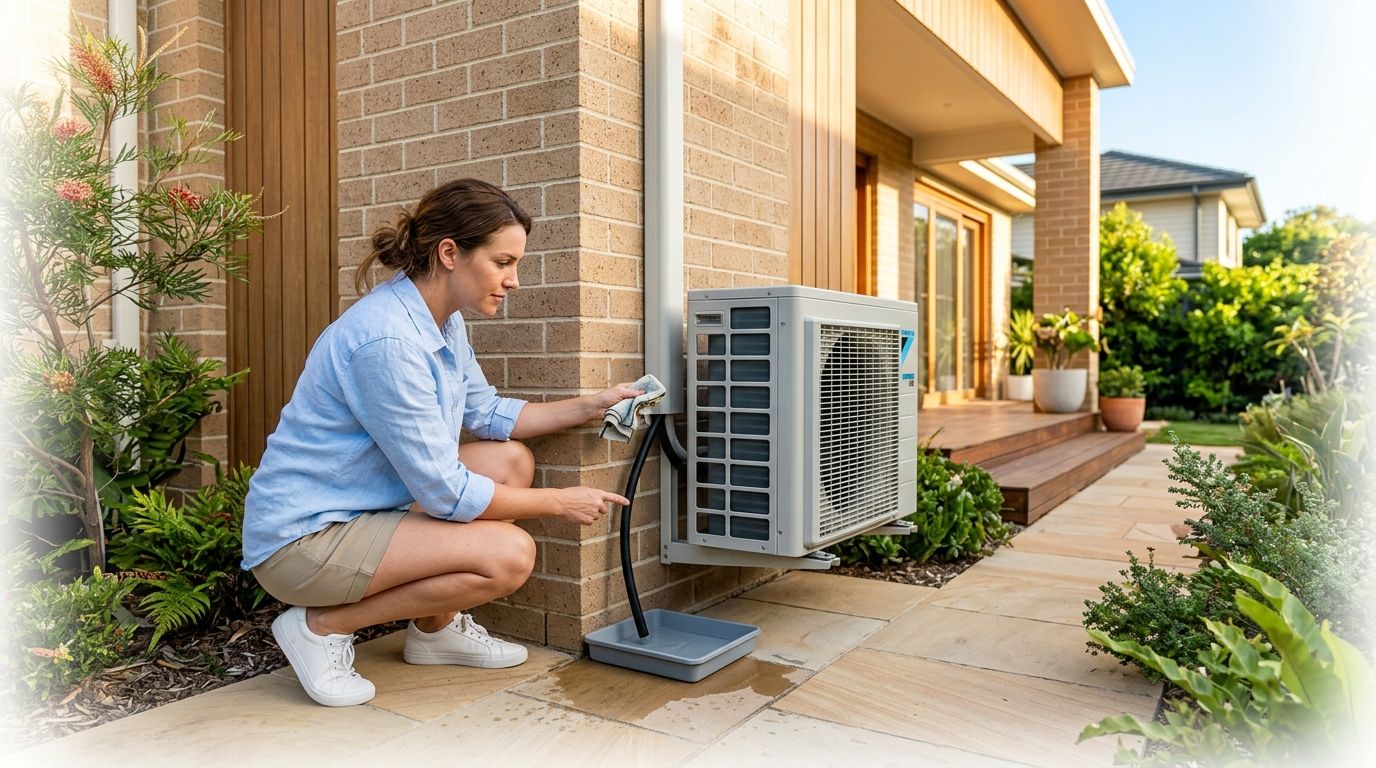
Spotting water dripping from your indoor air conditioning unit is one of those moments that stops you in your tracks. A small amount of condensation is a normal part of how your system works, but active aircon dripping water onto your floor, walls or furniture is a clear sign something has gone wrong. Left unchecked, it can damage ceilings, cause mould growth and lead to costly repairs.
There are five main reasons this happens: a blocked condensate drain line, a dirty or frozen evaporator coil, a cracked or overflowing drain pan, incorrect installation or refrigerant issues, and a clogged air filter restricting airflow. This article walks through each cause, explains what to look for and tells you what to do about it.
Key takeaways
Your air conditioner removes moisture from the air as part of the cooling process. Warm, humid air from your room is drawn across the evaporator coils inside the indoor unit. Those coils are cold, so moisture in the air condenses on their surface, just like water beads on a cold glass on a summer's day. That condensed water drips down into a drain pan sitting beneath the coils, then flows out of your home through a condensate drain pipe.
Under normal conditions, this process runs quietly in the background without you ever noticing it. A well-engineered unit like the Mitsubishi Electric MSZ-AP25VGD handles this condensation cycle reliably for years, provided it receives regular servicing. The same goes for quality Daikin and Fujitsu systems. The drain pan, drain line and coils all need to be clean and clear to do their job properly.
Problems start when any part of this chain is disrupted. A blocked drain line means water has nowhere to go and overflows the pan. Dirty coils can freeze over and then dump a large volume of water all at once when they thaw. A cracked drain pan simply leaks. Split systems are the most commonly affected type because their indoor unit is mounted high on a wall, so any overflow has a long way to fall before it hits your floor or ceiling below.
Understanding this process makes it much easier to diagnose what has gone wrong in your specific situation. Regular cleaning is the single most effective way to prevent these faults from developing in the first place. Our guide on how to clean your air conditioner covers exactly what to check and how often to do it.

Aircon dripping water inside almost always comes down to one of five faults: a blocked drain line, a clogged filter, a frozen evaporator coil, a damaged drain pan, or an incorrectly installed unit. Each fault has its own tell-tale signs, and knowing which one you are dealing with determines whether you can fix it yourself or need to call a technician.
The condensate drain line is the most common culprit behind a dripping aircon. Over time, algae, mould, dust and debris accumulate inside the pipe and form a blockage that prevents water from draining out of your home. When the line is blocked, the drain pan fills up and eventually overflows.
The signs to look for include water pooling on the floor directly below the indoor unit, a musty or mouldy smell coming from the unit, or the system shutting itself off unexpectedly. Many modern units have a float switch that cuts power when the pan is full.
A technician can clear the blockage by flushing the line with a wet-dry vacuum or compressed air. For minor blockages, some homeowners can pour a diluted bleach solution (roughly one part bleach to 16 parts water) into the drain access point to break down algae and mould. If the blockage is stubborn or you cannot locate the access point, leave it to a professional.
A clogged air filter is a surprisingly common cause of water leaks, and it is entirely preventable. When the filter is choked with dust and debris, airflow over the evaporator coil drops sharply. Without enough warm air passing over it, the coil gets too cold and ice begins to form on its surface.
When the unit eventually cycles off, that ice melts rapidly and produces far more water than the drain pan is designed to handle in one go. The pan overflows and water drips inside your home. You may also notice reduced airflow from the vents, visible ice on the indoor unit, or water appearing specifically after the unit turns off rather than while it is running.
This is a straightforward DIY fix. Remove the filter, rinse it under running water, let it dry fully and reinstall it. During periods of heavy use, check and clean your filters every four to six weeks. It takes about five minutes and prevents a long list of problems.
A frozen evaporator coil can result from a dirty filter (covered above), but there are two other common causes: low refrigerant levels and running the unit at very low temperature settings during cool weather. Low refrigerant reduces the pressure in the system, which causes the coil temperature to drop well below freezing. Running the unit at, say, 16 degrees on a mild autumn night has a similar effect.
The signs are hard to miss: visible ice on the indoor unit or along the refrigerant lines running to the outdoor unit, and noticeably reduced cooling performance even though the unit is running. When the ice eventually melts, it releases a large volume of water that overwhelms the drain pan.
If you suspect a frozen coil, turn the unit off and switch the fan to 'fan only' mode to help it thaw safely. Do not chip at the ice. Once thawed, clean the filter and try again. If the coil freezes again, low refrigerant is the likely cause and that requires a licensed technician to diagnose and recharge the system.
The drain pan sits directly beneath the evaporator coil and catches every drop of condensation the coil produces. In older units, particularly those more than 10 years old, the pan can crack, corrode or warp from years of constant moisture exposure. Once the pan is compromised, water escapes before it ever reaches the drain line.
The tell-tale sign is water dripping from the bottom of the indoor unit even when the drain line is completely clear and unblocked. A cracked or rusted pan is not a DIY repair. Depending on the unit's age and the extent of the damage, a technician may be able to seal a minor crack with waterproof sealant, but in many cases the pan needs to be replaced outright. If your unit is approaching the end of its service life, it may be worth discussing a full replacement with your technician. For a proper assessment, book air conditioning repairs with a qualified technician who can inspect the pan and advise on the most cost-effective path forward.
Split system indoor units must be installed with a very slight downward tilt toward the drain outlet, typically just a degree or two, so gravity can move condensation into the pan and out through the pipe. If the unit was installed perfectly level, or worse, tilted slightly the wrong way, water pools at the front of the unit and eventually drips out through the front face rather than the drain outlet.
This is one of the more frustrating causes because the unit itself is not faulty. The dripping typically appears from the front or bottom edge of the indoor unit rather than from the drain pipe area. Fixing it means a technician re-bracketing the unit to achieve the correct angle, which is not a complex job but does require the right tools and expertise.
It is also a strong reminder of why professional air conditioning installation matters from day one. A correctly installed unit drains properly, runs more efficiently and causes far fewer headaches over its lifetime. Cutting corners on installation often costs more to fix later than the installation saving was worth.
Not every dripping aircon requires a service call. Some faults are straightforward to resolve at home, while others involve risks to your safety, your system or your legal obligations as a homeowner. The table below gives you a clear breakdown.
| Issue | DIY Fix | Call a Technician |
|---|---|---|
| Dirty or clogged air filter | Yes. Remove, rinse and reinstall. | |
| Minor drain line flush (bleach solution) | Yes. Pour diluted bleach into the drain access point. | |
| Frozen coil thaw | Yes. Turn off the unit and let it thaw naturally. | |
| Blocked drain requiring tools (vacuum or compressed air) | Yes. Requires equipment and access to the drain line. | |
| Low refrigerant | Yes. Licensed technicians only. See note below. | |
| Cracked or rusted drain pan | Yes. Requires inspection, sealing or replacement. | |
| Incorrect installation tilt | Yes. Requires re-bracketing by a qualified installer. |
One point worth emphasising: handling refrigerant without an ARCtick licence is illegal in Australia. It is not a grey area. Refrigerant work must be carried out by a licensed technician, full stop. Attempting it yourself risks a significant fine and can cause serious damage to your system.
It is also worth keeping perspective on cost. A standard service call typically runs between $150 and $300. Water damage to ceilings, walls, flooring or furniture can run into the thousands. If you have worked through the DIY checks and the dripping continues, booking an air conditioning service is almost always the cheaper option in the long run.
Preventing aircon dripping water is mostly a matter of keeping up with a few simple maintenance habits. Clean filters, a clear drain line and an annual professional service will eliminate the vast majority of faults before they have a chance to develop. The good news is that none of these tasks are time-consuming or expensive.
Here are the four habits that make the biggest difference:
Some modern units include features that help reduce filter build-up between cleans. The Daikin Cora series (for example, the FTXM25Y 2.5kW) includes a self-cleaning filter function that brushes dust off the filter and deposits it into a collection box. The Fujitsu ASTG series (such as the ASTG09KMCA 2.5kW) offers a similar auto-cleaning feature. Both are genuinely useful, but they do not replace manual cleaning entirely. Dust still accumulates over time, and the collection boxes need to be emptied. Treat these features as a helpful supplement to your maintenance routine, not a substitute for it.
Most cases of aircon dripping water come down to a blocked drain line, a dirty filter or a frozen coil, and many can be sorted quickly once you know what you are dealing with. If you have worked through the checks in this article and the dripping is still happening, the fault is most likely something that needs a trained eye and the right tools to fix properly.
Frozone Air's technicians service customers across Sydney and Melbourne and can diagnose and resolve water leaks fast, whether it is a stubborn drain blockage, a refrigerant issue or a drain pan that has seen better days. Do not let a small drip turn into a big repair bill.
Call us on 1300 801 839 or book a service online to get a technician out to you.
Whether your AC dripping water is okay depends entirely on where the water is coming from. A small amount of condensation dripping from the outdoor unit is completely normal, especially on humid days. Water dripping from the indoor unit is not normal and usually points to a blocked drain line, dirty filter or frozen coil. Left unchecked, indoor dripping can cause water damage and mould growth, so it's worth investigating promptly.
You should turn your AC off until the cause of the leak is identified, particularly if water is pooling near electrical components or dripping onto walls and flooring. Continuing to run the unit risks worsening the underlying fault, whether that's a fully blocked drain or a developing refrigerant issue. Water and electrics are a dangerous combination, so err on the side of caution and call a technician.
To stop your air conditioner from dripping condensation, start by cleaning the filter and checking that the drain line is clear of blockages. If both look fine, the unit likely needs a professional service to inspect the drain pan, coil and refrigerant levels. Regular servicing at least once a year is the most reliable way to prevent the problem from coming back.
Some leaking AC fixes are DIY-friendly: cleaning the filter and flushing a mildly blocked drain line are tasks most homeowners can handle safely. However, anything involving refrigerant, drain pan replacement or re-bracketing the unit must be carried out by a licensed technician. Attempting refrigerant work without a licence is illegal under Australian law, so if in doubt, call a professional.