

Noisy Air Conditioner Compressor? What's Causing It and How to Fix It
Hearing air conditioning compressor noise from your outdoor unit? Learn what each sound means, what causes it, and when to call a technician.


Hearing air conditioning compressor noise from your outdoor unit? Learn what each sound means, what causes it, and when to call a technician.
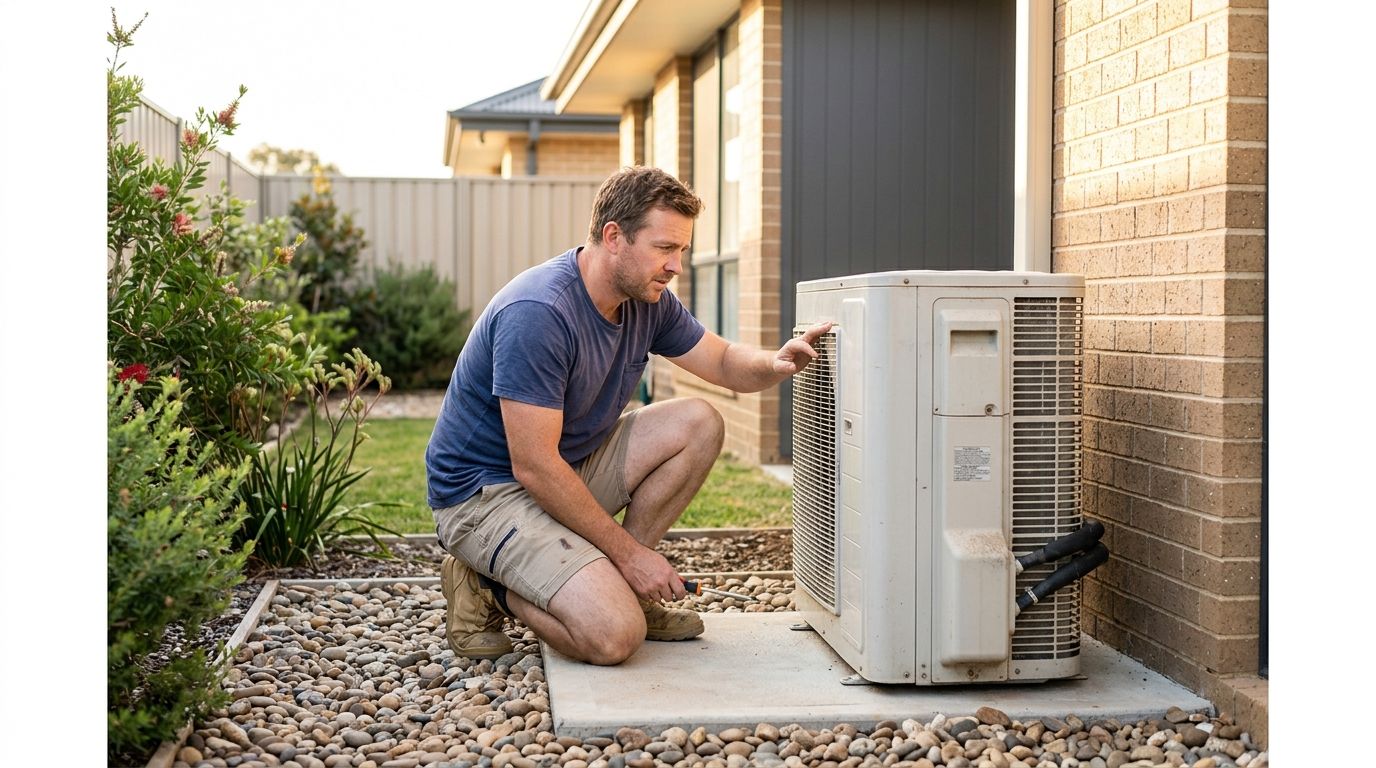
A sudden change in noise from your outdoor unit is hard to ignore. What was once a quiet hum in the background becomes a rattle, a screech or a persistent banging that follows you inside. Air conditioning compressor noise is more than just an annoyance. It is your system's way of flagging that something has changed, and in many cases, that something needs attention before it becomes a costly repair.
The compressor is the heart of your air conditioning system. It pressurises the refrigerant that moves heat in and out of your home, so when it starts making unusual sounds, the rest of the system is affected too. The good news is that different noises point to very different problems, and knowing which is which can save you time and money.
This article covers what each noise type means, the most common causes behind them, a practical DIY troubleshooting checklist, when to call a professional, and what your options are if the compressor is beyond repair.
Key takeaways
The sound your unit is making is your first diagnostic clue. Before you call a technician or start pulling panels off, take a moment to listen carefully and match what you hear to the descriptions below. Each noise pattern points to a different part of the system and a different level of urgency.
To summarise the urgency levels at a glance:
| Noise Type | Likely Cause | Urgency |
|---|---|---|
| Banging or clanking | Broken internal compressor component | High. Turn off and call a technician |
| Buzzing or humming | Failing capacitor, loose wiring or struggling motor | Medium. Book a service soon |
| Hissing or screeching | Refrigerant leak or dangerously high pressure | Immediate. Shut down now and call |
| Clicking | Relay or control board fault | Medium. Monitor and book a service |
| Rattling | Loose panels, screws or debris | Low. Inspect yourself first |
| Gurgling | Refrigerant flow issue or blocked drain | Medium. Have a technician check it |
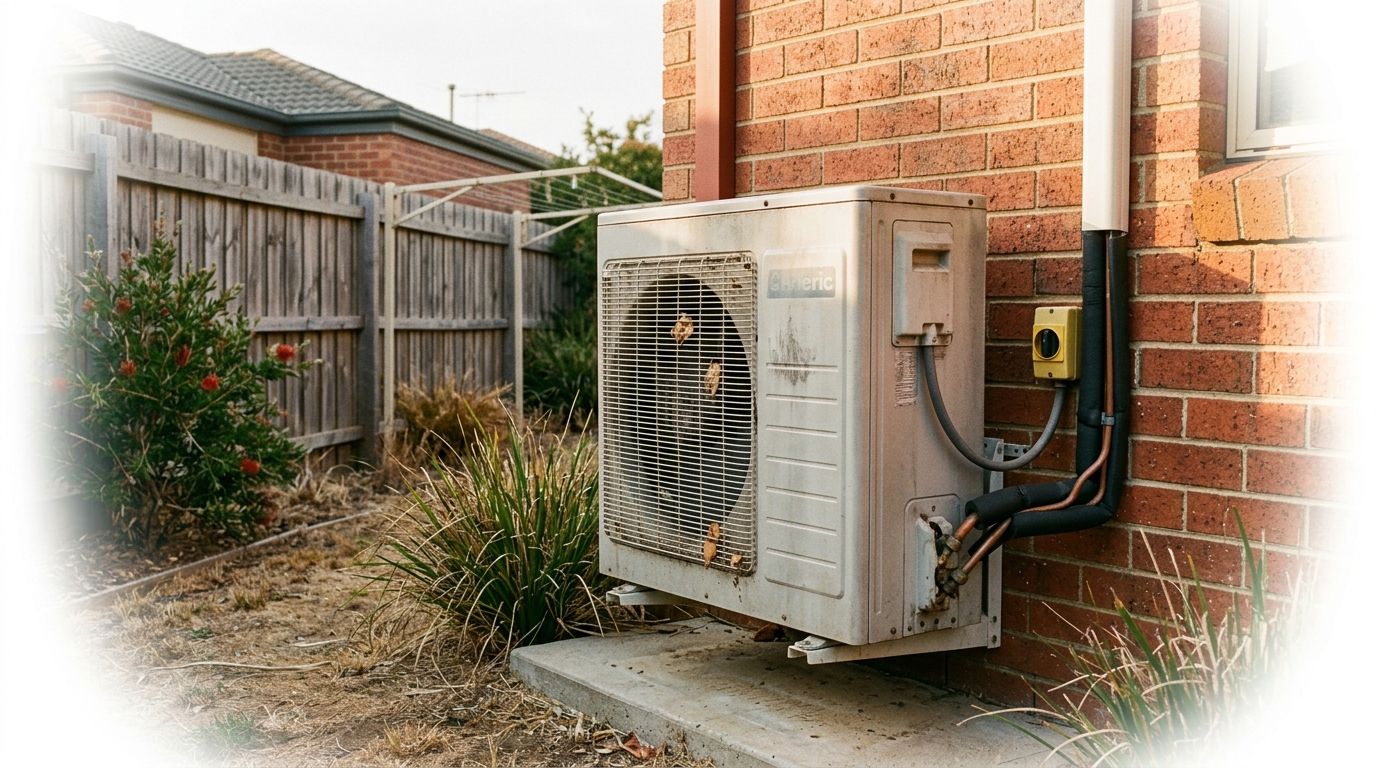
A noisy air conditioning compressor is almost always caused by one of six things: worn internal components, loose mounting hardware, a refrigerant problem, a failing capacitor, debris inside the outdoor unit, or a poor original installation. Some of these you can address yourself in 10 minutes. Others require a licensed technician and should not be touched by anyone without the right qualifications.
Wear and tear on internal components. Pistons, crankshafts and bearings inside the compressor degrade over years of operation. As these parts wear, tolerances loosen and the compressor starts to knock, rattle or grind in ways it never did when new. This type of wear is gradual, which is why a unit that was quiet last summer might suddenly sound noticeably different this season.
Loose mounting hardware. The compressor sits on rubber anti-vibration feet, and the outdoor unit itself is bolted to a slab or bracket. Years of vibration can loosen these fasteners, causing the entire casing to amplify noise that would otherwise be absorbed. This is one of the easier fixes and is safe to check yourself.
Refrigerant issues. Both a low refrigerant charge and an overcharge force the compressor to work harder than it should. The result is a louder, more strained operating sound. Refrigerant work is strictly regulated in Australia and must be handled by a licensed technician. Do not attempt to top up refrigerant yourself.
Failing capacitor. The capacitor gives the compressor motor the electrical kick it needs to start. A weak or failing capacitor causes a hard-start buzz and may leave the unit struggling to get going at all. This is an electrical component repair that requires a professional.
Debris ingress. Leaves, twigs, seed pods and dirt can enter the outdoor unit through the fan grille, obstructing the fan blades and adding load to the compressor. A visual inspection and careful clean-out is a reasonable DIY first step.
Poor original installation. An outdoor unit that was installed on an unlevel surface, or without proper anti-vibration pads, will vibrate excessively from the moment it is switched on. If your unit has always been noisy, this is worth investigating.
For causes involving refrigerant, the capacitor or internal mechanical components, you will need to book air conditioning repairs with a licensed technician rather than attempting anything yourself.
Compressors in units older than 10 years are significantly more prone to bearing wear and internal component failure. The tolerances that kept everything running quietly gradually break down, and the compressor has to work harder to maintain the same output. Increased noise in an ageing unit is often one of the first signs that the compressor is approaching the end of its serviceable life.
If your system is over 10 years old and has recently become noticeably louder, it is worth having a technician carry out a repair-versus-replace assessment before spending money on a repair that only buys another year or two of operation. In many cases, the cost of a compressor replacement or major repair on an older unit comes close to the cost of a new, more efficient system.
Before calling a technician, there are several safe checks a homeowner can carry out to narrow down the cause of a noisy compressor. Work through this list in order. Stop at any step that involves electrical components, refrigerant or opening the compressor casing, and call a professional instead.
Steps one through five are safe for most homeowners to carry out. Do not open the compressor casing, touch any wiring or attempt to handle refrigerant lines. These tasks require a licensed refrigeration mechanic and, in the case of refrigerant, an ARCtick licence.
If you have worked through this checklist and the noise persists, or if you are dealing with a broader set of problems beyond just the compressor, our general air conditioner troubleshooting guide covers a wider range of faults and fixes to help you work out what is going on before you pick up the phone.
Hissing, screeching, loud banging, or any noise paired with reduced cooling performance or a tripped circuit breaker are all signs that you need a licensed technician, not a DIY fix. These symptoms point to faults inside the compressor, in the refrigerant circuit or in the electrical system. Attempting your own repair can cause further damage or create a safety hazard. Book an air conditioning service as soon as you notice any of these warning signs.
When a Frozone Air technician arrives, they will work through a structured assessment of the outdoor unit. This typically includes inspecting the compressor for mechanical faults, testing the capacitor to check it is delivering the correct start-up voltage, and measuring refrigerant pressure to confirm the system is operating within its designed range. From there, they can tell you whether the compressor can be repaired or whether it needs replacing.
Compressor replacement is not cheap. The part alone typically costs between $800 and $1,500 or more, depending on the brand and capacity, and that figure does not include labour or any additional components that may need attention at the same time. On a unit that is 10 or more years old, that repair bill can come uncomfortably close to the cost of a brand-new system. A good technician will give you an honest repair-versus-replace assessment so you can make an informed decision rather than spending money on a repair that only extends the life of an ageing unit by a year or two.
Frozone Air technicians service all major brands including Daikin, Mitsubishi Electric, Fujitsu and Panasonic across Sydney and Melbourne. If your compressor is making noises that concern you, do not leave it running. Call us on 1300 801 839 or book a repair assessment online.
If your compressor is beyond economical repair, a replacement is an opportunity to get a significantly quieter system than the one you are retiring. Modern inverter split systems are far quieter than the fixed-speed units that were common a decade ago, and outdoor noise ratings have improved considerably across all the major brands.
Here are the three things worth prioritising when choosing a quieter replacement:
If you are ready to explore your options, browse our split system air conditioning range or get in touch to request a quote. We can help you match the right capacity and model to your space.
A faulty compressor typically produces banging, clanking, screeching or loud buzzing sounds. Banging usually indicates a broken internal component such as a piston or connecting rod, while screeching or hissing suggests a refrigerant leak or dangerously elevated internal pressure. Any of these sounds warrant switching the unit off immediately and calling a licensed technician.
A sudden increase in noise usually points to a specific event rather than gradual wear. Common causes include debris entering the outdoor unit, a component coming loose, a capacitor beginning to fail, or a refrigerant leak developing. If the noise appeared overnight with no obvious external cause such as a storm, have a technician inspect the unit as soon as possible.
Worn compressor bearings typically produce a grinding, screeching or high-pitched squealing noise that is most noticeable on start-up. The outdoor unit may also vibrate more than usual during operation. Bearing failure is a serious mechanical issue that requires professional repair or full compressor replacement and will not resolve on its own.
A healthy compressor produces a low, steady hum, typically between 50 and 60 dB at the outdoor unit, which is roughly equivalent to a normal conversation. It should not rattle, bang, screech or buzz. If your outdoor unit is noticeably louder than it used to be, that change in noise level is a reliable sign something needs professional attention.
Different compressor noises point to very different causes, and knowing which is which matters. Rattling from loose panels or debris is something you can often sort yourself in 10 minutes. But refrigerant leaks, failing capacitors, worn bearings and broken internal components all require a licensed technician. Attempting those repairs without the right qualifications risks making the problem worse and creating a safety hazard.
The most important takeaway is this. Catching a compressor problem early almost always costs less than waiting. A capacitor replacement is a fraction of the price of a full compressor replacement, and a compressor replacement is a fraction of the price of replacing a system that has failed completely and damaged other components on the way out.
If your compressor is making noises that concern you, book an air conditioning repair or service with Frozone Air on 1300 801 839. And if the unit is older and a replacement makes more financial sense, get in touch to request a free quote for a new split system installation. We will help you find the right system for your space and budget.