

Air Conditioner Tripping Circuit Breaker? Here's Why It Happens and What to Do
Is your air conditioner tripping the circuit breaker? Learn the most common causes, what's safe to fix yourself, and when to call a professional.


Is your air conditioner tripping the circuit breaker? Learn the most common causes, what's safe to fix yourself, and when to call a professional.
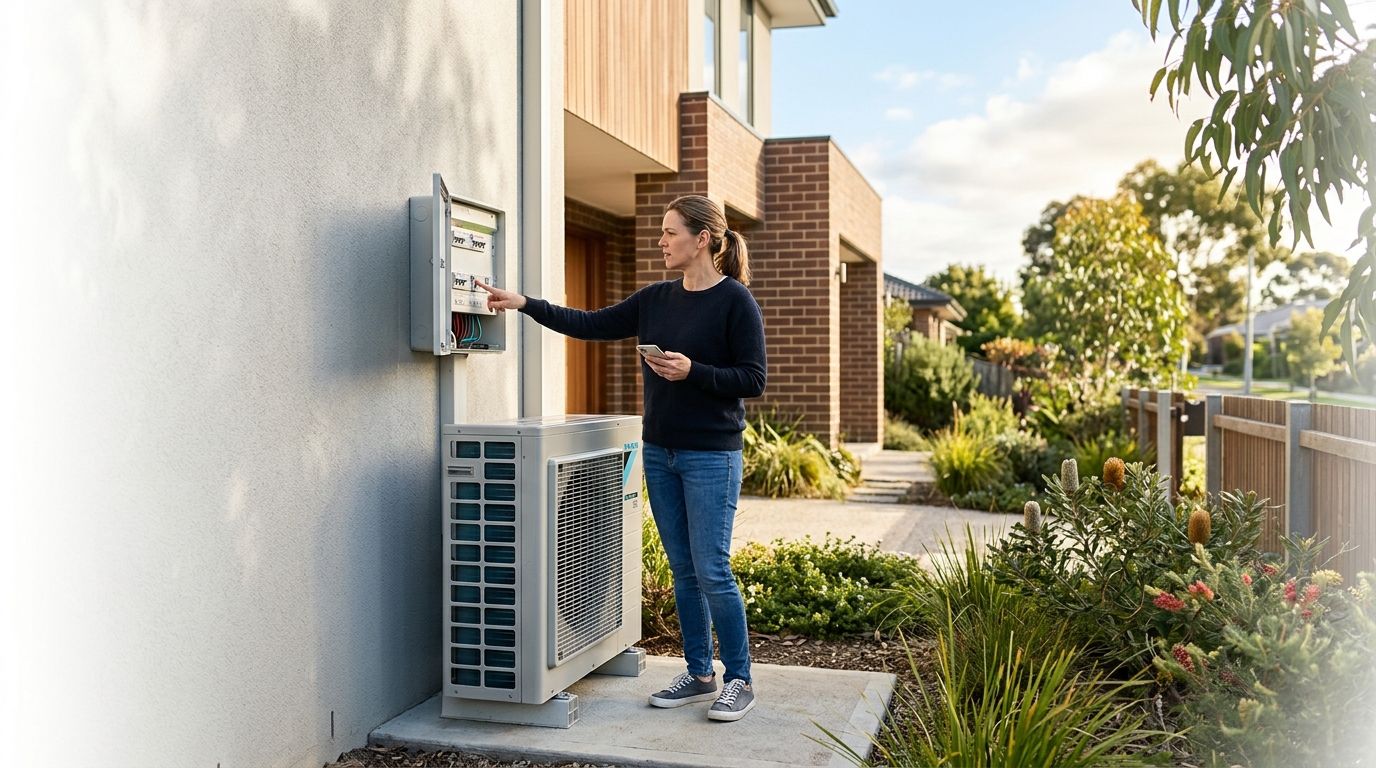
Picture this: it's 38 degrees in Sydney, you've just switched on the aircon, and within minutes the power cuts out. An air conditioner tripping the circuit breaker is one of the most common AC complaints we hear at Frozone Air, and it's never something you should ignore or keep resetting your way through. A tripping breaker is your electrical system telling you something is wrong.
The causes range from a simple dirty filter you can sort out yourself in five minutes, through to serious electrical faults that need a licensed technician on-site today. This article walks through each cause in plain terms, tells you which ones are safe to tackle yourself and which ones are not, and explains what a proper fix actually looks like.
Key takeaways
A circuit breaker trips when the current flowing through it exceeds its rated limit. Your air conditioner is one of the highest-draw appliances in your home, so when something forces it to work harder than normal, the breaker is often the first thing to respond. Here are the five causes we see most often.
A blocked air filter is the single most common reason an air conditioner trips its breaker, and it's also the easiest to fix. When the filter is clogged with dust and debris, airflow across the evaporator coil is restricted. The indoor fan motor has to work significantly harder to pull air through, which increases its current draw. If that draw exceeds the breaker's rated amperage, the breaker trips.
Check your filter first before calling anyone. Most split system filters slide out from the front of the indoor unit and can be rinsed under a tap, left to dry and reinstalled. If you're not sure how to do this safely, our guide on how to clean your air conditioner walks through the full process step by step. Filters should be cleaned every four to six weeks during heavy use periods.
Refrigerant is the substance that actually moves heat out of your home. When the system is low on refrigerant, usually because of a slow leak somewhere in the pipework or coils, the compressor has to run for much longer to reach the temperature you've set. That extended run time means sustained high current draw, which can push the breaker past its limit.
You may also notice the system is blowing air that isn't as cold as it used to be, or that ice is forming on the indoor unit. A refrigerant regas alone won't fix the problem if there's an active leak. The leak needs to be found and repaired first. Refrigerant handling is licensed work in Australia under the Australian Refrigeration Council (ARC) framework, so this is not a DIY job. Call a licensed technician.
The compressor is the heart of your air conditioning system, and it's also the component that draws the most current. A compressor that is struggling to start, often called 'hard starting', produces a large inrush current spike each time it tries to kick on. That spike can easily exceed the breaker's rating and cause an immediate trip.
Hard starting is more common in older units or systems that haven't been serviced regularly. In some cases, a failed start capacitor is the culprit. The capacitor gives the compressor motor the initial boost it needs to get moving, and when it degrades, the motor draws far more current trying to start on its own. A capacitor replacement is a relatively straightforward repair for a technician. If the compressor itself has seized or failed internally, a full compressor replacement or system replacement may be the more cost-effective path.
Damaged insulation, loose terminal connections or a short circuit inside the unit can cause the breaker to trip immediately, often the moment the system is switched on. These faults can develop over time from vibration, heat cycling, pest damage or simply age. A short circuit is a direct safety hazard, not just a performance issue.
Do not open the unit's electrical compartment or attempt to inspect internal wiring yourself. Even with the unit switched off at the wall, capacitors inside the system can hold a dangerous charge. This work requires a licensed electrician or a licensed air conditioning technician. If your breaker trips instantly every time you try to run the unit, treat it as an electrical fault until proven otherwise.
Circuit breakers don't last forever. Over years of use, the internal components can degrade and the breaker can become overly sensitive, tripping under loads it would have handled without issue when it was new. Separately, some older homes have breakers that were never correctly sized for a modern air conditioning system's rated current draw.
If a technician has checked the AC unit itself and found nothing wrong, the breaker is worth having a licensed electrician inspect. Replacing an ageing or undersized breaker, or upgrading the circuit, is a straightforward job for an electrician and can resolve nuisance tripping without any work on the AC unit itself.

When your air conditioner trips the circuit breaker, follow these steps in order before touching anything else. The sequence matters: skipping straight to resetting the breaker without addressing the underlying cause can damage your compressor, overheat your wiring or, in the worst case, start a fire. Stay calm, work through the steps below and you'll know within 30 minutes whether this is something you can resolve yourself.
A single breaker reset is safe in specific, low-risk situations. Repeated resets are not safe under any circumstances. The distinction comes down to whether you have a plausible, benign explanation for why the breaker tripped in the first place. If you do, one reset is reasonable. If you don't, or if the breaker trips again immediately, you need a technician.
In each of these cases, the cause is external or easily corrected. One reset, followed by careful observation, is a sensible first step.
Any of these signs points to an active electrical fault, a failing compressor or damaged wiring. Resetting the breaker in these situations doesn't fix the problem. It just gives the fault another opportunity to cause damage or injury.
It's also worth knowing that in Australia, any internal electrical work on an air conditioning unit must be carried out by a licensed technician. You cannot legally open the electrical compartment of your AC unit and start inspecting or replacing components yourself, regardless of how handy you are. This isn't bureaucratic red tape. It's there because the risks are real.
If your breaker issue is part of a broader pattern of AC problems, our guide to common air conditioner problems and DIY troubleshooting covers a range of faults you can safely diagnose before picking up the phone. For persistent tripping that keeps coming back, or for any of the warning signs listed above, the right move is to book a professional air conditioning service so a technician can inspect the unit properly and identify the root cause.
If your air conditioner is more than 10 to 15 years old and tripping the breaker regularly, the unit itself may be the root cause. Older fixed-speed compressors draw a large, fixed current every time they start and run, whereas modern inverter-driven split systems ramp up gradually and modulate their power draw continuously. That difference in inrush current alone can be enough to push an ageing circuit over its limit on a hot day.
Modern inverter units are also significantly more efficient under Australian energy rating standards. Two units Frozone Air installs and recommends are the Daikin Cora Series (2.5kW FTXM25YVMA) and the Mitsubishi Electric MSZ-AP Series (2.5kW MSZ-AP25VGD). Both carry strong energy star ratings, operate with low inrush current and are designed to run reliably through Australian summers without the sustained high-draw behaviour that causes nuisance tripping.
Replacing an old unit is not always the answer. If your system is under 10 years old and well-maintained, a targeted repair is almost certainly the better path. But if you're facing repeated service calls on a unit that's already had its compressor or capacitor replaced once, the maths often shifts in favour of replacement. A new inverter split system will cost less to run each year, draw less current from your circuit and come with a fresh manufacturer's warranty.
For further reading on what to look for in a replacement, our guide to the most energy-efficient air conditioners in Australia covers star ratings, capacity sizing and the brands worth considering. To see what's available, browse our split system range and filter by capacity to find a unit suited to your room size.
A tripping circuit breaker is a warning sign from your electrical system, not a minor inconvenience to reset and ignore. Whether the cause is a dirty filter, a refrigerant leak, a failing compressor or a wiring fault, the only way to know for certain is to have a licensed technician inspect the unit properly.
Frozone Air's technicians are licensed to diagnose and repair all of the faults covered in this article. We service customers across Sydney and Melbourne, and we can usually get someone out to you quickly when your system is down in the middle of summer.
Two ways to get in touch:
Don't keep resetting that breaker. Get it looked at once, get it fixed properly and get back to a cool home.
If your air conditioner keeps tripping the breaker, turn the AC off at the unit first, then check and clean the filter before resetting the breaker once. Wait at least 30 minutes before switching the system back on. If the breaker trips again, do not reset it a second time. Repeated tripping points to a deeper fault such as a failing compressor, refrigerant issue or wiring problem, and a licensed technician needs to diagnose it safely.
Yes, a bad AC breaker can cause a fire. A faulty or undersized breaker that fails to trip under overload allows wiring to overheat, which is a genuine fire risk. Repeatedly resetting a tripping breaker without fixing the underlying fault creates the same danger. If you have any doubt about your breaker or AC unit, have both inspected by a licensed electrician or air conditioning technician as soon as possible.
No, your AC will not run if the breaker is tripped. A tripped breaker cuts power to the circuit entirely, so the unit will not respond to any controls or remote commands. You need to reset the breaker at the switchboard to restore power, but make sure you identify and address the cause of the trip before you do so, not after.
Your condenser is tripping the circuit because the outdoor unit draws more current than any other part of a split system, and several faults can push that draw beyond the breaker's limit. Common causes include a failing compressor drawing excess current, a dirty condenser coil forcing the unit to overwork, low refrigerant or a faulty capacitor. All of these require a licensed technician to inspect and repair properly.