

How Much Does Air Conditioning Cost in Australia? (2026 Buyer's Guide)
Wondering about the cost of aircon in Australia? This 2025 guide covers unit prices, installation, running costs, and how to get the best value.


Wondering about the cost of aircon in Australia? This 2025 guide covers unit prices, installation, running costs, and how to get the best value.

The cost of aircon in Australia in 2026 ranges from under $500 for a basic portable unit to well over $20,000 for a fully installed ducted system in a large home. Your final cost depends on four things: the unit itself, installation, ongoing running costs and annual servicing. This guide breaks down each layer so you know exactly what to budget before you commit.
There is no single 'right' answer, but clear patterns emerge depending on your home size, climate zone and how often you plan to run the system. We will walk through each cost layer in plain terms, with real prices from systems we install every day across Sydney and Melbourne.
Key takeaways
Unit price is the most visible cost, but it is rarely the full picture. The table below covers the four main system types available in Australia, with typical price ranges for the unit alone (excluding installation unless noted) and the situations each type suits best.
| System Type | Typical Unit Price Range (AUD) | Best For | Example Model |
|---|---|---|---|
| Split System | $600 to $2,500 | Single rooms or open-plan living areas | Daikin Cora 4.6kW (FTXV46WVMA) |
| Multi-Split System | $2,500 to $7,000 | Multiple rooms from one outdoor unit | Daikin or Mitsubishi Electric multi-head |
| Ducted System | $5,000 to $15,000+ | Whole-home cooling and heating | Daikin Ducted or Mitsubishi Electric Ducted |
| Portable or Window Unit | $300 to $1,200 | Renters or temporary cooling needs | Various brands |
Split system air conditioning is by far the most popular choice for Australian homes, and for good reason. It offers the best balance of upfront cost, energy efficiency and installation simplicity. A quality split system can handle a bedroom, living room or open-plan kitchen without the complexity or expense of a ducted setup.
For whole-home comfort, ducted air conditioning is the go-to solution. It delivers conditioned air to every room through ceiling vents, with no visible indoor units on the wall. The trade-off is a higher upfront cost and a more involved installation, typically requiring roof space for the ducting.
To put real numbers to the mid-range split system category, the Daikin Cora 4.6kW (FTXV46WVMA) comes in at $1,621 supply and install, while the Mitsubishi Electric 5kW MSZAP50VGKDKIT sits at $1,692 supply and install. Both prices are all-inclusive, meaning no surprise labour fees on top. These are solid performers for a medium-sized living area and represent what most Australian households end up spending on a quality single-room solution.
Portable and window units are the cheapest entry point, but they come with real limitations: lower efficiency, higher noise levels and the need to vent hot air through a window or wall. They are worth considering for renters who cannot install a permanent system, but for homeowners they rarely make sense as a long-term investment.
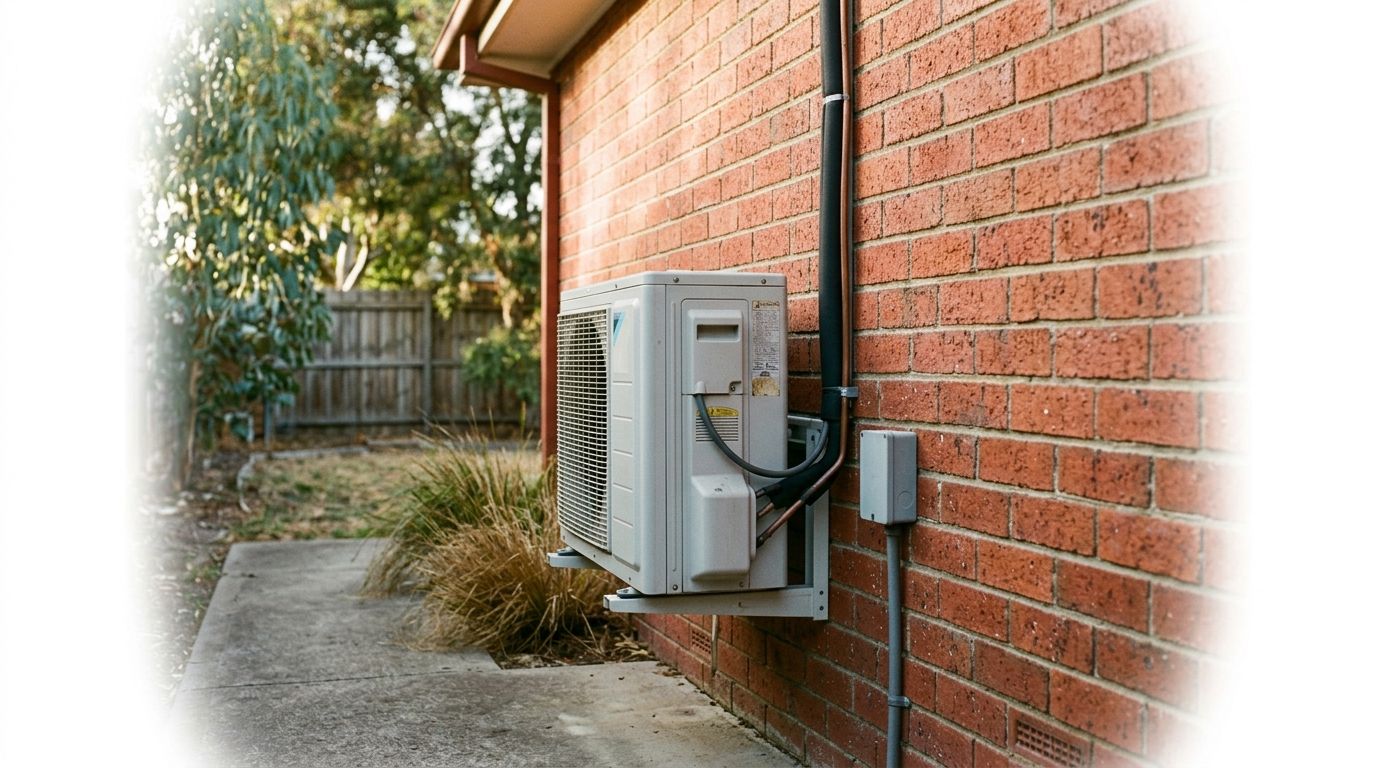
Air conditioning installation in Australia typically costs between $300 and $1,200 for a split system and $3,000 to $8,000 or more for a ducted system, depending on your home's layout, the complexity of the job and your location. Understanding what drives installation costs up or down helps you budget accurately and avoid surprises on the day.
The five main factors that affect what you pay for installation are:
As a rough guide, a basic split system installation runs $300 to $600, a complex or multi-storey install sits at $600 to $1,200, and a full ducted system installation starts at $3,000 and can reach $8,000 or more for a large home with multiple zones.
Frozone Air bundles the unit and labour into a single supply-and-install price, so there are no separate quotes to juggle or hidden fees added after the fact. The Daikin Alira X 3.5kW (FTXM35YVMA) at $1,431 all-in is a good example of what a mid-range back-to-back install looks like as a complete package.
For a full breakdown, see our guide to air conditioning installation cost in Australia.
A back-to-back installation is the simplest and most affordable way to install a split system. The indoor unit sits on one side of an external wall and the outdoor unit sits directly on the other side, keeping the pipe run to around one metre. There is no need to route pipes through ceiling cavities, around corners or down multiple storeys. The job is typically completed in two to three hours and carries the lowest labour cost of any permanent installation type.
A complex installation involves anything that adds distance or difficulty to that pipe run. This includes routing pipes through a roof cavity, running them down the side of a multi-storey home, drilling through double-brick walls or positioning the outdoor unit on a rooftop or elevated platform. Each of these factors adds time, materials and cost.
If your layout allows it, a back-to-back install is always worth choosing. Frozone Air offers a dedicated back-to-back installation service designed to keep the process fast, straightforward and priced clearly from the start.
Running an air conditioner in Australia costs roughly $0.10 to $1.40 per hour depending on the size of the system and your local electricity rate. The 2026 national average sits at around $0.40 per kWh, though rates range from approximately $0.19/kWh in south-east Queensland to around $0.34/kWh in South Australia and Western Australia. For most households, aircon running costs are very manageable with the right unit and a few sensible habits.
The formula is straightforward:
Running cost per hour = unit capacity (kW) x electricity rate ($/kWh)
In practice, inverter split systems do not run at full capacity continuously, so real-world costs are typically lower than the maximum figure. Here is how the numbers look across common system sizes:
| System Size | Estimated Cost Per Hour (at $0.40/kWh) | Typical Use Case |
|---|---|---|
| 2.5kW split system | $0.10 to $0.14/hr | Small bedroom or study |
| 5kW split system | $0.20 to $0.28/hr | Medium living area or open-plan space |
| 10 to 14kW ducted system | $0.80 to $1.40/hr | Whole-home cooling and heating |
Inverter technology makes a real difference to these figures. Unlike older fixed-speed units that cycle fully on and off, an inverter compressor ramps up and down to match the room's demand. This means the system spends most of its time running at partial load, which is far more efficient. A 5-star energy-rated unit can use up to 30% less electricity than a 2-star equivalent over a full season. For anyone focused on keeping bills down, the energy star rating deserves as much attention as the purchase price. See our guide to the most energy-efficient air conditioners in Australia for a full breakdown of what to look for.
Small adjustments to how you use your system add up to meaningful savings over a full summer or winter. Here are five habits worth building:
Keeping your air conditioner serviced typically costs between $120 and $400 per year depending on the system type, and skipping it almost always costs more in the long run through higher electricity bills, premature breakdowns and shortened system life. Frozone Air recommends an annual service for most residential systems as the minimum to protect your investment.
Here is what you can expect to pay for the most common service and maintenance jobs:
| Service Type | Typical Cost (AUD) | What It Covers |
|---|---|---|
| Split system service | $120 to $200 | Filter clean, coil inspection, refrigerant check, electrical check |
| Ducted system service | $200 to $400 | All of the above plus duct inspection and zone control check |
| Professional deep clean | $150 to $250 | Chemical coil clean, drain flush, mould and bacteria treatment |
| Regas (refrigerant top-up) | $150 to $350 | Refrigerant recharge; price varies by gas type and quantity required |
A regas is not a routine maintenance item. If your system needs refrigerant regularly, that points to a leak that needs to be found and repaired rather than simply topped up each season. Addressing the root cause early is far cheaper than repeated regas visits or a compressor failure down the track.
A neglected system works harder to reach the set temperature, draws more electricity and puts extra strain on the compressor. The cost of one annual service is typically recovered within a single season through lower running costs alone, before you factor in the repairs it helps you avoid.
Running a 5kW split system for eight hours a day at the national average electricity rate of around $0.40 per kWh costs roughly $1.60 to $2.24 per day, or $48 to $67 per month. A larger ducted system running the same hours could cost $3.20 to $5.60 per day. Actual costs vary based on your local electricity tariff, the system's energy rating and how hard it has to work to maintain the set temperature.
A split system is cheaper to run when you only need to cool or heat one or two rooms, because you are conditioning a smaller space with a smaller unit. A ducted system costs more per hour to operate but covers the whole home, so the cost per room can be comparable if you are running multiple split systems simultaneously. For most households, a split system wins on running cost unless whole-home comfort is the goal.
Portable and window units are the cheapest to buy, typically ranging from $300 to $1,200 with no installation cost. However, they are the least energy-efficient option and cost more to run over time. For homeowners, a split system in the $600 to $1,500 range offers a much better balance of upfront cost and long-term running efficiency.
A modern inverter split system adds a modest amount to your electricity bill, typically $30 to $80 per month during heavy summer use for a medium-sized room. Older fixed-speed units and oversized systems cost noticeably more. Choosing a high energy star-rated unit, setting the thermostat sensibly and keeping filters clean are the three most effective ways to keep the impact on your bill manageable.
Most residential air conditioners should be professionally serviced once a year. Systems in dusty environments, homes with pets or units that run year-round may benefit from a service every six months. Annual servicing keeps the system running efficiently, extends its lifespan and helps catch small issues like refrigerant leaks or failing components before they become expensive repairs.
The total cost of air conditioning in Australia covers four layers: the unit price, installation, running costs and annual servicing. Each one varies depending on your system type, home layout and how often you use it. Once you have a clear, itemised quote in front of you, the guesswork disappears and you can make a confident decision.
Frozone Air installs and services air conditioning systems across Sydney and Melbourne, with transparent supply-and-install pricing that bundles everything into a single figure. No separate labour quotes, no surprise fees after the job is done.
Ready to find out what your home will cost? Request a free quote or book an online consultation with our team today. If you are in Sydney and want to talk through your installation options, visit our air conditioning installation Sydney service page to get started.